







Marin Alsop returns to Denver — and her beginnings
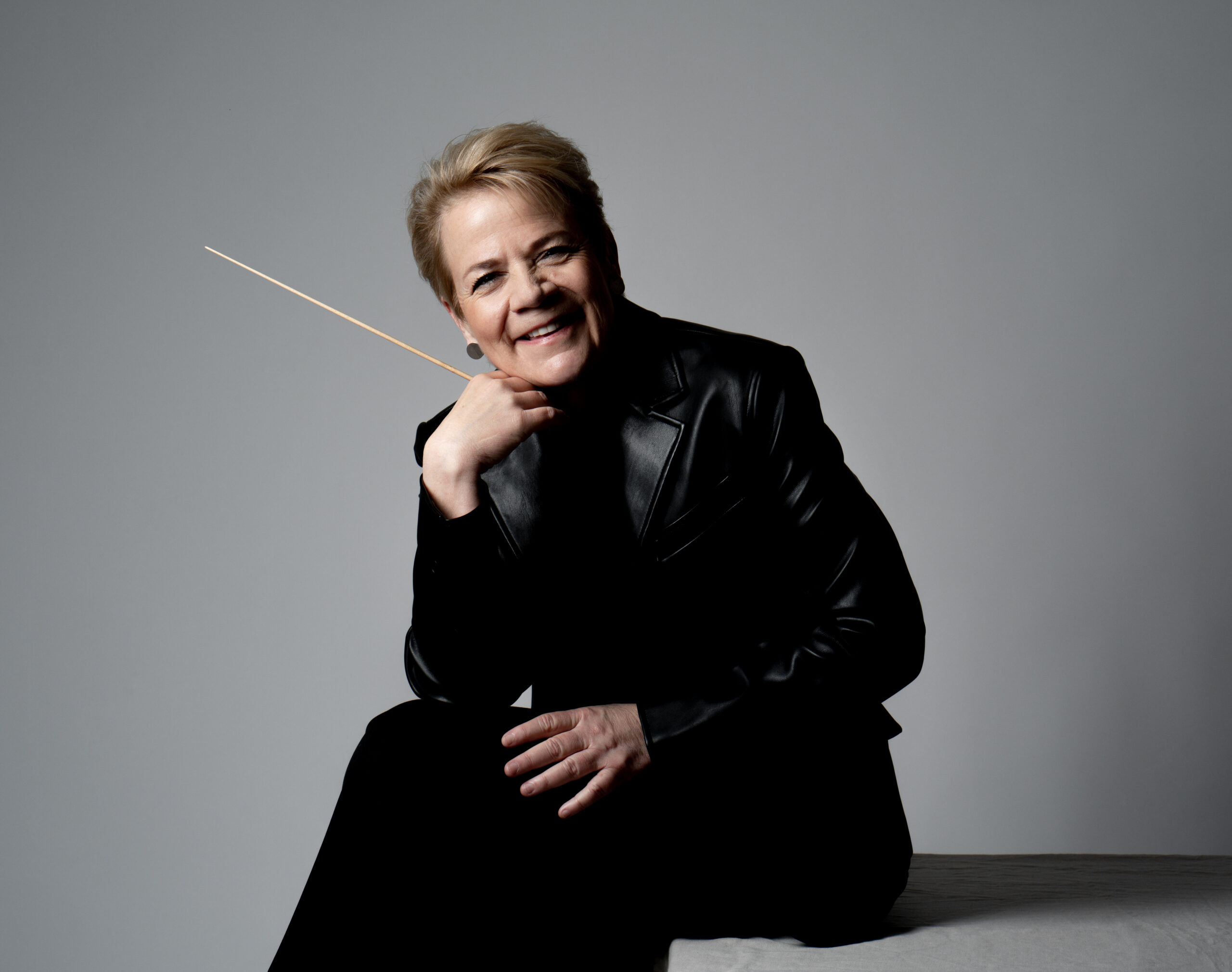
For a long time now, Marin Alsop has been a woman of the world.
She has commanded the podium of major orchestras in Europe, Asia, South America and across this country. She’s held and still holds several important conducting posts, made dozens of recordings, been the subject of a documentary, won numerous awards. She’s an international star.
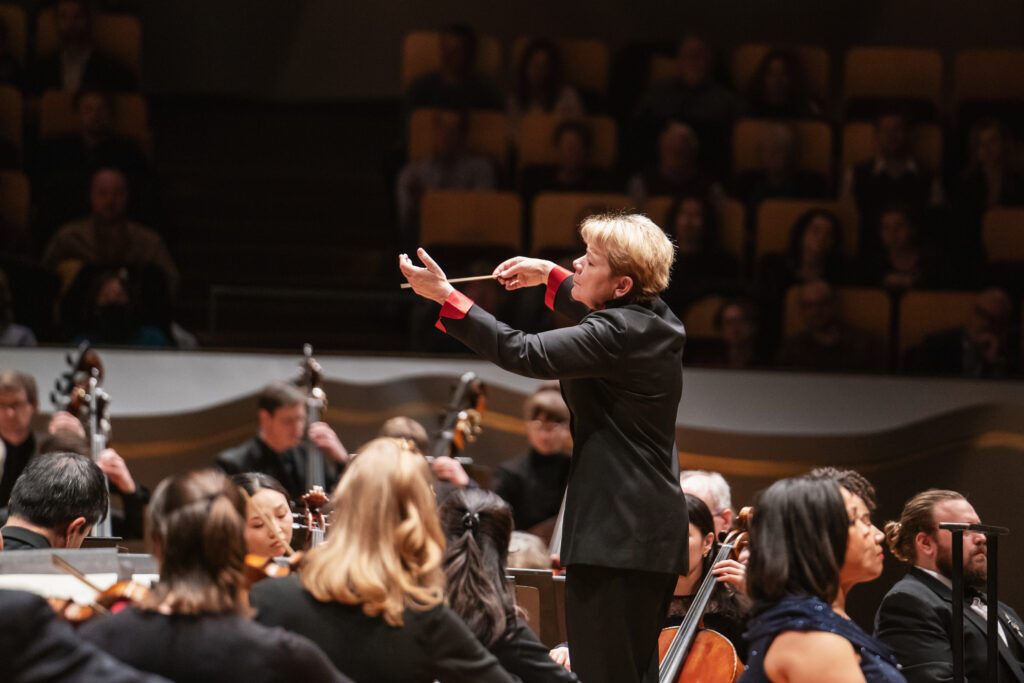
But way back when her career was just getting started, Alsop quietly began a relationship with our orchestra in the Mile High City. All these years later, she hasn’t forgotten.
“Denver remains one of my landmarks,” she says simply. “It was a big part of my life. My time here was important on so many levels.”
Alsop spoke from her home in Baltimore. She made headlines there in the early 2000s, named to direct the Baltimore Symphony — the first woman to direct a major American orchestra.
But she preferred to chat about her upcoming Denver gigs. This weekend, Alsop will once again step on the Boettcher Hall podium to lead the Colorado Symphony in three concerts — something she’s managed almost every other year for quite a while.
“I make time to return to the orchestra because it’s what I want to do,” she said.
Alsop spoke with fondness about this relationship, which began with a few guest appearances in the early ’90s. In 1993, she was appointed principal conductor, quickly followed by her elevation to music director — a title that remained through the 2005 season. Then, it was off to Baltimore.
There’s more than nostalgia as she reflected on her time here.
“I learned a lot about guiding an orchestra organizationally. In those days, the orchestra was emerging from the ashes, and I learned how to handle things whenever crises might hit.”
Back in the late ’80s, mountains of debt forced the old Denver Symphony to declare bankruptcy and dissolve, leading the brave orchestra players to create and manage the Colorado Symphony. It was a struggle to survive — but they did it. With time and the arrival of Alsop, audiences came back.
More than merely staying afloat, the revived orchestra and its talented music director brought energy and adventurous programming.
“I got to try incredible amounts of repertoire,” she said. “We did exciting projects, like a Festival of American Music, where we brought (famed composers) John Corigliano, John Adams and Chris Rouse. It was pretty cool.”
Naturally, she programmed the popular warhorses — and those concerts proved important for her growth. After all, you can only learn so much studying at Juilliard.
“That was a formative time in my career,” she said. “We did surveys of the (four) Brahms Symphonies, the four Schumann Symphonies.”
The ’90s were critical to finding her groove with the baton. In the ’80s, she’d built several ensembles in New York, such as a female jazz group named String Fever, but it was her years in Colorado that brought maturation.
“The ages 40 to 60 are an important time for a conductor (she’s now 69). You know your instrument (i.e., the orchestra). And by then, you know your style.”
While Denver’s reborn orchestra was finding its audience in the ’90s, its young music director was finding her “style” on the podium.
“I was so excited to work with such an excellent instrument,” she said. “As we rehearsed and performed concerts, I could watch a piece grow. You have to do a piece three times in a weekend to try and get it right.”
Today, Alsop is proud to carry the title conductor laureate, presented soon after her retirement (it’s an honor she also holds in Baltimore).
“That title serves as an attachment to a city and an orchestra,” Alsop said. “It signals an ongoing relationship.”
Programming has proved one of her many pleasures. For years each holiday season here, she presided over performances of a gospel-flavored setting of Handel’s Messiah titled “Too Hot to Handel.” Some of her recent orchestral visits have carried inventive themes. That’s true of her concerts this weekend, in which women are saluted.
Last month’s observances of International Women’s Month have passed — but not in Boettcher Hall. Alsop’s program will open with Antrópolis, a musical tour of Mexico City’s lively nightclubs and dance halls by Mexican composer Gabriela Ortiz (b. 1964). That will be followed by Venezuelan-born Gabriela Montero’s “Latin” Piano Concerto with the composer as soloist. After intermission, a third woman is the star, in Rimsky-Korsakov’s beloved Scheherazade, the colorful tale of a clever sultana who outsmarts her sultan with a series of tantalizing stories.
This agenda hints at some possible words from Alsop, well-known for her commentaries.
“Sometimes it’s good to break down the fourth wall — or whatever wall it is,” she said. “I think it’s important to make this music accessible.”
Though on occasion, words can backfire. She chuckled, recalling an evening with her jazz group, String Fever. “I was giving this longish introduction in a small club, when someone in the audience shouted, ‘Shut up and play your music!’ ”
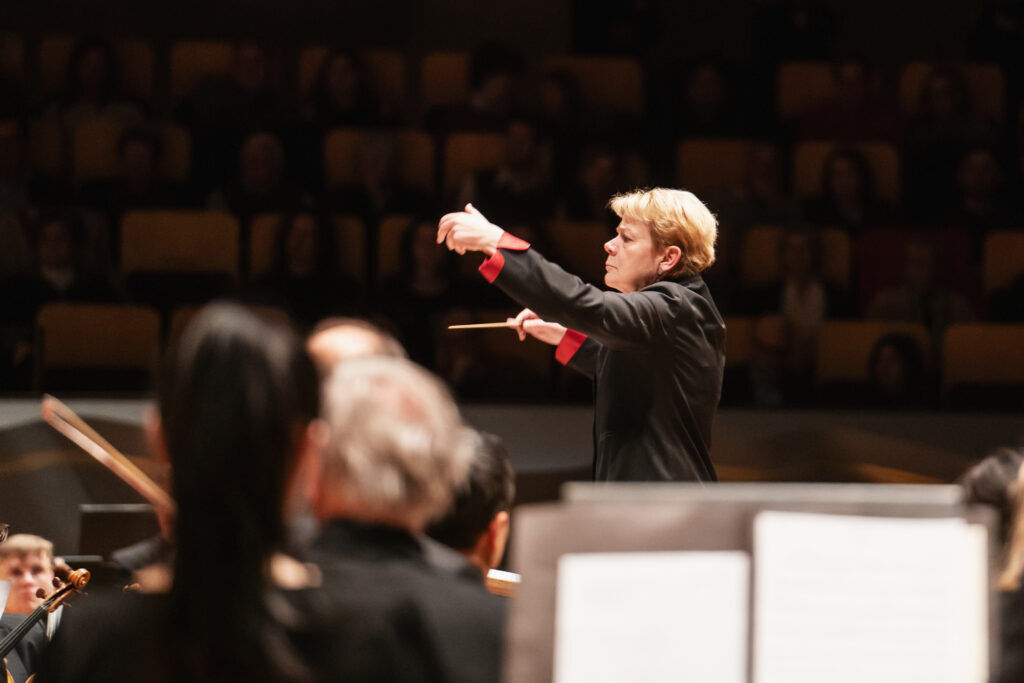
Colorado Symphony audiences seem to enjoy Alsop’s often witty little talks. I reminded her of one at the start of a sold-out evening with superstar cellist Yo-Yo Ma appearing after intermission. For the first half, the conductor selected music by Arnold Schoenberg, a thorny composer hardly beloved by most in attendance.
“We’ll open the program with a work by Schoenberg,” she announced. Murmurs of discontent rippled through the hall. Alsop continued sternly, “Don’t try to leave, we’ve locked all the doors.”
Everyone laughed. Nervously. Well of course she was kidding.
Wasn’t she?