







EDITORIAL: Innovation paves way for Colorado data centers
As lawmakers consider legislation regulating data centers, it seems advancing technology is changing the terms of the debate — and perhaps rendering some key concerns moot.
If contrarian politicos have their way, Colorado risks leaving itself behind in building out AI and quantum computing — which heavily depends on scaling data centers to meet demand.
Economist Stephen Moore recently observed that large data centers “pay their way,” pointing to “jobs, growth, and massive property tax revenue” generated by the world’s largest data center cluster in Loudoun County, Va. — which features Amazon, Microsoft and Google.
Until recently, one of the main concerns about the proliferating data centers in the arid West has been water use. Coloradans this spring are facing drought conditions and water restrictions after a winter that almost wasn’t and a low snowpack.
Traditionally, data centers have consumed substantial amounts of water to keep systems cool.
But that’s changing, says Polis administration energy czar Will Toor. Toor, who heads the Colorado Energy Office, told The Gazette in a recent report that data centers only use roughly 0.1% of the state’s water consumption. Technological change is easing water worries.
The Gazette reports that “many companies, including Microsoft, are moving toward “zero-water” cooling techniques that use closed-loop systems and engineered fluids, reducing reliance on local resources.
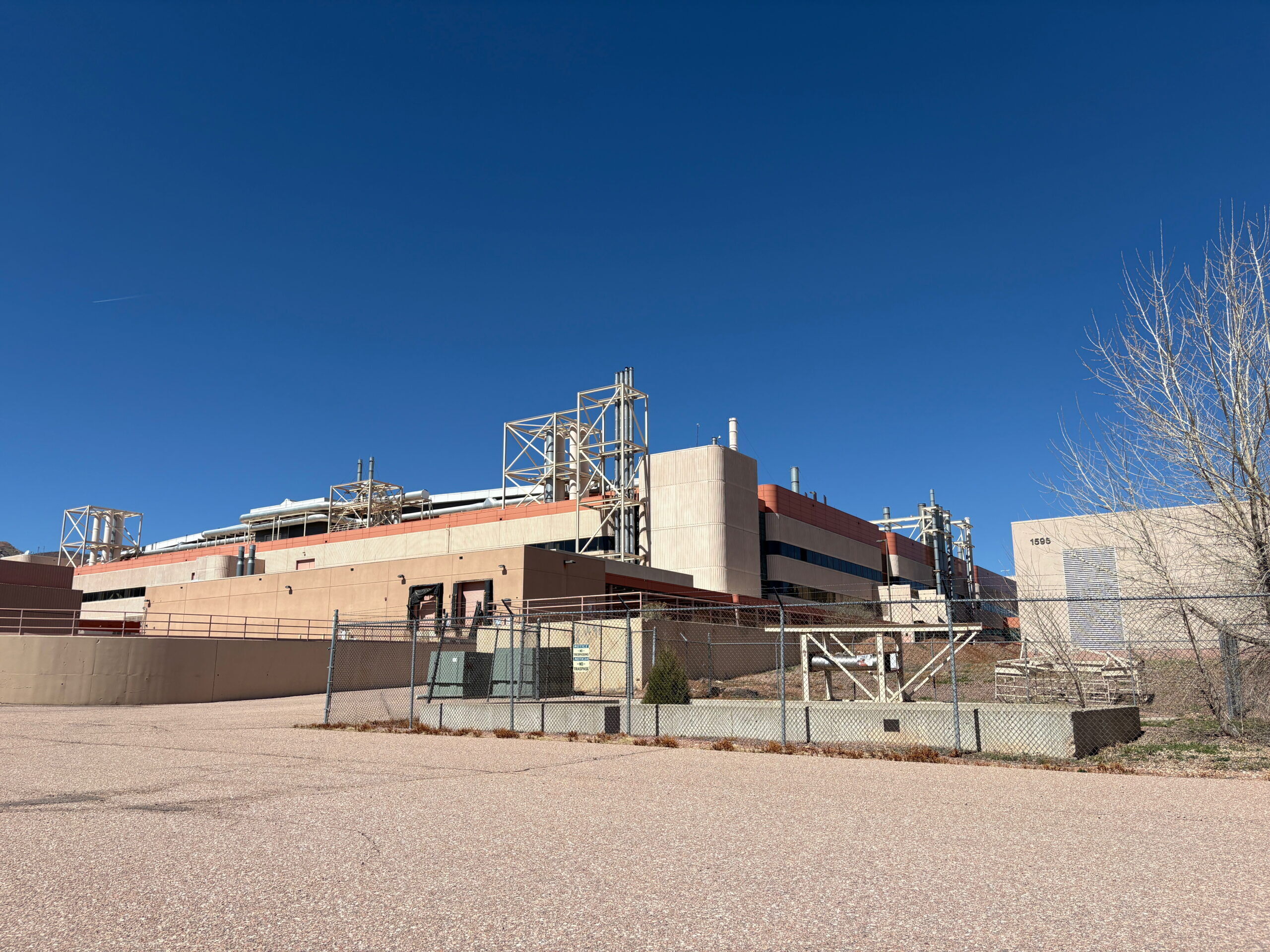
As The Gazette also reported the other day, the California-based company Raeden has been working with Colorado Springs for over a year to build a data center using just such water-wise cooling at a former Intel plant in the city.
Raeden officials say the installation will use a “minimal” amount of water by utilizing the project’s cutting-edge “air-cooled closed-loop system.” The 50-megawatt facility also will draw half the power it once did as a chip plant.
“What that means is we don’t need water,” Raeden founder Jason Green said. “So this system is not using any of your water.”
Perhaps he’ll inform Denver City Hall, where leaders back a moratorium on new data center construction — citing water use as an issue even as technology is solving it.
Toor noted that water isn’t “a really big issue or constraint on data center development in a way that I think getting the energy policy right is,” adding that data centers could use 20% of the state’s electricity over time.
That’s a significant figure — one that underscores where the real challenge lies: Colorado’s self-defeating energy policy.
At its core is the Polis administration’s obsession with going all-renewable on the state’s energy portfolio by 2050. That’s a nonstarter for meeting the state’s growing need for power generation — with or without data centers.
U.S. Energy Secretary Chris Wright, who champions an all-of-the-above energy plan, recently told The Gazette the AI race will “be dominated by natural gas and nuclear.” Wind, solar, hydropower and clean coal are also part of the necessary mix. Diversity of energy sources is the key.
But Polis, regulators and the legislature’s ruling Democrats have erected massive barriers — pursuing reckless and costly targets for renewables that won’t move the needle on climate change, and creating what Wright calls “a train wreck energy policy.”
Colorado needs to build out generation capacity and transmission capability — relying on an all-of-the-above energy portfolio that creates jobs, improves livelihoods and powers homes, businesses and, yes, data centers.
Amid rapid technological change, Colorado must get ahead of the energy curve to stay competitive.