







Aurora tracks leftward as new councilmembers take the reins
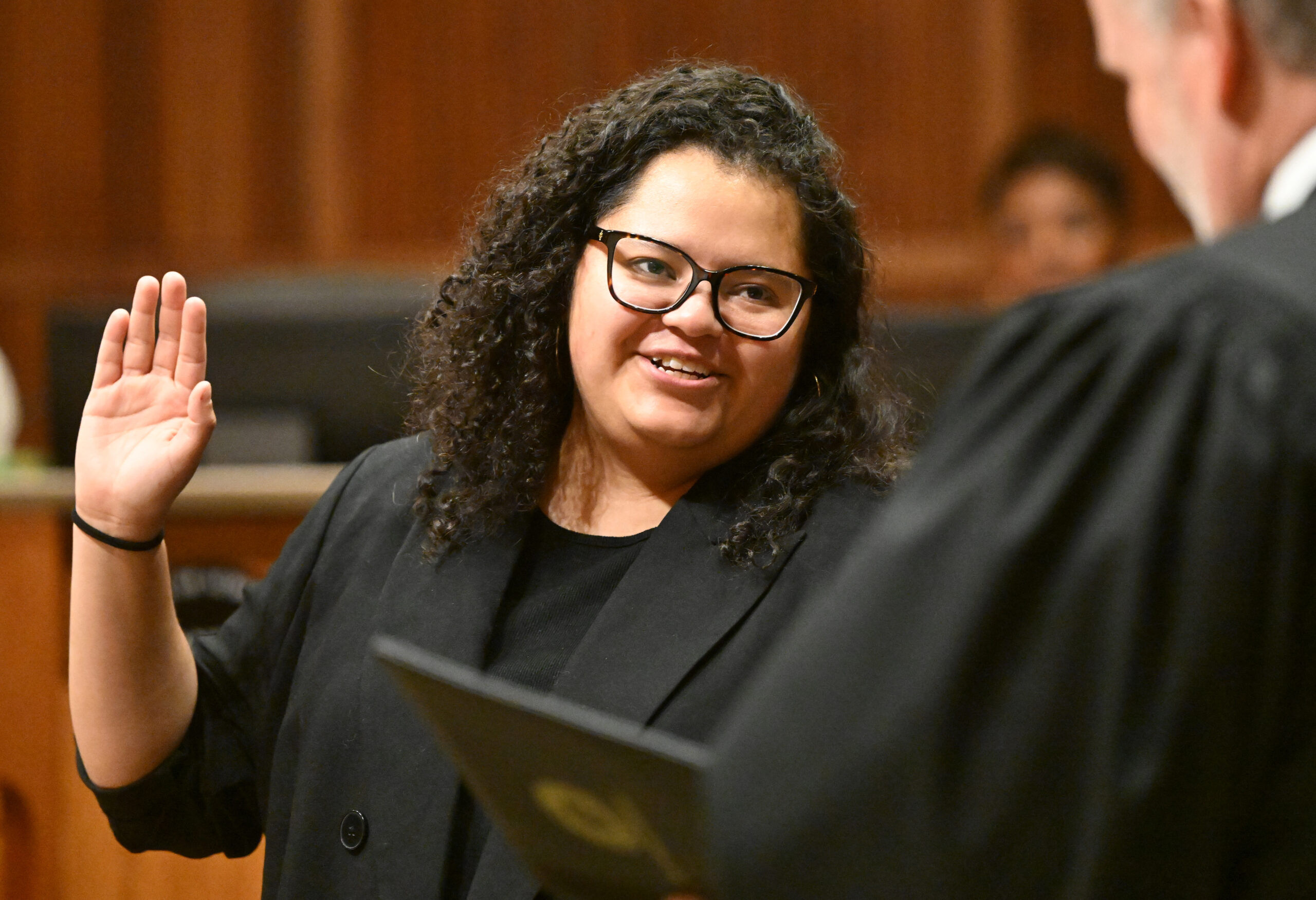
Soon after Aurora’s progressive members were seated on the council, the city — home to a major immigration processing facility in Colorado — declared its opposition to U.S. Immigrations and Customs Enforcement “overreach.”
The move, along with other early decisions, marked the beginning of a progressive shift in Aurora’s leadership, which has begun to push a series of changes that showed how the new majority is flexing its muscle.
In November’s election, Aurora voters had picked progressive candidates over their conservative counterparts, who included several incumbent policymakers.
Conservative Councilmembers Danielle Jurinsky, Steve Sundberg and Amsalu Kassaw lost their races to progressive candidates Rob Andrews, Amy Wiles and Alli Jackson.
Voters chose Gianina Horton to replace outgoing Councilmember Crystal Murillo, who did not run for reelection. Both are progressive policymakers.
Progressive incumbent Ruben Medina was reelected over conservative former Councilmember Marsha Berzins.
In the 100 days since the election, the council’s ideological shift has become palpable, with Jackson, Andrews, Wiles and Horton pushing policies and seeing early successes.
In assessing the shift, their allies emphasized a familiar currency in progressive circles, using language that often characterize identity politics. Danielle Young-Kombo, a progressive advocate, said the new council’s greatest strength is in representation, with new members almost all being people of color with diversity in “lived experience” that reflects that of the people of Aurora.
They understand their constituents, guiding them to make decisions that are best for the city’s residents, Young-Kombo said.
Meanwhile, Jurinsky, the former councilmember, said she worries the city is already undoing decisions made by the previous council that bolstered public safety.
“As the pendulum swings, maybe they need to move forward with their socialist policies to bring Aurora back once again, and I believe Aurora can be brought back again,” Jurinsky said. “As soon as the people of Aurora see homeless people back on every street corner, we’ll see what the voters decide next time around.”
Opposition to ICE ‘overreach’
Soon after the Aurora election, the council passed a resolution condemning “overreach by ICE agents” in a 6-4 vote, with the four remaining conservative councilmembers voting “no.”
Wiles said her “yes” vote on the resolution was a result of the many emails she got from her Ward II constituents.
“It’s something (the previous council) never would have passed, but it was important and timely,” she said. “In weighing my decision, I went by the number of emails I got from people in my ward. Most of them have continued to ask what else the council can do.”
Aurora officials are looking to other cities and the state to determine any further action with regards to ICE, Wiles said.
Jurinsky called the resolution “nothing more than a political stunt,” agreeing it would not have passed under the previous council.
“It was theatrics,” Jurinsky said. “The more cooperation we have with our federal partners in getting criminals off the streets, the better. The ICE facility in Aurora is not going anywhere, it’s been there for decades.”
The resolution came on the heels of stepped-up immigration enforcement in other parts of the country, notably in Minnesota, where a federal agent shot and killed a woman originally from Colorado Springs.
Details of the shooting were disputed. Homeland Security officials described the shooting as self-defense, alleging the woman’s vehicle was blocking agents and that she attempted to run over officers. Minneapolis officials countered that the officer “recklessly” used force, that video evidence showed an “escalation by the officers” and that the woman was trying to evade, not attack.
While some 600-plus miles away from the U.S.-Mexico border, Aurora stood at the center of the national debate over illegal immigration during the last presidential campaign following reports that the Venezuelan gang Tren de Aragua operated out of three apartment complexes in the city.
Colorado, in fact, is in the eye of the illegal immigration storm. In a two-year timeframe, the state, which has long embraced “sanctuary laws,” saw an influx of some 40,000 people who arrived metro Denver after illegally crossing the southern border.
Back in 2024, Aurora passed a resolution affirming its “non-sanctuary” status.

Homelessness
In the last several years, Aurora had struck a starkly different approach to homelessness compared to Denver. While the former has embraced a “housing first” mentality, Aurora, under its previous council, adopted a “tough love” approach.
Both jurisdictions, for example, have pursued campaigns to provide shelter to homeless people. But while sharing similar goals, Aurora enacted a camping ban, started a court system to address low-level offenses by homeless people and pursued a “navigation center.”
Notably, the navigation center, as envisioned, offers different tiers of shelter to homeless people, depending on their level of commitment to eventually gaining independent living. People, for example, can move up to the highest tier when they are employed or have taken the next big step but may still need case work and services and aren’t yet ready to move out of the center.
The previous council saw those elements as interrelated pieces, part of a comprehensive strategy in tackling homelessness.
Whether the new council will keep the approach or ultimately adopt Denver’s strategy remains to be seen.
One of those strategies is to get rid of requirements to provide shelter options and a 72-hour notice before sweeps.
In February, Andrews, the new councilmember, proposed a resolution that brings back the 72-hour notice before homeless encampment sweeps. The resolution passed in a mid-March council meeting with four ‘no’ votes from councilmembers Bergan, Gardner, Hancock and Lawson.
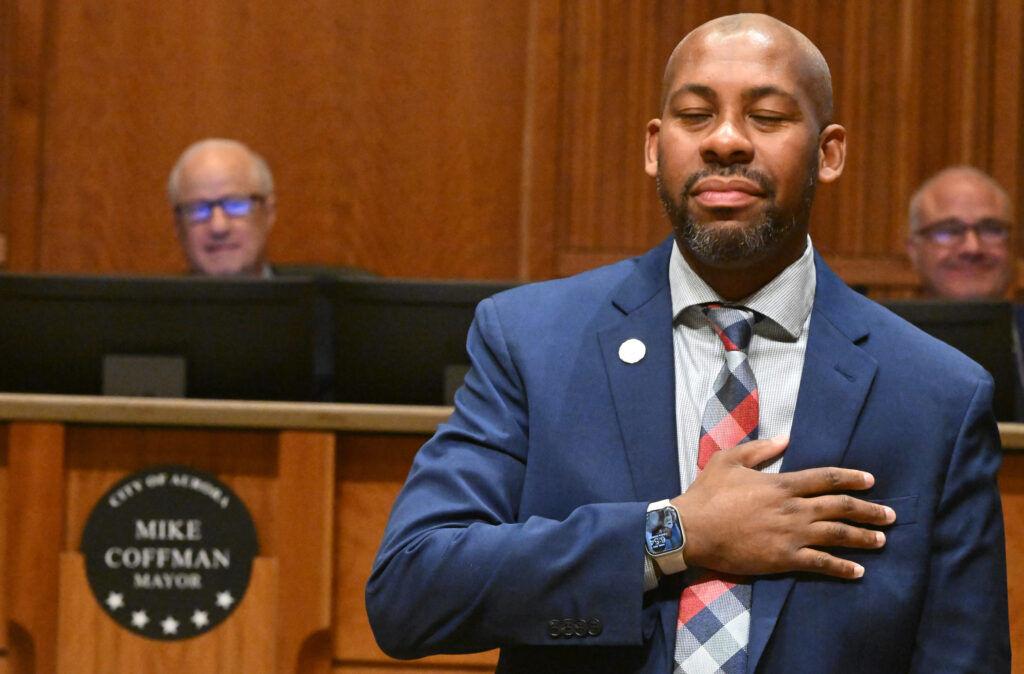
The previous council’s decision followed a U.S. Supreme Court ruling that the Eighth Amendment’s cruel and unusual punishment clause does not prohibit the enforcement of a rule prohibiting camping on public property, according to the language of the ordinance.
Young-Kombo said the resolution’s passing is a testament to the council’s understanding of working class and lower income communities.
Jurinsky disagreed, saying it will just make homelessness worse in Aurora.
Everybody agreed the move would not have happened under the previous council.
Settling a lawsuit
In the wake of public comment disputes involving the City Council and activists, protest leader MiDian Holmes filed a lawsuit in June, alleging the council’s decisions violated their First Amendment rights.
In early March, Aurora officials and Holmes announced a settlement, with Aurora officials agreeing that the council will continue to hold in-person meetings with the newly adopted public comment rules.
The settlement came after the new council voted to repeal the public comment restrictions that resulted in the lawsuit to begin with.
“The reality is had we continued the lawsuit, there was a potential for us to lose more money, and this (settlement) was far smarter in terms of what’s best for the city,” said Wiles, the councilmember. “Our community members deserve to speak and it prevented us from having to pay out more money. We don’t want our lawyers spending time working against the community.”
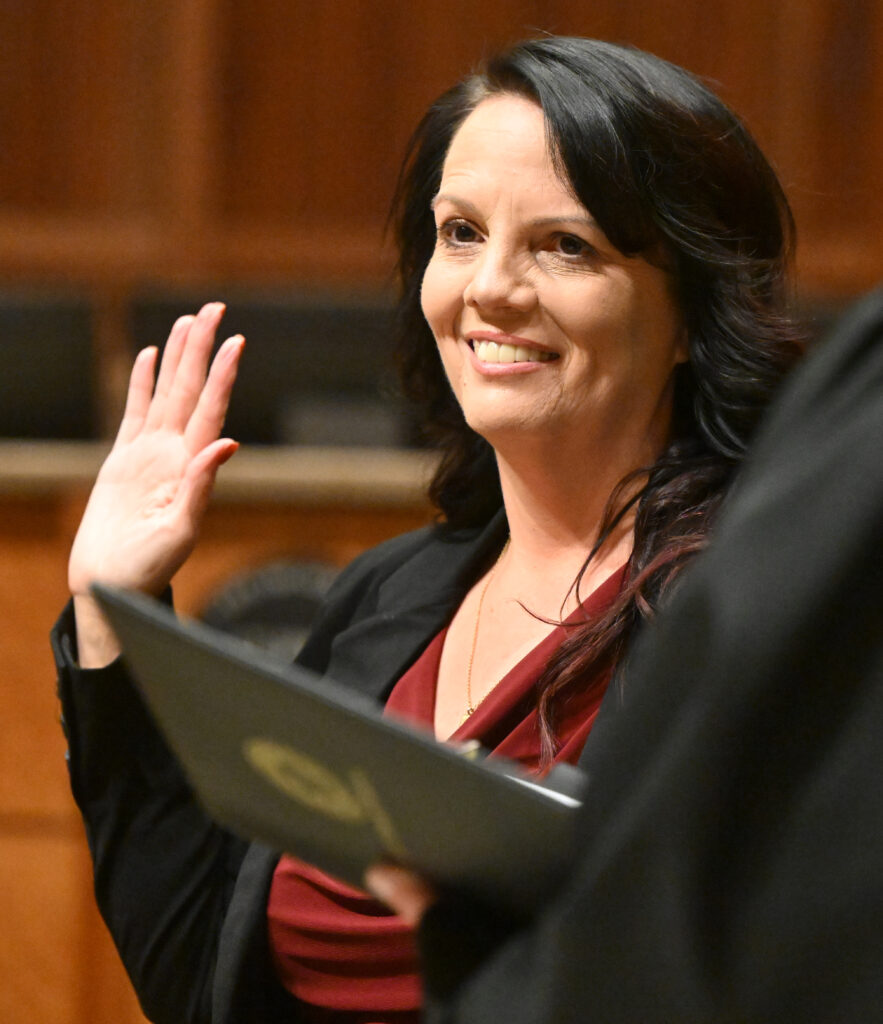
Coffman, the mayor, called the settlement “unfortunate” in a city council meeting in early March.
“Prior to starting the public comment period, I’d like to state to the members of our audience, both here and watching at home, that I don’t approve of the sometimes rude and offensive behavior of some of the individuals who will be speaking this evening,” Coffman said, pointing to the Holmes lawsuit. “The courts unfortunately have been sympathetic in awarding them damages at taxpayers’ expense. As I exercise my own First Amendment rights, please know that I personally find their speech as offensive as you do.”
The new councilmembers
Three months in, the new councilmembers have been busy.
Horton and Wiles are pushing to create a police oversight committee for the Aurora Police Department. Funding and approval is already in place for the office, and Horton and Wiles have conducted community meetings over the past several months to gauge what Aurora residents want to see from such an office.
Andrews brought forward the 72-hour notice for homeless camp abatements.
Councilmember Alli Jackson is serving as the City Council appointee on the Downtown Development Authority Board that is seeking to revitalize Colfax Avenue.
“I do want to applaud the councilmembers who’ve been there for a while, like Curtis Gardner who knows a lot about issues and really makes us sit and think about them,” Andrews said. “Longtime councilmembers like (Francoise) Bergan, (Angela) Lawson and (Alison) Coombs have been able to give us their expertise. It’s going to be tough at times, but we’re willing to work together to improve the city.”