







Missing Mark di Suvero sculpture and six others find new home on DU campus
Denver Art Museum transferred seven outdoor sculptures to the University of Denver
Colleen Smith
Special to The Denver Gazette
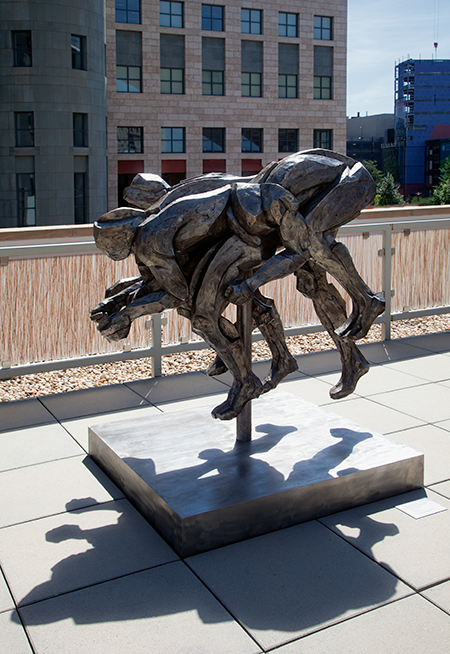
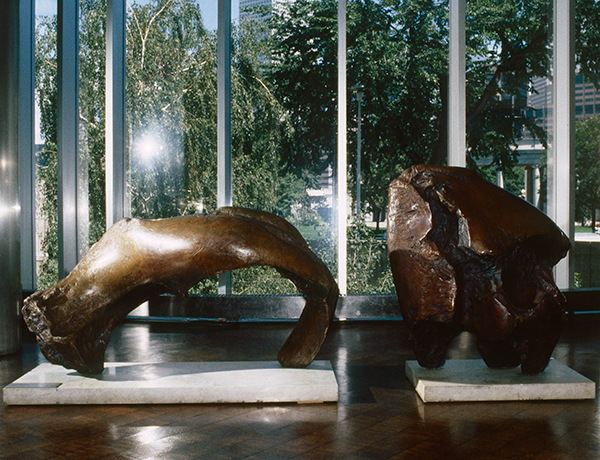
In a monumental move, the Denver Art Museum will transfer seven large-scale sculptures held in storage to the open air of the University of Denver campus.
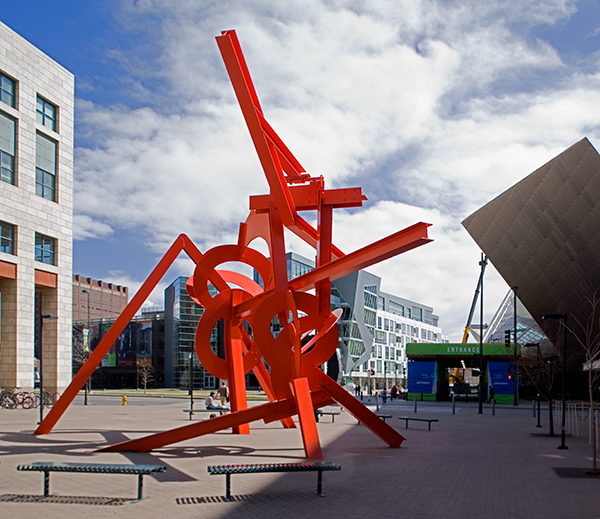
The sculptures include the popular and long-absent Mark di Suvero steel sculpture titled “Lao Tzu,” formerly installed downtown in the plaza between the DAM and Denver Public Library’s Central Branch.

“Lao Tzu” was removed in November of 2017 when construction began on the DAM’s new visitor center and has been mothballed since.
“It’s very exciting to see sculptures come out of storage,” said Rory Padeken, DAM’s curator of modern and contemporary art. “All are outdoor works of art. Some have previously been on view at Denver Art Museum when they first arrived in the ‘70s to early ‘90s. Some have never been on view, due in large part to the museum having very little space for presentation and installation of outdoor sculptures. The only possibility was to keep these pieces in storage, but we’ve had a desire for a long time to find an appropriate place for these works of art to be enjoyed once more or for the very first time.”
On its campus, the DAM exhibits eight outdoor sculptures from its permanent collection and two from the Denver Public Art collection. Padeken said the DAM team investigated numerous sites for the sculptures in storage, yet adhered to a primary objective of keeping the artworks within the city of Denver.
Sculptures will enhance campus, community
“In DU we found a perfect partner. The university has an art collection, and my colleagues there are highly knowledgeable. DU has outdoor sculpture on campus currently, so they have experience with maintenance and concerns about works of art outdoors,” Padeken said.
“The campus is the perfect context for the students and faculty and visitors to campus to enjoy artworks,” he added. “DU is situated in a neighborhood and the campus is open. People use the space for pleasure, exercise, walking dogs. It has the embrace of the public sphere, as well, so these artworks are not in some hermetic environment, but open to the outside world.”
DU Chancellor Jeremy Haefner said, “We are excited to expand access to art that both the DU and Denver communities will be able to enjoy. The University of Denver and the Denver Art Museum share a longstanding vision and commitment towards access to culture and education.”
Installation to wrap up in Summer 2027
The sculptures will be installed according to a design by DU.
“My DU colleagues devised a plan for the installation of these seven works forming a central spine from north to south,” Padeken said, “It’s a beautiful way to present the works.”
The installation plan will begin this summer with work to continue through summer 2027.
“The ground itself must be prepared to support and secure the weight of sculptures, up to 33,000 pounds for ‘Lao Tzu.’ Concrete pads will be poured and reinforced. DU has some grounds maintenance, as well, with underground sprinkler systems,” said Padeken. “We’re dealing with real space and with the elements.”
Mark Di Suvero, a living legend in the sculpture field
Tentatively, the most notable of the sculptures, “Lao Tzu” will enjoy pride of place.
“Mark Di Suvero is still alive, with us, and he is one of the most significant sculptors of our time. His career spans over six decades. Di Suvero drew influence from the abstract expressionist painters, including Clyfford Still. Folks in Denver know Still well, and Di Suvero was taken with Still’s irregular form,” Padeken said.
“Di Suvero thinks of drawing in space, making connections, painterly gestures,” said Padeken. “He was influenced by (Alexander) Calder, and some of Di Suvero’s sculptures have kinetic elements. This one does not, which is not to say it’s a lesser form.”
Padeken pointed out the characteristics of “Lao Tzu” consistent with Di Suvero’s practice from the late ‘80s and early ‘90s: “The central I-beam connects two parts that form a triangular base and help to stabilize the sculpture,” he said.
“We think about the material uses of steel in the building of architecture, and it’s the very same steel beams providing a skeletal network for skyscrapers. Here, it’s used in terms of art, a drawing in space,” Padeken added. “With ‘Lao Tzu,’ in particular, the curving forms appear to encircle either side. We see negative space that forms shapes and provides an element viewers can engage with. As they move about the sculpture, views change. The cutouts form new shapes. Even though ‘Lao Tzu’ is very stable — it’s welded and bolted — it is always constantly interactive.”
The new site will allow the sculptures to be viewed year-round in the round.
“Sculpture should always be seen in the round. At its very essence, this sculpture is truly a medium associated with the body in a Modernist tradition,” Padeken said. “It very much requires the viewer’s own body.”
Di Suvero’s body of work includes numerous large-scale sculptures. “Lao Tzu” stands nearly 30 feet high, 17 feet wide and 37 feet deep.
“For those who are familiar and had experienced it when sited on 13th Street outside what we now call the Martin Building, ‘Lao Tzu’ was presented on concrete pavers. Now, in its resurrection, the sculpture will be on a wide, expansive, grassy lawn — the most prominent location. This will be a new kind of experience of this architectural construction emerging from the ground,” Padeken said.
About the artist
The steel painted brilliant red-orange is characteristic of Di Suvero, Padeken said, noting his personal wonder whether the color and material of the Golden Gate Bridge may have influenced the artist as a 7-year-old boy arriving in California.
“Di Suvero was born in Shanghai to Italian parents who immigrated to the United States and probably passed through the Golden Gate Bridge,” Padeken mused. “I’ve never found anything to verify that, but it’s a lovely thought.”
For more about the artist, see the sidebar from the DAM website.
Regardless of influence, the hot orange color will complement and contrast with Colorado’s vivid blue skies and the verdant green of campus turf grass.
“On the grass, the contrast of the materials — the steel’s hardness and the soft grass — will be another high contrast,” Padeken said.
A DAM employee and donor
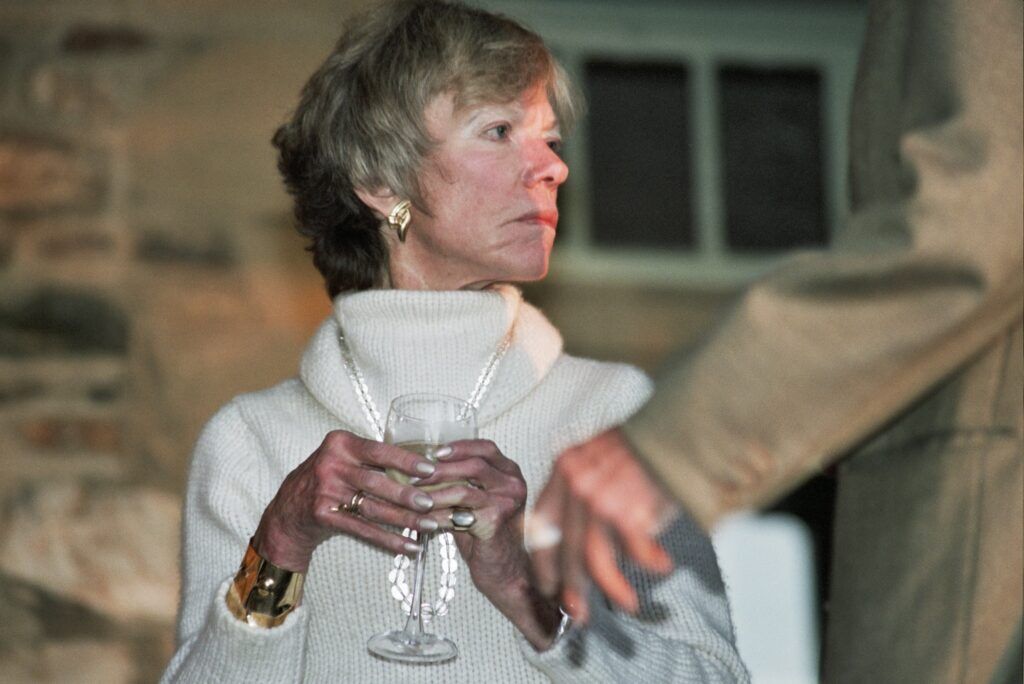
“Lao Tzu” was originally installed in Socrates Park in Queens, N.Y., in 1986. The sculpture came into the DAM’s permanent collection in 1991, thanks, in part, to funds from the NBT Foundation. “NBT” stands for Nancy Babson Tieken, a longtime DAM staffer and patron of the arts.
Taylor Kirkpatrick, who serves on both boards of the DAM and DU, happens to be NBT’s nephew. Kirkpatrick, president and CEO of Babson Farms, Inc., recalled his sadness when the sculpture was removed and placed in storage.
“Lao-Tzu” is a tour de force, and many residents and visitors identify it with Denver, and vice versa. When it stood in front of the Denver Art Museum, it became a kind of center of gravity for the entire cultural district. The scale and presence of the piece seemed to anchor the space between the museums, the library, and the surrounding civic buildings,” said Kirkpatrick. “I remember feeling a sense of loss when it was removed during construction, and that is why it is so gratifying to know the sculpture will have a new home where the public can once again encounter it, reflect on it, and be inspired by it.”
The DAM and DU’s collaboration may spawn more
Kirkpatrick is one of three individuals — together with Trygve “Tryg” Myhren and Craig Harrison — currently sitting on both boards of the DAM and DU.
“It has been an extraordinary privilege for me,” Kirkpatrick said. “The collaboration has been strengthened tremendously by the relationship between DU Chancellor Jeremy Haefner and DAM Director Christoph Heinrich. Their shared vision has helped deepen the connection between the university and the museum and is building community in ways that benefit students, scholars, artists and the greater Denver. I think you will see more collaborations between these two organizations in the future!”
For Kirkpatrick, also an avid book collector who has served as a Denver Public Library officer, the transfer of the sculptures represents more than meets the eye.
“For me personally, it is deeply gratifying to help foster that bridge between education and the arts, two worlds that enrich one another in profound ways, and areas that are both passions of mine,” he said.
Aside from DU’s status as his alma mater, Kirkpatrick sees the campus as the ideal location for “Lao Tzu” and the other outdoor sculptures.
“The University of Denver campus offers a remarkable setting for a work of this scale and significance. The campus has beautiful open green spaces that allow a monumental sculpture like ‘Lao Tzu’ to breathe; to be experienced from different angles and distances as people move through the landscape,” Kirkpatrick said.
Sculptures will support a multidisciplinary curriculum, too
“But just as important is the community that surrounds it. DU is home to students who are not only studying art, but also exploring the broader ecosystem: art history, conservation, curation, and even the business of art. Placing the sculptures there creates a daily opportunity for inspiration,” he said. “It becomes more than a public artwork; it becomes a teaching moment. Students, faculty, and visitors alike will encounter it, reflect on it, and perhaps see the world a little differently because of it. In that way, the sculpture will serve both the university and the wider community.”
An artful aunt’s influence on a nephew now in leadership roles
Kirkpatrick credited his family’s influence on his personal appreciation of arts and culture.
“Some of my earliest memories of my Aunt Nancy are inseparable from art. Her living spaces were never simply decorated; they were alive. Every wall, every corner seemed to hold something remarkable: paintings, sculptures, objects from artists she knew personally and deeply admired,” Kirkpatrick said.
“But what made it truly magical was that every piece came with a story. Nancy was a storyteller of art,” he added. “Whether we were walking through a museum gallery or standing in her living room, she would lean in and share some small but fascinating detail: the artist’s inspiration, the circumstances of its creation, or a moment she had shared with (the artist). Those little insights transformed the work. Suddenly, the art wasn’t just something to look at; it was something to experience, something connected to real people and real moments. Being with her made art feel personal and alive.”
Kirkpatrick’s aunt left an indelible impression upon not only his aesthetic, but also his enthusiasm.
‘Collect what you love‘
“My aunt influenced my approach to collecting far more as a mentor than as someone shaping my taste. She never tried to tell me what I should like. Instead, she gave me the most liberating advice a collector can receive: Collect what you love,” he said.
“I remember more than a few occasions when I was considering a significant purchase and would call her, hoping she might help me decide,” Kirkpatrick said. “Her answer was almost always the same. She would gently laugh and say, ‘The biggest regret you’ll have is that you didn’t buy it’.”
A career in art, a collector of art
Tieken (Nov. 9, 1940, to Dec. 18, 2013) was born in Chicago. She earned her MFA at Radcliffe/Harvard and joined the staff of the DAM in 1991. She held various positions at the DAM, including associate curator in the modern and contemporary department. In her 23 years on staff, she contributed to the acquisition of important works of the DAM’s collection, including a major installation by James Turrell, “Big Sweep” by Claus Oldenburg and “Quantum Cloud 33” by Antony Gormley.
As Creative Manager of Collection Publications, she shaped the publication of numerous books and guides.
Previously, Tieken worked at the Los Angeles County Museum, the Currier Museum in New Hampshire, The Peabody Essex Museum in Massachusetts, the Institute of Contemporary Art in Boston, the National Portrait Gallery in Washington DC and the Museum of Contemporary Art San Diego in California.
Kirkpatrick said, “Her collection leaned strongly toward modern and contemporary work, which reflected both her personal taste and her professional life working with and supporting living artists. Because she had such close relationships with many of them through museums and exhibitions, her collection often felt like a conversation with the artists themselves.”
Ancient artifacts and playful toys can coexist artfully
Kirkpatrick acknowledged another generation: his grandmother.
“In many ways, Nancy’s collecting philosophy echoed that of my grandmother (her mother), who believed art should simply bring joy. My grandmother collected what made her smile, regardless of category or value,” he said.
“I vividly remember visiting her apartment and seeing something priceless, an ancient archaeological artifact, displayed beside a pair of whimsical plastic wind-up sneakers,” Kirkpatrick added. “To her, both objects were delightful, and therefore both deserved a place of honor. Nancy carried that same spirit. Serious art and playful objects could coexist because what mattered most was the joy they brought.”
On the DU campus, the DAM’s seven sculptures are bound to bring joy to countless passersby.
DU seeks philanthropic support to fund the new campus art walk. For more information, or to make a gift, contact Jennifer Garner, executive director of development, The College of Arts, Humanities & Social Sciences, 303-871-7467, [email protected].