







Veo scooter, e-bike contract advances to Denver City Council
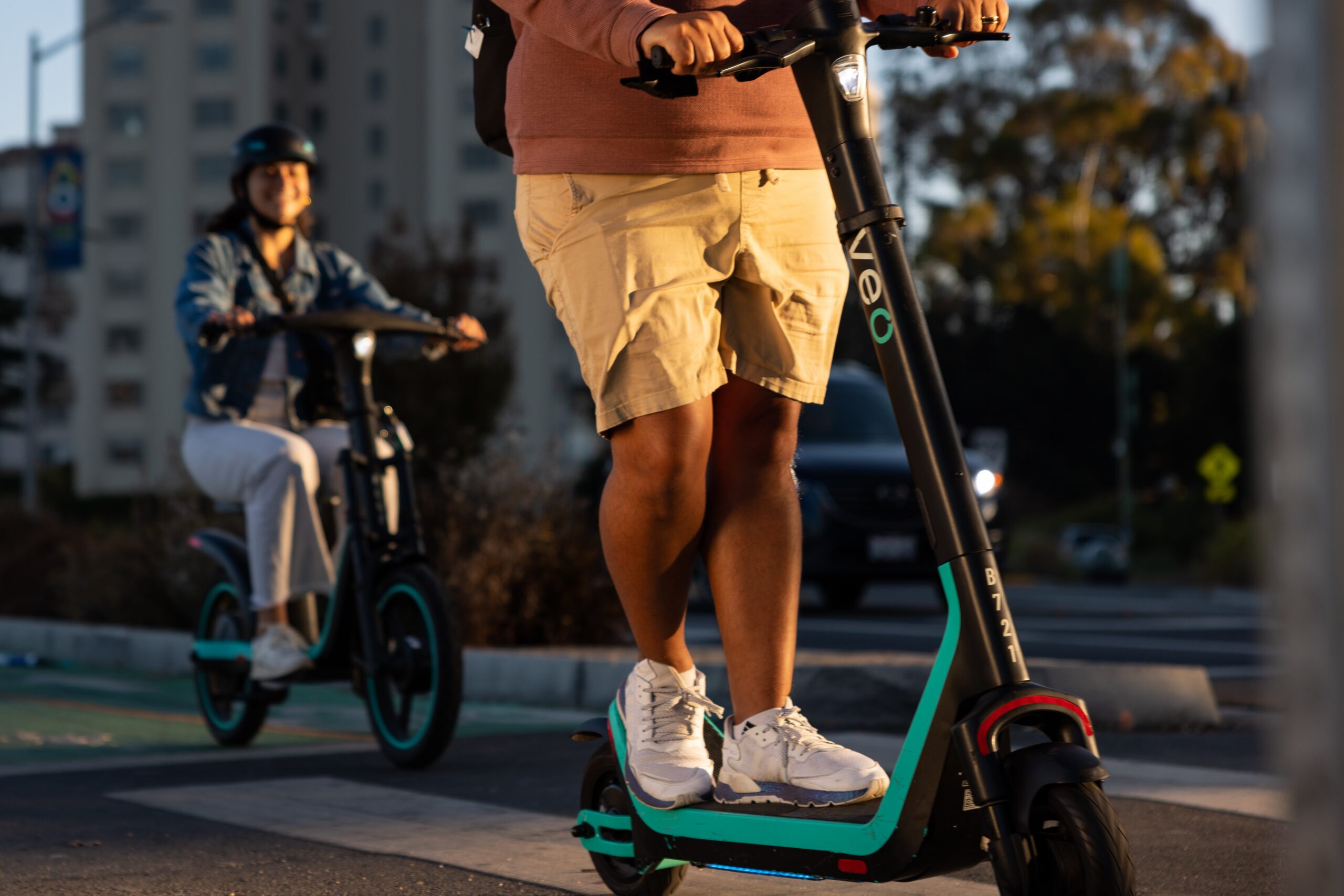
Looks like the third time’s the charm for a Santa Monica-based e-scooter and bike operator hoping for a three-year contract with the City and County of Denver.
After stalling twice before, the city’s Transportation and Infrastructure Committee voted unanimously Wednesday to forward a proposed contract with Veo Micromobility to the full City Council for consideration.
Denver’s Department of Transportation and Infrastructure selected Veo as the city’s next shared scooter and bike operator, with the transition anticipated to occur in the spring of 2026 when the city’s license agreements with existing contractors Bird and Lime expire.
Committee members first balked at advancing the agreement without the opportunity to adequately review the contract and the details of how Veo was scored and selected as the city’s new single provider of micromobility transportation.
When the proposed contract was presented, it was delayed again as the committee declined to advance it without further review and a “redlined” version of the agreement.
Top concerns among committee members included how Veo will address illegal sidewalk riding and scooter parking.
The Denver City Council passed legislation in 2025 requiring shared scooter vendors to include sidewalk-riding detection technology, a rider-compliance test, and special parking zones for scooters to keep the public rights-of-way clear and accessible.
“Part of what sets Veo apart is that they do the GPS technology detection, which is common, but they also do radar detection,” Alaina McWhorter, who oversees DOTI’s legislative affairs, said.
According to Veo officials, Veo vehicles will “talk” to riders, reminding them of local policies and ordinances.
“Everyone who starts a (Veo vehicle) trip in Denver is going to hear, ‘Welcome to Veo. Please do not ride on sidewalks’,” Veo Vice President Alex Keating told the committee.
Veo officials expect to have an initial Denver fleet capped at approximately 9,000 vehicles.
Of that fleet, approximately 70% would be seated vehicles with the remaining 30% consisting of standing scooters.
DOTI officials suggest the transition between Veo and the city’s current vendors, Lime and Bird, would be organized and scaled to prevent an unreasonable number of vehicles on the street without the infrastructure to support them.
Should the contract be approved, the rollout to Veo would happen around May 1, providing a two-week overlap with Lime and Bird to provide a transition period without losing service capability.
For some, the quick changeover from Lime and Bird is concerning and has prompted requests to the city for another 12- to 18-month extension.
Among those who depend on Denver’s shared bike and scooter program are low-income residents who rely on the city’s Free-Ride ‘Access’ program to get to and from work, appointments and school.
Under the new contract, Veo will offer 60-minute free rides for eligible users, along with instant access to minimize users from “slipping through the cracks” during the transition period, officials said.
These users would be expected to eventually follow up with the appropriate documentation, DOTI officials said.
As for scooters and e-bikes that are randomly abandoned and causing issues, DOTI said that under the new contract, such vehicles would be picked up within a two-hour window after being reported to Denver’s 311, the city’s non-emergency contact center.
Scooters that are legally parked would not be picked up unless it is deemed that they are not being ridden.
“If a vehicle is not being ridden, we’re not making any money,” Keating said. “So, our incentive is to take that vehicle back to a hub, back to a place where it’s going to generate a trip without disrupting the ability of the individual who wrote it to have another ride.”