







Reform Colorado’s anti-prostitution laws | Pius Kamau
When, in February, a number of Colorado legislators proposed the repeal of the law that deems prostitution in Colorado a crime, I gave a silent hooray. I hoped Senator Nick Hinrichsen’s SB 26–097 erasing prostitution as a state offense would find enough support. Lacking support, I watched the attempted repeal dissolve. It would have made Colorado the third American state to stop hounding women trying to earn a few dollars with their only asset.
Nevada’s and Maine’s laws differ in that, in Maine’s “Nordic model,” selling sex is legal while paying for it is illegal. It’s a more rational and better alternative to other anti-prostitution laws.
The “Nordic model” aims at fairness to victims of prostitution and sex trafficking, while making payment for sex a criminal offense. In Nordic countries, support services help women “to exit” their practice, thus reducing the demand that drives sex trafficking. It’s been adopted in Sweden, Norway, Iceland, Canada, France, Ireland, and Israel.
The failure to get enough votes to change the awful law on prostitution is disappointing. Many lawmakers represent a narrow sliver of a society that looks down at women who would trade their bodies to strangers so they can survive. In many cases child support is part of the mix. The most pernicious coercive practice of sex trafficking is best epitomized by the many underage girls who were trapped in the web of Jeffrey Epstein’s sex scandal.
I have high regard for poor women who battle their fear of the dark, who allow themselves to confront unpredictable strangers, many of them violent men, just to earn a few dollars. The eight women killed by Rex Heuermann, the Gilgo Beach serial killer, each risked her life in the dark. The majority of women who engage in these activities detest it; doing it because they are victims of abuse, extreme poverty and violence in their lives.
I have talked to many women who sell their bodies across continents, in different cultures to understand how they survive, how they live with themselves after the noises of their nights have passed. One thing is common among all of them: they have little self-esteem and are uniformly despised by society. Many are either killed by their johns, their pimps or they commit suicide – killing themselves by different means.
The women I interviewed were usually in hotel bars in Nairobi, Addis Ababa, Kampala and elsewhere, women who, though of different culture from American girls and women of the night, had the same existential angst. Their disembodied and forced laughter was marked by their unsmiling eyes; reflection of their incredible pain and sorrow. As I hand them some money for a meal and wish them well, they invariably have looked at me suspiciously, uncertain of my sanity. Every man owes women who lack means of survival a hand up.
I make my confession to illustrate my feeling that criminalizing prostitution is an odious thing that punishes that segment of society that is already marginalized, whose bodies are weighed down by hungry children, man’s weighty needs, and laws.
Western minds respond to the call of a Christianity that has for centuries considered sexual relationships outside of marriage a mortal sin. Prostitutes were considered the most despicable segment of society, that led to Jesus saying: “He that is without sin among you, let him first cast a stone at her.” In the Latin culture of Luis Bunuel’s movies, fathers took their sons to Madrid brothels to learn what it meant being a man. The implication was that virgin girls the boys would marry were pure.
Thankfully, that has now changed; virginity’s value has waned. Indeed our concern today is about the low birth rate in our society. Our laws must change; the support we offer women and children at the lower rungs of society need to be commensurate to a changing society. And alas, I have been disappointed that women’s groups - such as NOW - have not raised their voices in support of poor, dejected women and their children. I suppose that their voices, like those of our legislator class, are reserved for the clean, elegantly coiffured society ladies.
I’m sure many will criticize my opinion regarding women selling their bodies. You see, I refuse to judge these poor women who find it necessary to ply their bodies to survive. When a society withdraws childcare and healthcare support, it means that more women will find it necessary to use the one thing men hanker for: unencumbered sex.
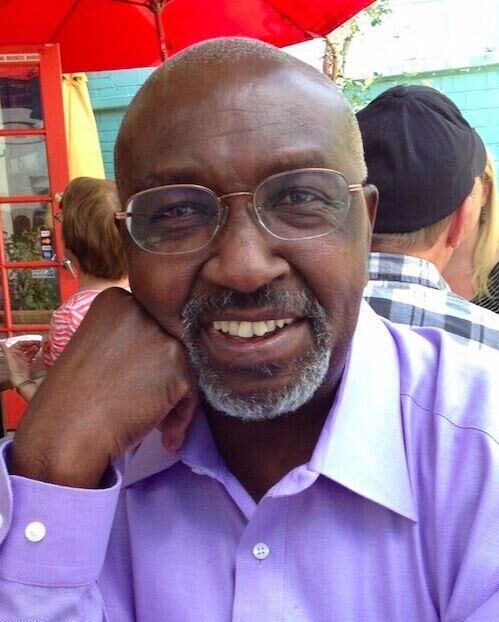
Pius Kamau, M.D., a retired general surgeon, is president of the Aurora-based Africa America Higher Education Partnerships; co-founder of the Africa Enterprise Group and an activist for minority students’ STEM education. He is a National Public Radio commentator, a Huffington Post blogger, a past columnist for Denver dailies and is featured on the podcast, “Never Again.”