







GUEST COLUMN: Denver must change course to draw business

Economic decline does not arrive all at once. It shows up gradually in the decisions companies make about where to invest, hire, and locate their headquarters. Denver has been losing ground in that competition.
Over the past decade, several high-profile companies with deep ties to Colorado have moved their headquarters elsewhere. Chipotle relocated to California. Molson Coors shifted to Chicago. Since 2019, nearly 100 businesses have either left Colorado or significantly reduced their presence. At the same time, Denver lags peer cities in its share of Fortune 500 companies.
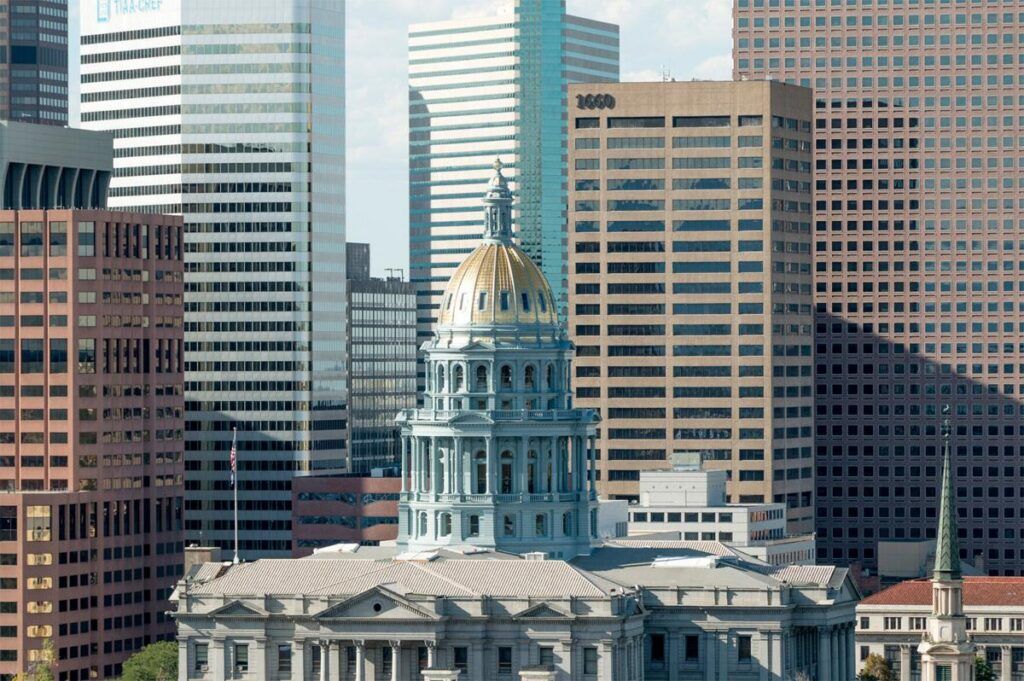
Downtown office vacancy rates have climbed above 30%, among the highest in the country. Colorado has also experienced net domestic outmigration in recent years, according to the U.S. Census Bureau. Fewer workers are choosing to move here and more are choosing to leave. That directly impacts the talent pool companies depend on.
These are not isolated events. They are signals.
Businesses choose cities based on cost, predictability, and execution. Denver is becoming weaker on all three.
Rising operating costs, including real estate, labor, and taxes, are compressing margins. Regulatory complexity and bureaucracy are increasing uncertainty and slowing down investment. At the same time, core services like public safety, infrastructure, and permitting have underperformed. Unpredictability is a tax, and right now, Denver is imposing more of it.
Headquarters decisions matter disproportionately to a city’s economic trajectory. They anchor high-wage jobs, stabilize the tax base, and generate downstream economic activity across industries. When companies leave, those benefits leave with them. Frankly, we need a population of large company headquarters to pay for a high-quality city.
If Denver wants to compete again, it must take a more deliberate, pro-business approach.
First, the city must improve how it executes its core functions. Every delayed permit, missed service standard, or infrastructure failure is a direct cost imposed on businesses and communities. Denver should implement clear performance metrics across core services and hold departments accountable to them. Service-level agreements, including guaranteed timelines for permitting and inspections, should be the standard. If the city misses its own deadlines, that is an operational and organizational failure that needs to be addressed. Businesses should experience a city that is fast, reliable, and accurate.
Second, Denver must make it materially easier to build and invest. Time is capital. When approvals take years and months instead of weeks, projects stall or move elsewhere. The city should streamline planning and development processes, eliminate redundant requirements, and simplify compliance. A faster system is not just more efficient, it is more competitive.
Third, Denver must become cost-competitive. That requires more than general fiscal discipline. It requires a deliberate strategy to reduce the cost of doing business. City leadership should audit all taxes, fees, and regulatory costs impacting employers and benchmark them against faster-growing competitors in Texas, Florida, and Arizona. Where Denver is uncompetitive, it should adjust. This also includes reducing taxes and fees by streamlining city government and investing in innovation to do more with less.
Finally, Denver should compete aggressively for major employers. Companies go where they are wanted and where they can operate efficiently. The city should establish a coordinated economic development strategy that includes direct executive outreach, targeted incentives tied to job creation, and a dedicated team focused on attracting and retaining headquarters and high-growth companies. Get aggressive. This is a competition for economic prosperity that we’re in with other cities and we need to start looking at it that way.
Denver is at an inflection point. The current trajectory is the result of a series of decisions made over time. Reversing it will require a different set of decisions, made deliberately and executed consistently.
If current trends continue, Denver will lose more companies, more talent, and more economic relevance. If it changes course, it can reestablish itself as a competitive destination for investment and growth. We can be the number one city for business in the United States. We can be an opportunity city.
The outcome will depend on whether city leadership chooses to prioritize the businesses that create jobs, expand opportunity, and drive our local economy. The time to act is now.
Erik Clarke is a chief financial officer in the private sector and writes on public policy, economic opportunity, and the future of cities. He ran for Denver auditor in 2023.