







EDITORIAL: Colorado’s next step toward nuclear
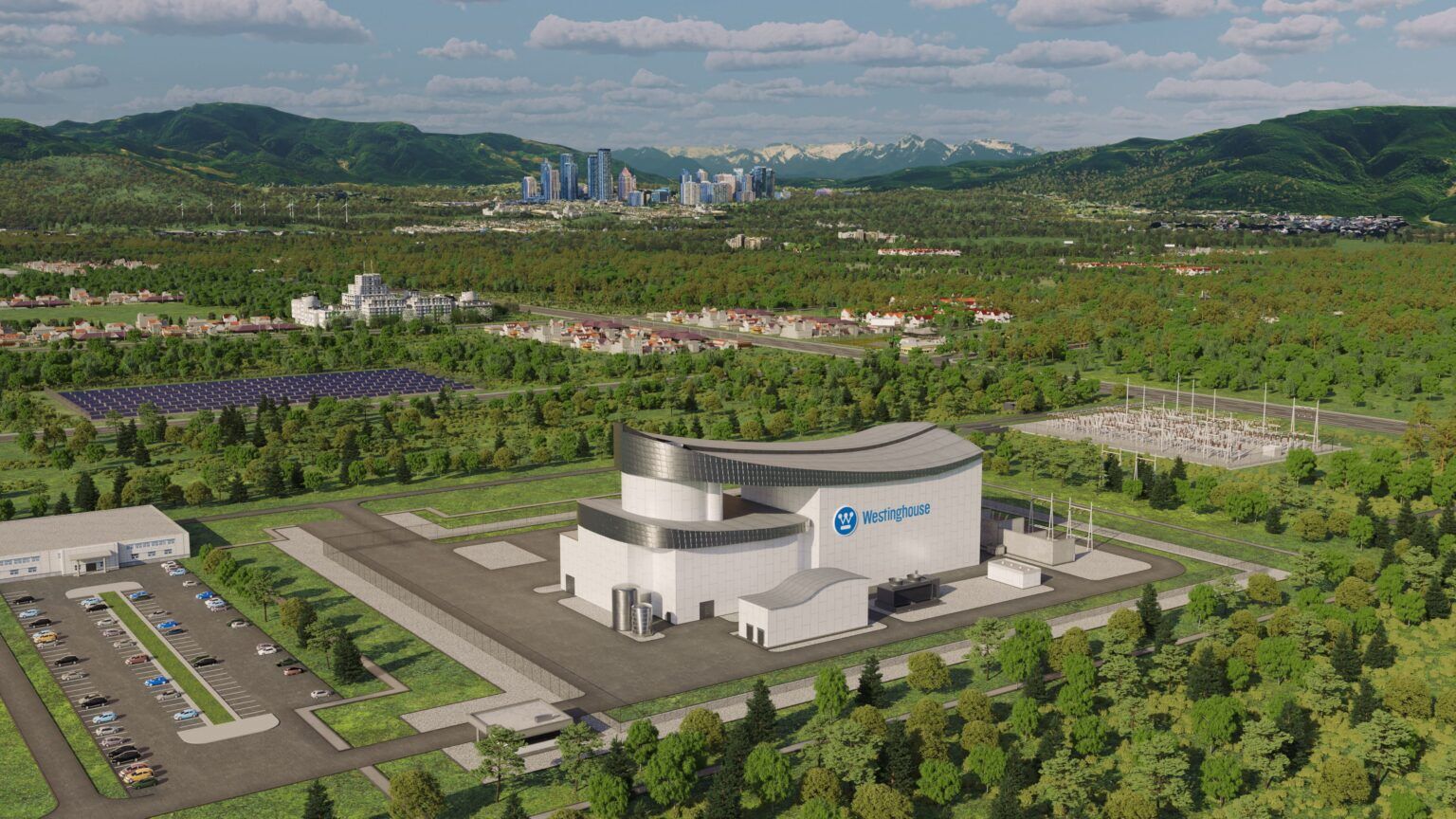
News that Aurora’s Buckley Space Force Base is likely to get its own nuclear microreactor should be welcomed by Coloradans.
After all, Colorado thrives on technological innovation. Tapping into a self-sustaining power source at Buckley would reinforce that strength.
As The Gazette reported, Buckley and Malmstrom Air Force Base in Montana have been selected as potential sites to help expand energy resilience across the military.
These aren’t your grandfather’s nuclear plants. Next generation “modular” reactors are compact, taking up less than 10% the space of traditional nuclear plants. Their components are factory-built, reducing costs, and easily transported by truck, railcar or ship.
Once the components arrive, they can be assembled and quickly brought online. According to the Department of Energy, passive safety systems automatically shut down to prevent overheating or reactor meltdown.
“Their small footprint and modular, offsite manufacturing make them a promising solution for critical military installations vulnerable to power disruptions,” the Air Force said in a statement.
If chosen, Buckley’s reactor could be online by 2030 or sooner.
America’s first microreactor is currently under construction in Oak Ridge, Tenn., with roughly 20 more in pre-investment stages. One is currently under development for Eielson Air Force Base in Fairbanks, Alaska.
The world’s first operating modular reactors are in China and Russia.
Fortunately, Colorado is ready to move forward. If Buckley secures a modular reactor, it will be a coup for the state, launching a nuclear-driven energy renaissance.
The legislative framework is already there thanks to House Bill 25-1040, spearheaded last year by state Sen. Larry Liston, R-Colorado Springs. The law redefined nuclear power as “green energy” — making nuclear projects eligible for special clean-energy financing and counting nuclear power generation toward a utility’s state-mandated clean-energy portfolio.
A microreactor at Buckley won’t mean a high-level waste disposal site nearby, either. Nuclear waste isn’t the problem it used to be.
Rural governments in Colorado — eager to launch nuclear power in their communities — are exploring innovative systems that recycle or repurpose nuclear waste.
The greatest challenge remains scaling nuclear power. Necessary supply chains aren’t there yet, The Gazette reported, and many of the requisite materials aren’t produced at industrial levels with sufficient professional expertise.
But that can change if Colorado begins mining resources and putting them to work in microreactors at home. The federal government can jumpstart that process through deliberate investments at Buckley.
Colorado is home to a longstanding uranium mine that’s ready to restart production. Western Uranium & Vanadium Corp. supplied the federal government from the 1950s through the mid-1980s.
Since 2022, the company has been rehabilitating and developing operations, setting up for 15 to 20 years of production while creating hundreds of jobs in Montrose and San Miguel counties.
All they need is demand to anchor a domestic supply chain. Owner George Glasier told The Gazette last fall that the U.S. could meet about half its uranium needs inside a decade if prices make production feasible.
If Buckley makes this move, the ball will start rolling on nuclear in Colorado. With Colorado Springs Utilities and rural communities alike exploring nuclear power, who knows what will follow?
A genuinely carbon-free energy renaissance is at our fingertips, driven by easy-to-deploy, factory-built nuclear microreactors.
It’s a no-brainer — and Buckley Space Force Base may lead the charge.