







Mayor Johnston claims Denver goals on track except for gun violence
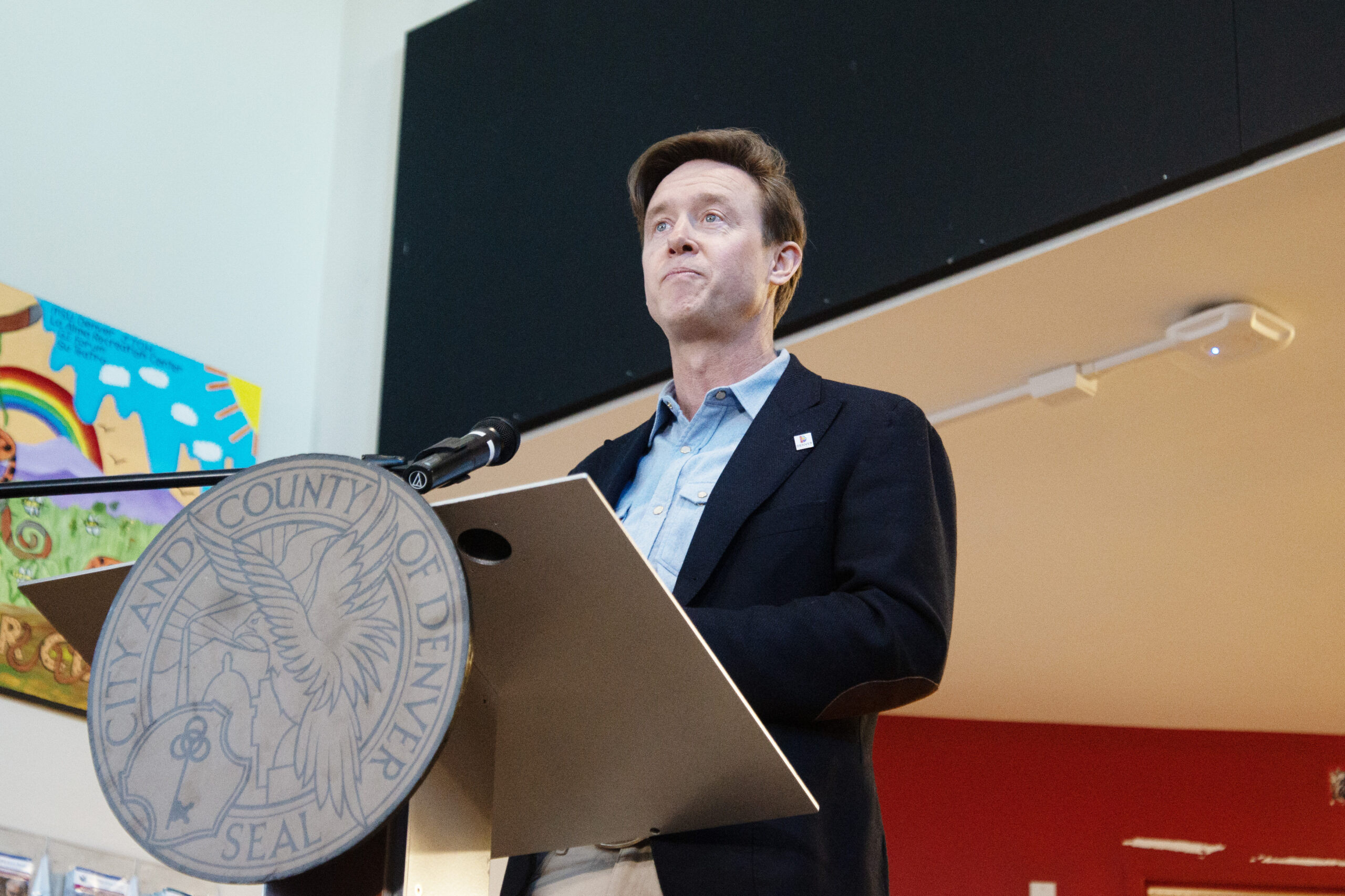
Denver Mayor Mike Johnston on Monday claimed progress toward his priorities for the city, notably in the areas of housing, downtown development and homelessness.
The mayor also announced the launch of a new public-facing dashboard, where residents can track the city’s metrics.
Johnston touted progress even as challenges persist for the city. Downtown, for example, saw foot traffic gains last year but still below pre-pandemic levels. Meanwhile, downtown’s office vacancy rose to nearly 39% in the first quarter of 2026. And while the office market has shown signs of stabilization, the demand remains dry, according to a recent report form a commercial real estate firm.
Mayor says city on track of goal to fill downtown office and retail space
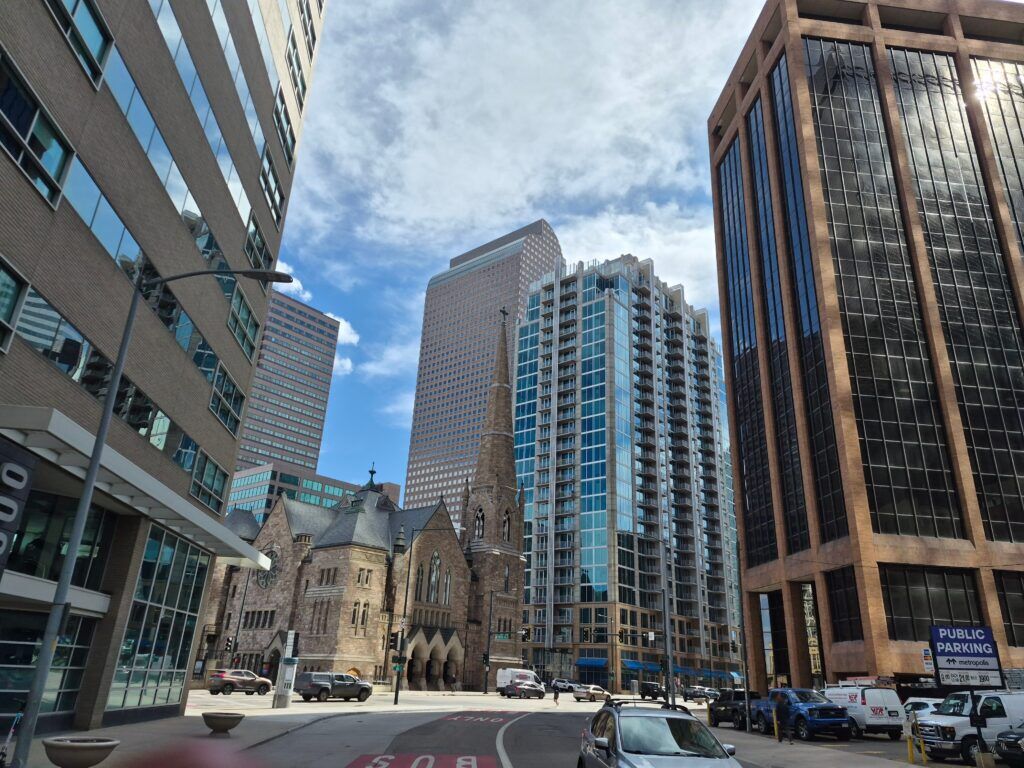
With the reopening and rebranding of 16th Street complete, Johnston promised to fill 3 million square feet of downtown office and retail space — just under half of the 7 million square feet currently available.
“The great news is we’re actually on track,” Johnston told reporters. “We’re actually ahead of schedule. We will, in Q1, have filled half of that goal, and the largest part of that was the High Fidelity office conversion project — that was those two Denver Energy Center buildings that sold. Those alone will be 1.1 million square feet and 700 new units of housing.”
As for fleshing out more business in downtown, the mayor said in the first quarter there were 14 new retail openings, five new downtown office deals, and the city retained 241,000 square feet of renewed leases.
The city’s urban core saw downtown visits recover by 90% in 2025 compared to before the pandemic. The trend of improving foot traffic continued into 2026, though gaining back pre-pandemic figures remained difficult: January recorded a 96% recovery rate, February was at 89% and March was 84%, according to the Downtown Denver Partnership.
Meanwhile, the return of office workers is still playing catch-up, according to a report from the group.
In 2025, downtown’s return-to-office rate stood at 64%, the report said. Another report from the DDP, breaking down March’s economic trends, recorded the best office worker rate since the pandemic at 74%.
The empty office real estate market will continue to be one of downtown’s major vulnerabilities, the group said.
City: 2,157 housing units permitted to date
The goal of adding more affordable housing is “on track,” according to the mayor, with 2,157 units permitted to date, and several new units set to become available toward the end of 2026.
The city seeks to deliver 2,500 affordable housing units and permit an additional 5,000.
However, beyond the permits lies the challenge of moving the projects from paper to shovel.
“We have almost 20,000 units that are in the pipeline, stuck because they can’t get financing because interest rates went up, the market collapsed, they ran out of money,” Johnston said.
He added that his office is working to “harvest” as many of those projects as possible, noting that the city’s Community Planning and Development Department is working to “extend deadlines,” to give them an extension and make sure they don’t walk away from the project.”
Johnston said the majority of the languishing projects are stalled due to financing issues.
Under a proposed “Site Development Plan Validity Extension” amendment, city planning officials hope to extend a lifeline to developers, giving them more time to secure building permits and financing.
The proposed change, if supported by the City Council, would spare roughly 22,600 planned residential units from loss due to expiring city paperwork, as Denver experiences a sharp decline in the demand for multi-unit building permits. The Denver City Council has set a public hearing on the proposed amendment for May 4.
Drew Hamrick, general counsel and senior vice president of government affairs for the Apartment Association of Metro Denver, earlier told The Denver Gazette that new numbers show the apartments market gradually tightening after an oversupply of units that were launched during the COVID-19 pandemic had driven vacancy rates up.
“The product on the market all at once caused prices to fall,” Hamrick said. “Now, that looks like it’s worked its way through, and you can see a gradual stiffening in rates.”
“But there’s not much (added supply) in the pipeline; people are not champing at the bit to build,” he added.
Firearm-related homicides are flat — ‘not up, not down’
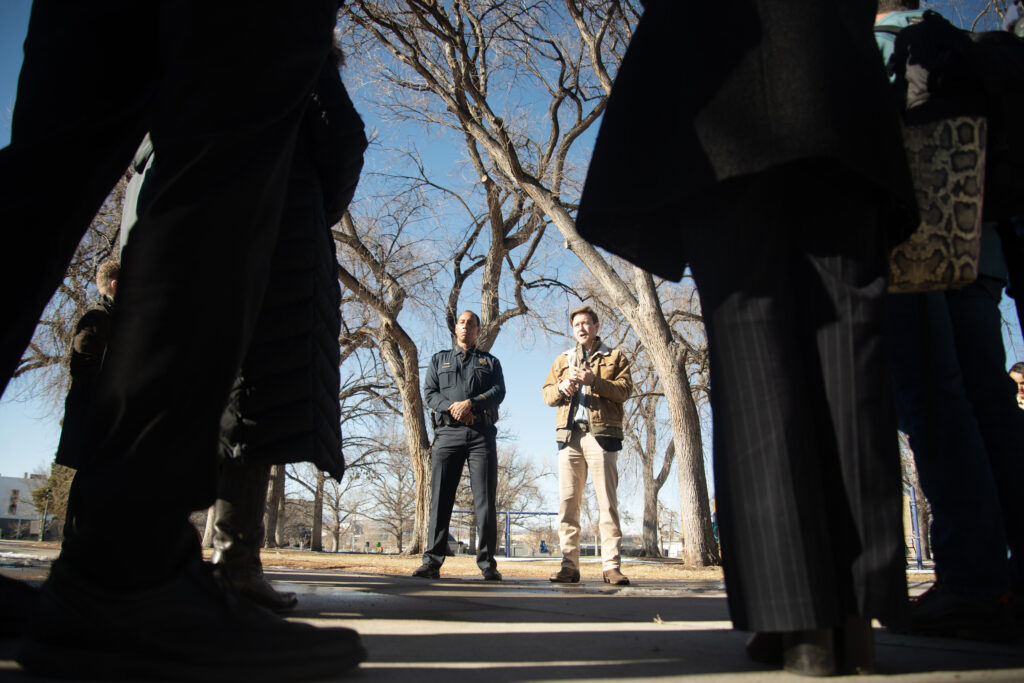
Although Denver just recorded one of the city’s lowest homicide totals, 37 in 2025, Johnston admitted that progress on this goal is off track.
As of the city’s March 31 data, Johnston said that firearm-related homicides were flat — “not up, not down.”
The data did not include the latest string of shootings during the first weeks of April.
The city seeks to decrease gun-related homicides by 10% and shootings in ‘high-risk’ neighborhoods by 20%.
“Last year was a tough act to follow, as the city recorded the second-lowest homicide rate since 1990,” a Johnston spokesperson told The Denver Gazette. “That first week of April has been the biggest difference from last year to this year, but thankfully, things have slowed down since — thanks in no small part to the police department’s work to de-escalate. Still, it’s hard to extrapolate too much from a single week, good or bad, which is why we lean on more detailed data points.”
The good news, Johnston said, is that Denver has seen a reduction in shootings in its high-risk areas.
“We prioritized a focused strategy that includes economic development strategies, lighting, infrastructure, after-school programming, and officers, and it has these community groups that help build strategies and deploy them in five of those sites,” he said.
Johnston wants one-day response timeframe
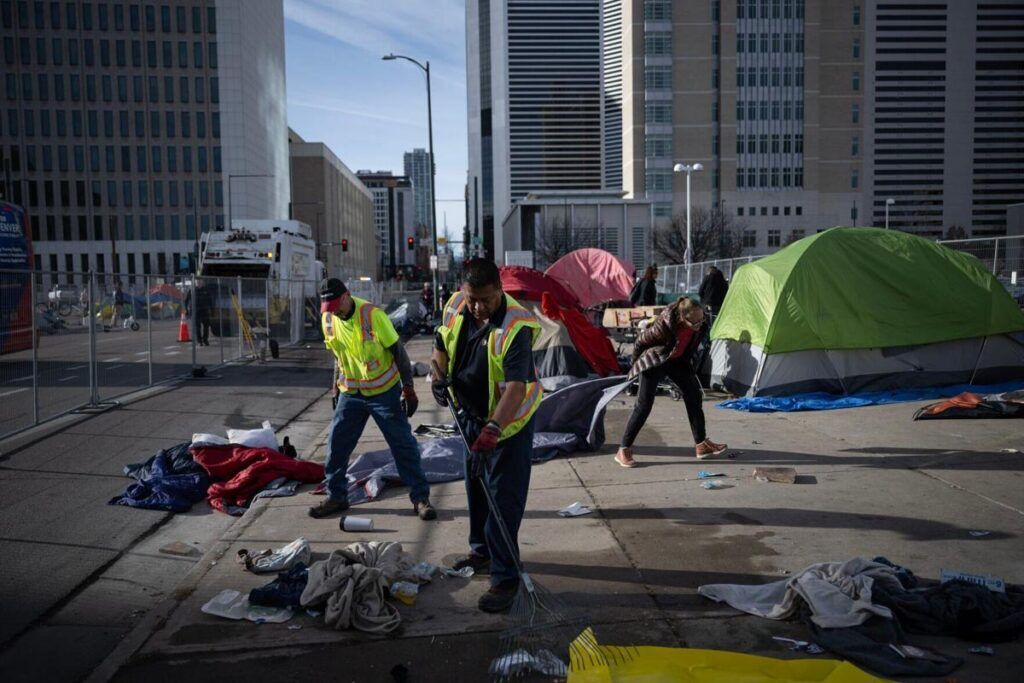
A count last year showed that although fewer people were sleeping on the streets in Denver, the total number of homeless individuals in the city actually grew.
So far, the city has completed the closure of the Comfort Inn non-congregate shelter, and the goal is to get more people exiting into permanent housing.
Among Johnston’s other goals to solve homelessness is a concerted effort to respond to reports of individuals in need within one day.
“And so right now we’re on track,” he said. “The goal is to be one day by the end of this year. We want to do that even faster. We’re about 2.3 days right now. So, we’re on track. We want to continue to see that response time come down, and to see our case closure rate go up.”
Johnston’s goal, among others, is to reduce street homelessness by 75% compared to 2023 numbers.
On Johnston’s first day in office in July 2023, he declared a state of emergency, freeing up funds and fast-tracking decisions in his quest to end homelessness in the city by the end of his first term as mayor, as he had promised during the campaign.
That allowed the city to move forward with plans to dismantle homeless encampments and move people indoors and off the streets, with financial backing from federal funding sources, such as the American Rescue Plan Act.
Since then, the city has spent more than $155 million — some $65 million more than what the mayor earlier said it would cost — for hotel shelters and service contracts to house the homeless and provide “wrap-around” services, such as case management, mental health services and job assistance.
City is also on track to meet ‘clean’ energy goals, mayor says
Looking to have more neighborhoods powered by “clean” energy and “protected from climate risks,” Johnston said Denver is on track to meet its goal of installing 5,000 clean energy systems and developing 50 acres of green infrastructure.
The city wants to install 5,000 clean energy systems citywide, and develop 50 acres of “green” infrastructure.
As of March 31, 2026, the city has permitted the installation of 1,259 units.
| System Type | Permitted |
|---|---|
| All | 1,259 |
| Water heating | 244 |
| Space heating | 291 |
| Solar photovoltaics (PV) | 252 |
| EV charger | 407 |
| Batter storage | 65 |
Like the state, Denver has adopted a regulatory framework to transition toward electrification. Originally passed by the Denver City Council in 2021 and updated in 2025, the Energize Denver ordinance requires large commercial and multifamily buildings to track energy use and meet efficiency targets or face penalties.
Supporters said the move is critical to meeting state climate goals and it already offers ample flexibility.
The fundamental problem with the program, building owners have said, is that the energy-savings standards have been intentionally set to make them impossible to meet without fully electrifying buildings and eliminating the use of natural gas for space and water heating.
Industry representatives have also said that, in many cases, this is both financially and physically impossible for older, multi-family buildings to achieve.
A spokesperson for Denver’s Office of Climate Action, Sustainability, and Resiliency responded after this story initially published, stating that fuel switching to meet Energize Denver is not a policy requirement.
The spokesperson added that timeline and target adjustments are available for all buildings regulated by the Energize Denver policy, and that 37% of buildings 25,000 square feet or larger in Denver are in compliance with Energize Denver. Most of these buildings still have gas systems.
Mayor: Expanding childcare is a work in progress
Johnston’s childcare goal is also a work in progress, with city agencies drafting guidebooks and “discussing current systems and potential frameworks,” according to the mayor.
“As for the specific goal of summer work hiring, where we’re doing a lot of summer job fairs now, trying to hire young people in the summer, and so that is moving well,” the mayor said. “And our goal is that every high school student has a chance to get a work experience before they graduate, and that will be about 5,000 more young people who are put into out-of-school and work opportunities this year, and 2,500 young people are our goal to be on the job.”
Reporters Scott Weiser, Bernadette Berdychowski and Mark Samuelson contributed to this article.
Editor’s note: This story has been updated to reflect that there is no city requirement for the electrification of all buildings larger than 25,000 square feet.