







Save ranching to save the lesser prairie chicken | Rachel Gabel

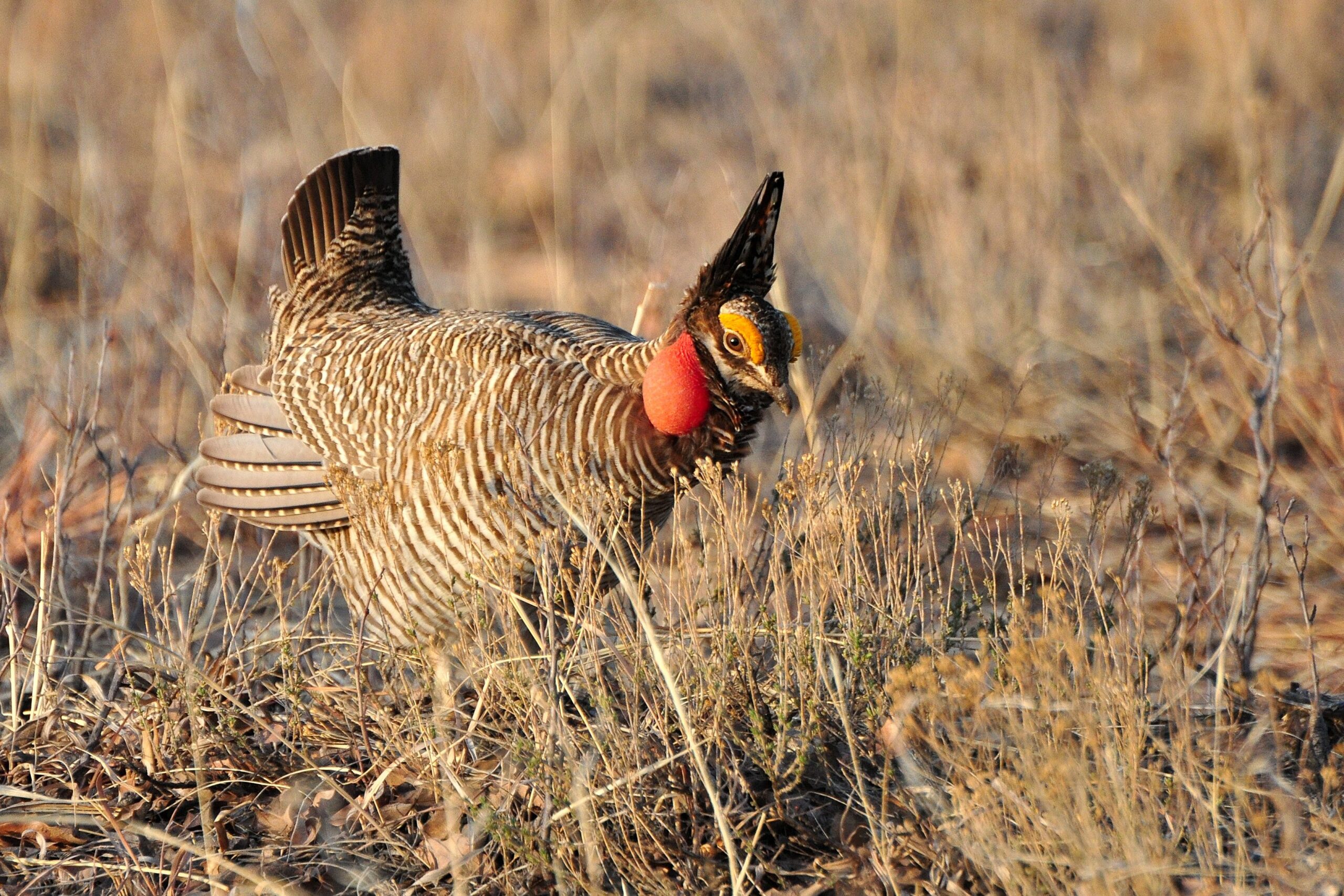
In southeastern Colorado, a slew of green energy projects are being planned – some in partnership with landowners and some despite landowners. At the same time, the lesser prairie chicken has been dominating many of my conversations as of late, due in part to the bird’s unique April dance marathon, which makes it more observable and visible than at any other time of year. Perhaps green energy projects can share habitats with species like the LPC, but ranchers most certainly can. If we want to save the LPC, we need to save ranching.
There are conservation programs available to compensate ranchers for managing the land for the benefit of, for example, chickens. The problem that has historically plagued these compensatory mitigation programs is the failure to compensate landowners where the work is being done, and in Colorado, requiring mitigation would remedy that. The demand for the placement of power lines and green energy projects in southeastern Colorado will remain, and leaving money on the table is foolish.
With energy companies paying millions in mitigation, participation in conservation programs is in high demand. Particularly in Western Kansas and southeastern Colorado in chicken habitat, there is a market among energy companies for credits to offset power and energy projects. The challenge is to ensure that compensatory mitigation is paid where the work is being done. Much compensation for work done in Colorado to improve chicken habitat was paid in Kansas because Colorado doesn’t require it. If the utility companies are required to perform mitigation, they can petition the PUC for reimbursement. If ranchers are paid for mitigation for doing the good work they’re already doing, that translates to less financial strain, the ability to expand and bring home interested younger generations, and to keep ranching.
U.S. Fish and Wildlife Service recognizes Colorado as a chicken habitat, but not as high-quality as the habitat in other areas. Colorado has an estimated 200 birds and decent habitat, but Kansas has greater bird numbers. CPW is reporting great improvement in habitat through participation in voluntary conservation programs and the presence and return of chickens, as evidenced by the observation of feathers and tracks. If you build it, they will come, if you will. The habitat is good enough to list as threatened, so it should be good enough to allow for the required mitigation.
USFWS is currently initiating a status review of LPC under the Endangered Species Act. In a letter from CPW Director Laura Clellan, the agency offered its comments and asked for “regulatory mechanisms that provide added incentive to assess and mitigate the impacts of potential habitat-altering activities.” In short, Clellan is requesting mitigation banking, an offset project that allows a rancher to keep ranching for the benefit of the land and the chicken. The mitigation bank would be approved by CPW with an associated number of credits that can offset habitat disruption by energy projects. Colorado chicken habitat is continually listed federally as threatened, so it ought to be recognized and worth the requirement of mitigation banking.
Powerlines have and will continue to fundamentally change southeast Colorado. The lines have the potential to have a more significant impact on the area than the buy-and-dry water deals of recent years that have caused farms and small towns to dry up and blow away. The disturbance exists. The chickens don’t differentiate between the source of energy in the lines, making them less bothered by energy produced through green methods. There is a deal to be made that allows a win for all and if those landowners were approached in an air of partnership rather than in an adversarial way, the energy goals would be reached faster.
Southeastern Colorado has a long history of distrust of conservation easements, due in large part to bad easements in the early 2000s that were based on wildly inappropriate land valuations. Once the state recognized the fraud being committed by the companies gathering easements, landowners were required to pay back hundreds of thousands of dollars in penalties and fees on bad tax credits. It broke the bottom line, the land is still saddled with the easement even though the company that made the scam deals is long gone, and legitimate easements were blocked by the state in the years that followed. In reporting from that time, one of the cases disputed was a parcel in Prowers County near Lamar that sold for $776,000 and appeared to qualify for easement credits of $8 million. The resentment of conservation easements and government overreach remains in that area, so approaching landowners requires some level of consciousness of the win-win possible and the work they’ve done and continue doing.
There is still much work to be done, but the first step is to require mitigation so that ranchers stewarding their ranches for the best outcomes for cows and chickens can be incentivized. If we want to save the chicken, we have to save ranching.
Rachel Gabel writes about agriculture and rural issues. She is an assistant editor of The Fence Post Magazine, the region’s preeminent agricultural publication.