







Expanded NCAA Tournament is latest example of change in college sports no one asked for | Tyler’s take
The greatest sporting event has lost a piece of its soul.
Even as sports on every level — from high school to college to professional and all across the globe — have become increasingly corporatized in the 21st century, we still had the NCAA men’s basketball tournament.
It didn’t matter if you were a college basketball nerd, like myself, who watched and analyzed the sport for months trying to build the perfect March Madness bracket.
It didn’t matter if you were a casual sports fan waiting for a big upset and to get a feel for some of the top prospects heading into the NBA next season.
It didn’t matter if you weren’t a sports fan at all, just someone who wanted to win their office bracket pool by picking which mascot you liked the best.
The NCAA Tournament had something for you.
As the expansion from 68 teams to 76 teams became official last week, the March Madness viewing experience will be largely unchanged for the majority of the population. But that doesn’t mean this isn’t a really stupid decision.
No one asked for this.
When the NCAA expanded to 64 teams in 1985, it created the perfect sporting event. Just the right amount of teams and the right blend of high- and mid-majors to create chaos and underdogs while often still getting a worthy and deserving group of teams in the Final Four.
Even the addition of the “First Four” in Dayton, Ohio, beginning in 2011 turned out to be an ingenious move. The University of Dayton and the community at large were the perfect hosts for the event that often produced dramatic games. It gave No. 16 seeds real opportunities to get NCAA Tournament wins that forever hang on banners in their respective gyms.
Now, we have an “Opening Round” consisting of 12 games between 24 teams on Tuesday and Wednesday prior to the first round of the tournament Thursday and Friday. The entire 12- and 16-seed lines will be featured in this “play-in” style, while there will also be two games between 15 seeds and two between 11 seeds.
Dayton remains as the host for half of the games, while another city, reportedly likely on the western half of the country, will get the other six. Maybe that’s a basketball-crazed city like Albuquerque? Just an idea.
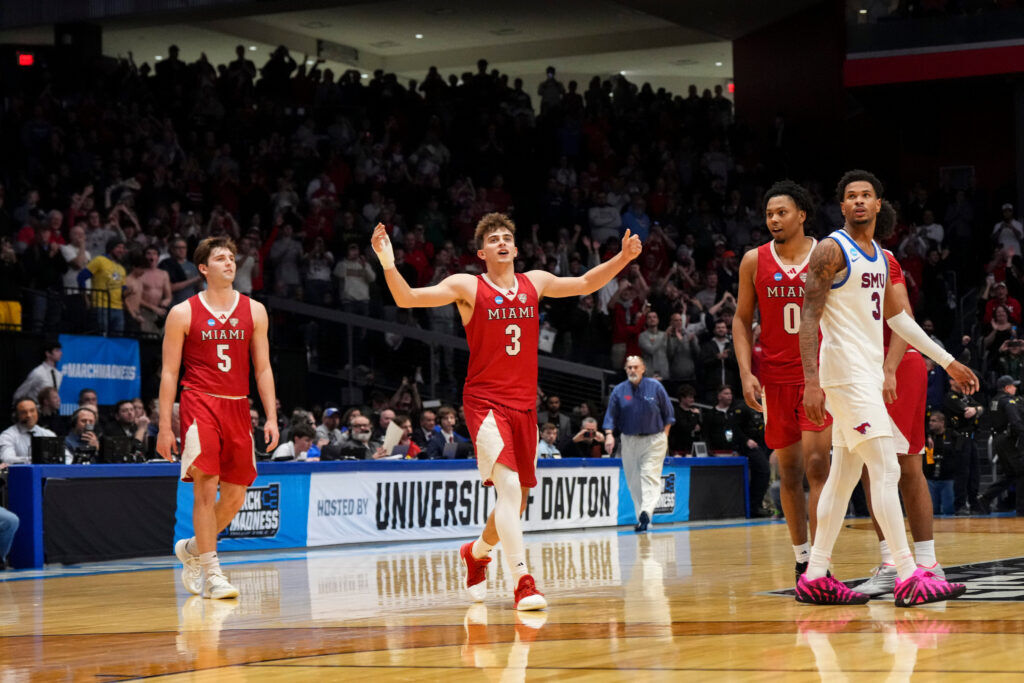
Regardless, what this means is more mediocre high majors getting in the Big Dance, plain and simple.
This past season, for example, the first four teams out were Auburn (17-16, 7-11 SEC), Oklahoma (19-15, 7-11 SEC) San Diego State (22-11, 14-6 Mountain West) and Indiana (18-14, 9-11 Big Ten).
One of the best mid-majors gets in, along with three high-majors that had losing records in conference play.
Looking ahead to next season, ESPN bracketology expert Joe Lunardi has just three at-large bids going to mid-majors, even with eight more teams in the field.
The expanded tournament is appeasing the suits who run the media partners and the suits who run the two biggest conferences in college sports, the Big Ten and the SEC. The rich get richer while the fans get left behind — the story of sports in the 21st century.
For a long time, the NCAA Tournament was immune to that unfortunate reality. No longer, sadly.