




MOTH FORECAST: Will Colorado’s cities be invaded by swarms of Miller moths this year?
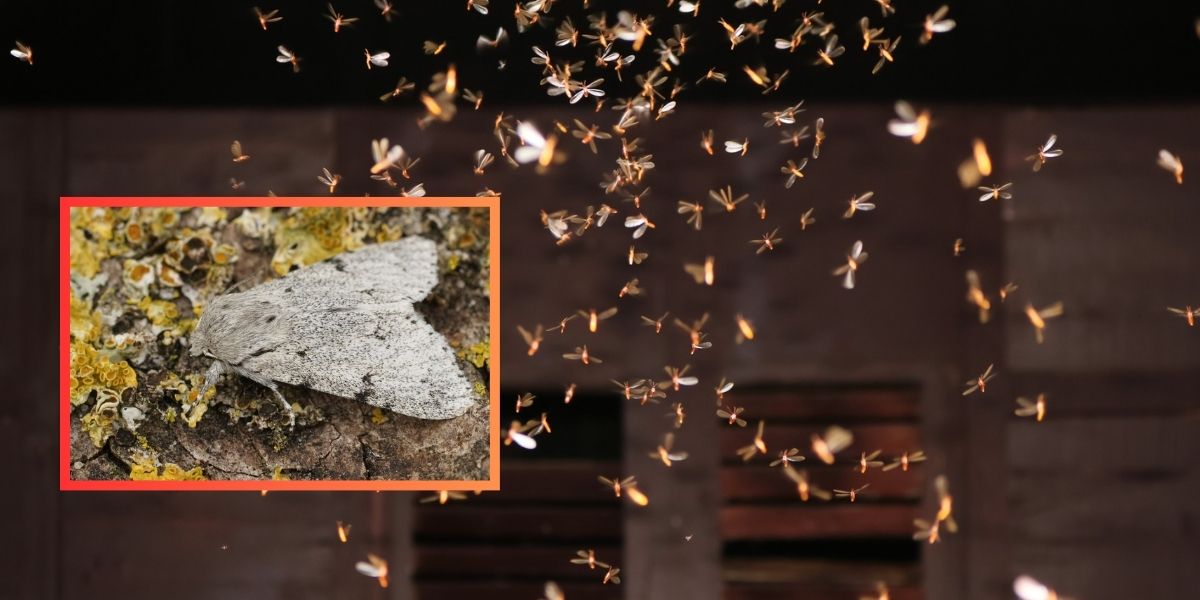
It’s that time of the year when Miller moths start showing up en masse around Colorado’s Front Range cities.
But amid record-setting dryness and abnormal heat, 2026 has been far from the norm.
Many Coloradans have likely wondered how these atypical conditions may impact moth appearance.
Here’s a look at what’s expected.
According to Denver’s Butterfly Pavilion, Miller moths typically migrate through Colorado’s Front Range cities between now and early June, as members of the species travel from the plains to the mountains. Miller moth eggs hatch in the high plains in early spring and after developing wings, they’ll travel more than 100 miles into higher-elevation terrain to spend the summer before returning to the plains in early fall to lay eggs again.
Called “Miller moths” due to how their scales rub off and leave behind something that resembles flour dust, this species isn’t harmful to human or pets and is actually quite beneficial to the local ecosystem. Not only do moths help with nighttime pollination of crops and other plants, they’re also an important food source for birds, bats, and other animals. With this in mind, it can be easier to view the species as less of a pest that “invades” and more as aiding the agricultural industry and sustaining other wildlife around the state.
As long-time Coloradans have likely noticed, Miller moth numbers in civilized areas can seem to vary each year — and these numbers can be affected by numerous factors.
For starters, lets consider the state’s ongoing drought, the worst its been since 2021. During drier years, when there’s less moisture in barren rural landscapes, there are fewer plants and food for Miller moths. This can cause the species to move into cities where irrigated landscapes are more common earlier in the spring. That said, a wet spring can tend to delay the arrival of moths, as well, and following this year’s dry winter, wetter conditions have been present for several weeks. While this hasn’t done much in terms of reversing the drought, perhaps this could keep Miller moths in rural areas for a bit longer.
It’s also worth noting that temperature has been cited as a bigger factor in terms of moth survival with cold weather being particularly problematic during winter and early spring. The past winter and spring were among the warmest on record in Colorado, which could bode well for the moth population, as harsh winter and spring temperatures were avoided. That said, Miller moths also don’t like hot weather, which could mean that moths are inclined to leave the Front Range soon after their arrival if the hotter-than-normal trend continues.
Then there’s also the extreme dryness that’s present in the state’s mountainous terrain. Much of the Miller moths’ final summer destination is experiencing some of the most severe drought in the Centennial State. Could this end up delaying their departure from cities and towns with more reliable sources of water? Or will the forecasted warm weather encourage the moths to move on anyway?
Colorado Springs news organization KKTV caught up with an expert from CU Boulder, Ryan St. Laurent, who indicated that this miller moth season should be fairly normal — not any sort of “invasion.” Expanding beyond more recent conditions, St. Laurent looked to last fall, when the plains were dry, and, thus, fewer ideal places for Miller moths to lay eggs were available. According to St. Laurent, conditions of the previous fall tend to be the best indicator in terms of how many moths are seen by Front Rangers each year as this can impact how many eggs ultimately hatch in the spring.
Whether there’s a lot of moths, just a few, or something in between, Coloradans should avoid interfering with their migration as the species does serve an important role in the ecosystem. Keep in mind that in order for their typical migration cycle to take place, they’ll need to survive making it through the Front Range cities, to the mountains, and eventually all the way back to the plains to lay eggs. It’s a long journey ahead for a tiny bug that other animals seemingly find delicious. They’ll need all the help they can get.
Instead of killing moths that get inside the home, use a disposable cup to capture them and release them outside. You can even make a game out of saving as many as possible — more on that here.
Learn more about the Miller moth on the Butterfly Pavilion website.
STAY INFORMED: Get free Colorado news with our daily newsletter (Click here)
Get OutThere
Signup today for free and be the first to get notified on new updates.
PREV
PREVIOUS

Man found dead on Flatirons after 'Apple Crash Detection' alert was sent to emergency services
According to the Boulder County Sheriff’s Office, a male was found dead in a gully on Boulder’s Second Flatiron on May 14. Officials were first made aware of a potential incident after receiving an Apple Crash Detection alert from an Apple device with the alert originating from Chautauqua Park in Boulder at about 11:30 a.m. […]

CIA website features report of "frightening" UFO sighting that occurred in Colorado
For many years, residents and visitors of Colorado’s mysterious and vast San Luis Valley have claimed to witness odd and unexplained phenomena taking place in the night sky. One of those ‘events’ was apparently deemed notable enough to be published on the C.I.A. website. That document captures an article titled ‘Pair of Pueblo Youths Photograph […]