







The Shakespearean double life of CU heroine Mary Rippon
As festival returns to improved amphitheater, a fresh look at its stage’s namesake
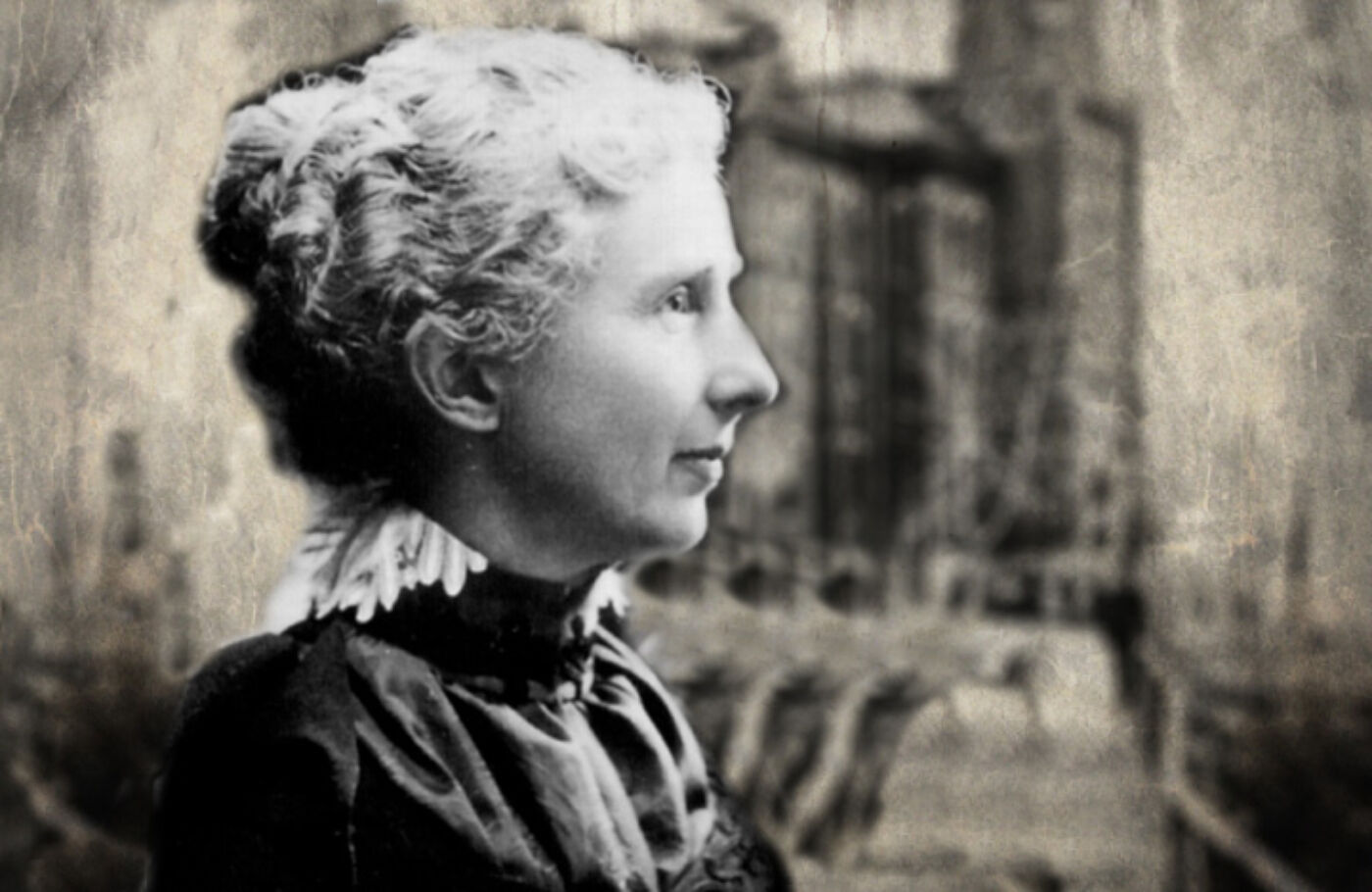
Shakespeare would have loved Mary Rippon. She was a headstrong woman who rode sidesaddle. On her horse, Fanny – and throughout her unconventional double life.
• Like Rosalind, she survived exile and meticulously engineered the ending of her own story.
• Like Portia, she outsmarted most every man in her life.
• Like Beatrice, she was fiercely independent and verbally unmatched.

• And, like Hermione, she was not allowed to raise her own child. Not in the Victorian days of 1888. Not just 12 years after Colorado became the 38th state. Not at a time when professional women could not legally or socially maintain a career if they were married or had a family. The prevailing reasoning then was that working women would take jobs away from men with families to support.
Mary Rippon was a human wildflower drawn to Colorado by the promise of its own wildflowers – and an offer to become the first female teacher at the University of Colorado at Boulder. That and an assurance from famed first university president Joseph Sewell to build a $2,000 library.
If Shakespeare had ever titled one of his plays by the name of one woman (alas, he didn’t), he could have done far worse than “Rippon.” (PS: It rhymes with “Rippin.” We know this because her father’s gravestone engraver incorrectly spelled the name the way the family pronounced it back in rural Illinois.)
Historians believe that when Rippon joined CU in the second semester of its existence in January 1878, she became the first woman to teach at a state university anywhere in America.
For 20 years, she was the only woman faculty member at the university and served as unofficial dean of women. Along the way, she helped spruce up the barren new campus by planting flowers, shrubs and grass.
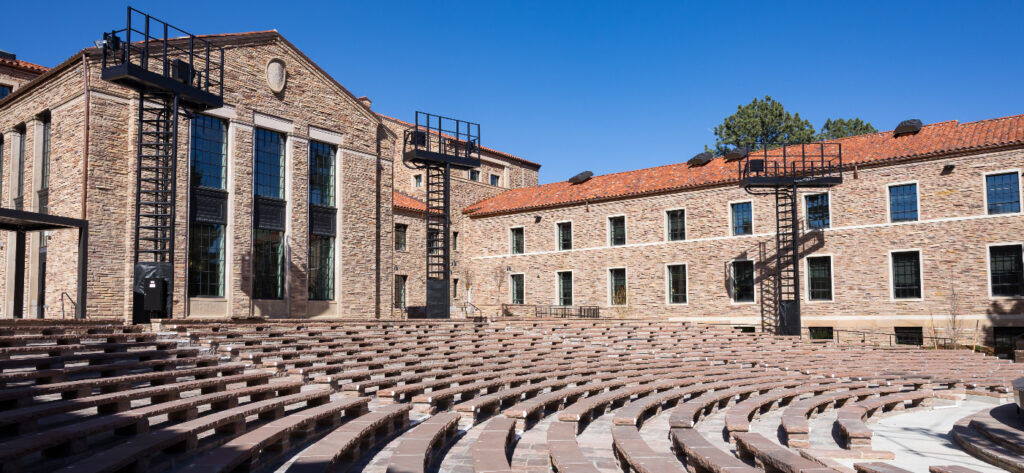
There is no better name for the glorious amphitheater that has been home to 69 seasons of the Colorado Shakespeare Festival than the Mary Rippon Outdoor Theatre.
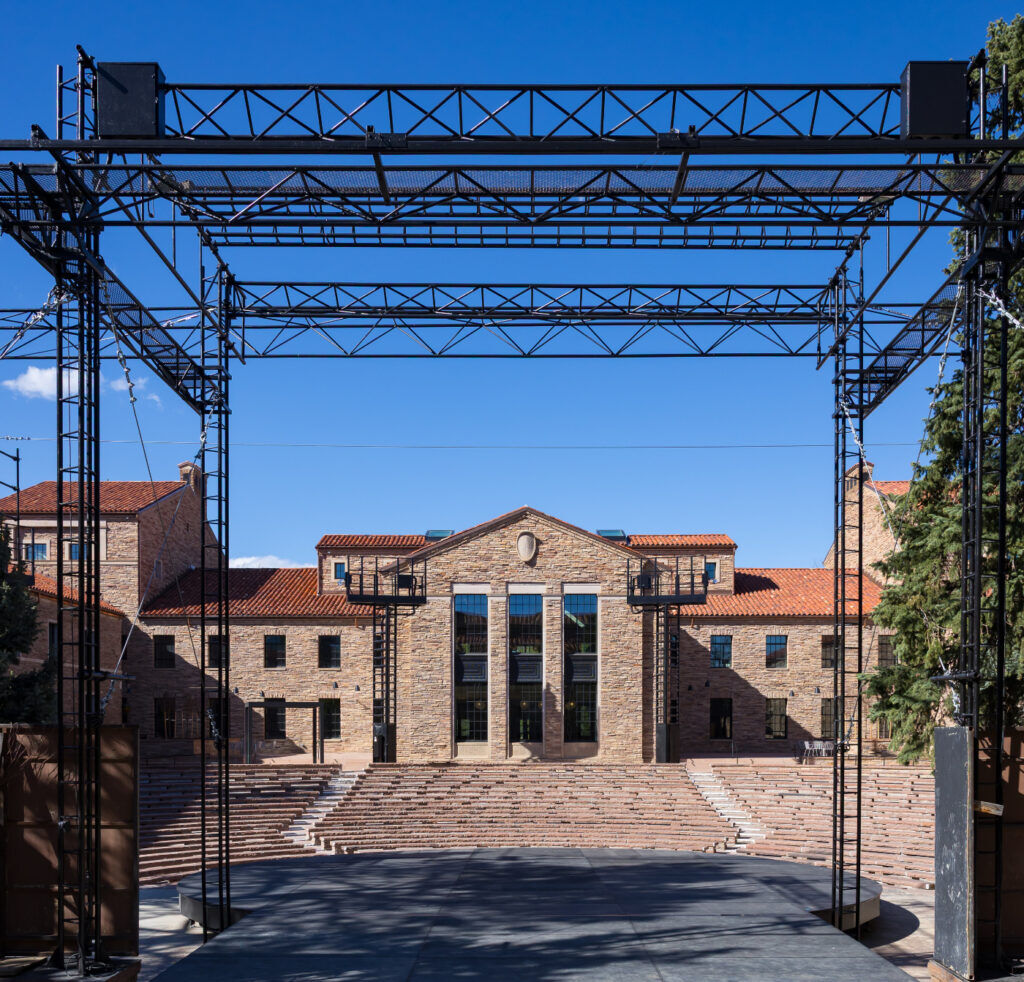
Save for the last two. The fest is returning next week to the famed on-campus amphitheater I’ve always called “Little Red Rocks” after a two-year shutdown for a massive, $105.2 million transformation of the surrounding Hellems Arts and Sciences building.
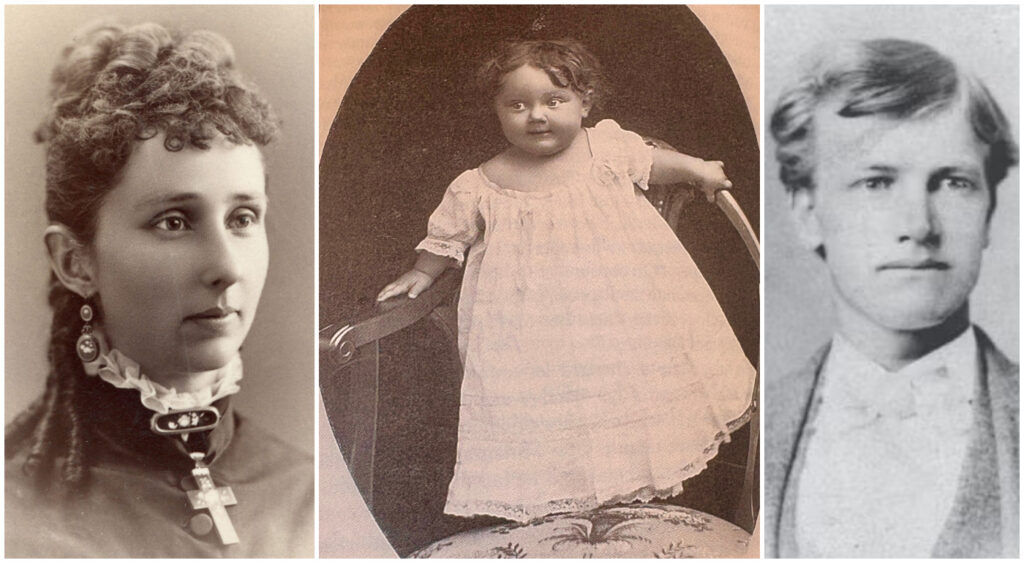
The great irony – and tragedy – of Mary Rippon’s life is that while she came to be known as “a revered mother figure to all young women on the campus of the University of Colorado” over her 57 years in Boulder, she could never be a real mother to her own blood daughter, Miriam. Not after the babe was born from a secret scandal that Mary miraculously managed to keep private for her entire life.
The babe’s father, Will (“Don’t Call Me Shakespeare”) Housel was 26-year-old man from a prominent Boulder family – and a student enrolled in two of Mary’s German classes. Mary was already 37 by then and chair of CU’s Modern Languages department. As if the student-teacher relationship were not scandalous enough, “the very idea of a woman marrying a younger man was considered unseemly.”
That and other assertions come from a scorching page-turner of a book called “Separate Lives: Uncovering the Hidden Family of Victorian Professor Mary Rippon,” written by former Boulder Daily Camera reporter Silvia Pettem. The book is considered such a precious resource at History Colorado that one can only read it on-site – it can’t be checked out. (You can, however, buy it on Amazon. Pettem updated and reissued the book in 2024.)
The prevailing historical view of Mary Rippon and her perfect spinsterly life was blown up in 1976 when, as Pettem reports in her book, an elderly man from the East Coast came forward, identifying himself as a descendant of Mary Rippon. But how could the (seemingly) never married Miss Rippon have a descendant if she had no children? At that time, the university had no inkling (or records) of a secret life. Rippon had never been involved in a single controversy. She had only received praise from the local press.
It was only after the emergence of Wilfred Rieder in 1976 that a true picture of the complicated, accomplished and carefully managed dual life of Mary Rippon began to come into full focus – more than a century after giving birth to a daughter who would one day follow in her footsteps teaching at CU.
The author, who earned her chops as a Boulder cold-case cracker, has said her purpose in writing the first book on Mary Rippon “was not to tarnish her well-deserved reputation, but rather to uncover the human side of a woman whose circumstances clashed with the mores of her time.”
Pettem’s propulsive question: Was Rippon’s life fulfilling or tragic?
In the end, it was pretty clearly both. No matter her many professional achievements and the enormous regard with which she was held, the personal sacrifices that were required of Rippon seem in retrospect positively Draconian.
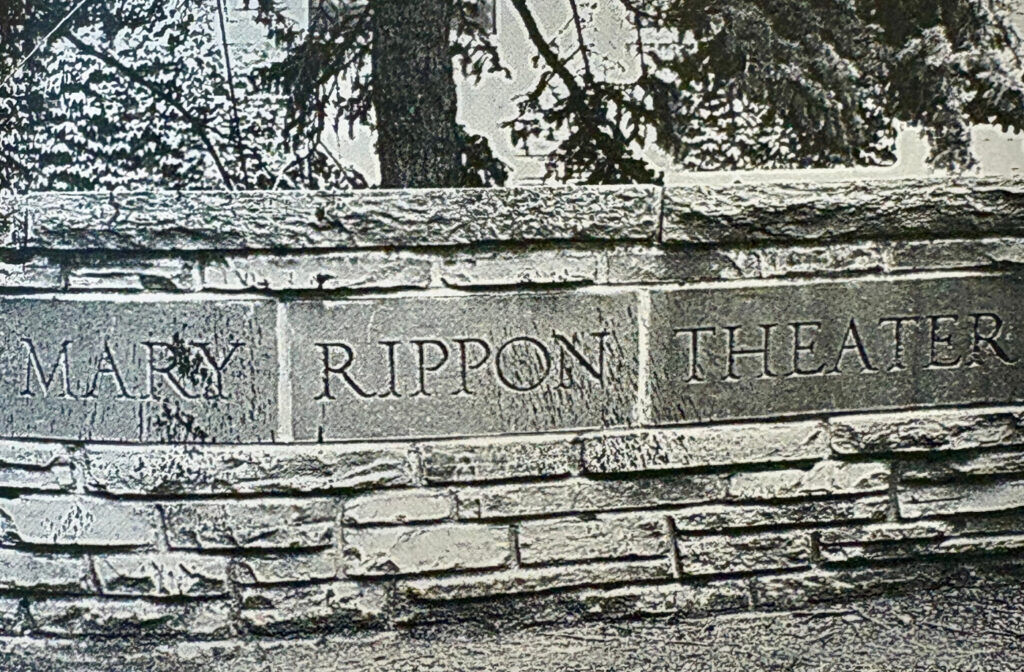
As the Colorado Shakespeare Festival enters its next era performing in the house that was built in Rippon’s honor, her life story offers surprisingly modern lessons about ambition, compromise, loneliness and institutional hypocrisy.
The most obvious, to Pettem, is that pioneers rarely get to be fully human.
When Mary died in 1935 at age 85, a lengthy obituary in the Boulder Daily Camera noted: “No teacher had more friends.” That same obituary claimed only one survivor – a nephew from Kansas. It also noted, according to Pettem’s reporting, that “Mrs. Wilfred Rieder, assistant professor in Romance languages at CU, was one of Miss Rippon’s greatest friends.”
That was Miriam (who also married a Will!). It was not yet known that Mary had maintained an interest in her daughter all her life.
A small, flat stone memorializes Mary in the northwest corner of Boulder’s Columbia Cemetery. The stone is engraved with an open book and two columbines. “Books and flowers symbolized Mary’s separate lives,” Pettem wrote. “The books represented her teaching profession. The flowers portrayed the inner, emotional life she shared with Will. Both are entwined on her gravestone.”
The irony being: Until Pettem published her story, Rippon’s life was anything but an open book.
Back to the beginning
Rippon’s parents were part of a group of 20 farming families who in 1833 migrated from upstate New York to the corn and wheat fields of Kendall County, Ill. Mary was born on May 25, 1850. When her father died of typhoid less than a year later, Mary was sent to live with a guardian on a nearby farm. I took particular interest in this part of her story, given that her nearest neighbor was named John Moore, who harbored fugitive slaves seeking freedom in Canada.
The guardian, John Litsey, was a kind man who bought Mary a $300 piano, which the author says is more than it cost to build a house at the time. When she turned 18, she inherited $3,500, making her a practical heiress. Thus began five years of study abroad in Germany and Paris. Her timing was good as, back in America, author Edward Clarke was arguing that “to give women the same education as a man was a crime before God and humanity.”
Mary was following her own modern ambitions for her education and was becoming fluent in German and French.
A life-changing poem
It was there that Mary discovered Goethe’s epic poem “Faust.” It is, simply put, a poem about “the hunger for more.”
At its center is a man who simply cannot accept the limits placed upon him. He wants more experience, more feeling, more meaning. A woman in 1877 — especially an educated and unmarried woman — surely recognized that hunger intimately. She would not only recognize the poem’s enduring battle between knowledge and damnation, she would see a story about gender, freedom, respectability, loneliness and temptation.
You can bet that poem became a cornerstone of her teaching in Boulder.
Sewell is one undisputed hero of Rippon’s story. He began recruiting Rippon from the moment he was tasked with building CU. But Rippon had already made a commitment to teach at a high school in Detroit, so this would take some time. Sewell received an assist from Atlantic Monthly when it published Helen Hunt Jackson’s essay, “The Procession of Flowers in Colorado.” Rippon saw that and immediately agreed to join Sewell in January of 1878 at a salary of $1,200 a year.
Rippon’s first train-ride west of Illinois stopped in Boulder, where she said the glorious Colorado mountains reminded her of the Alps.
But consider the reality: Boulder was only 16 years old. The Sand Creek Massacre happened only 13 years before. Silver had been discovered in the Colorado mountains only eight years before. CU was little more than a windswept shack on the prairie.
Undaunted, Rippon mentored women students, organized educational outreach and persisted in a profession that had been built to exclude women like her. But Rippon was for the most part accepted by her peers and adored by her students. In 1881, she was promoted to full professor and made a department chair. The pay was, of course, unequal, but, Pettem wrote, in Boulder, “Mary was free to live without Eastern constricts for single women.”
Enter Will Housel, soon followed by the need for Rippon to request a year’s leave of absence.
When Mary entered into a relationship with Housel, she walked on dangerous ground. Like Faust, Mary had stepped outside the bounds of morality. Considering the prominence and status she had achieved in her profession, getting involved with Housel was extraordinarily risky. But this would prove to be the enduring love of her life.
Housel accompanied the pregnant Rippon to St. Louis, where they were covertly married on June 9, 1888. They spent the summer with Rippon’s family in Illinois. Then Mary continued, alone, to Stuttgart, Germany, where Miriam Edna Housel was born on Jan. 17, 1889. Mary had achieved what one ladies’ magazine of the day called “the fulfillment of a woman’s physiological and moral destiny.”
But returning to Boulder as a married couple with a child in tow was an impossible consideration. The disclosure would have destroyed her position and reputation. But her return was overdue and eagerly anticipated. So the couple placed Miriam in a Catholic orphanage in Germany, where Housel stayed to continue his studies, in part to remain in close proximity to the child. For Mary, the irony was thick. Not to belabor the point, but a woman who was considered the mother of an entire university had to leave her child an orphan in order to return to CU in good standing.
Back in Boulder, no one knew about the affair, the baby or the couple’s ongoing long-distance marriage. The couple kept fully abreast of Miriam’s well-being and Mary provided income for her needs. In 1893, Mary paid to have her moved to an orphanage in Denver.
And the secret stayed kept. Because Housel would have been expected to marry and start his own family, he did. He and Mary divorced as secretly as they had married.
After 18 years as a “single” woman living in boarding houses, Mary bought her own home at 2463 12th St. in Boulder, where she remained until her death in 1935 at age 85. And if this Hollywood story is to be fully believed, it was only when Miriam, herself now a married mother, applied for a teaching position at CU in Rippon’s department that the mother reportedly came clean to the daughter about her parentage. By all known presumption, it was a happy revelation, and Miriam continued to refer to Rippon as “Aunt Mary.”
It should be noted here that Rippon was a voracious diary-writer. Perhaps predictably, she destroyed some of them. But there is one entry that probably sums up Rippon’s assessment of her own compromised but full life:
“Conventionality,” she wrote, “is the mother of dreariness.”
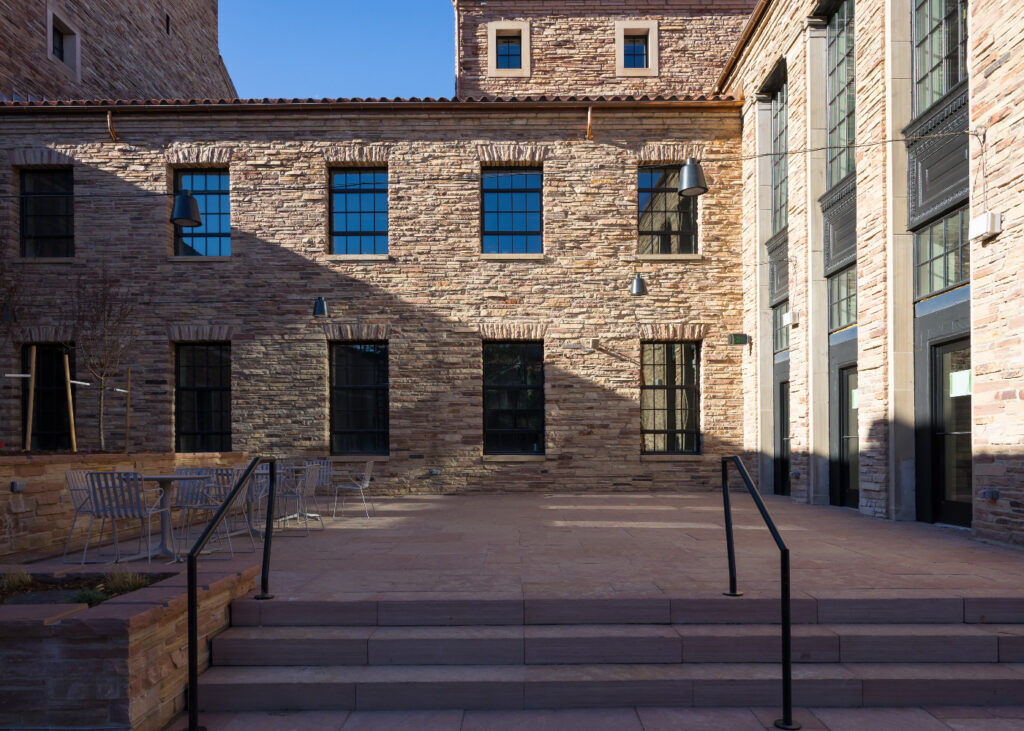
Rippon was herself, a monument. And, in death, CU’s board of regents quickly moved to make her one. They sped up a planned 1,200-seat amphitheater that would now be built in Rippon’s memory just south of the Hellems liberal-arts classroom. Once wings were added to Hellems, the theater would sit fully surrounded within a protected court. The regents even kicked in the first $750. (How generous!) But with Depression-era funding from the federal Works Progress Administration and a plethora of memorial contributions coming in from former students around the country, the job got done.
One student wrote that Rippon had given her money to help her through her tough college days. “Loving in thought, word and deed,” she wrote.
A complicated legacy
Mary Rippon was a compelling figure in Colorado history long before revelations about her private life emerged. The discovery that she was forced to hide her husband and child for decades in order to keep her job only makes her a more compelling, complex figure – and an emblematic symbol of the ongoing struggle for women to lead fully satisfying personal and professional lives.
It’s such a bittersweet story. American institutions like universities often celebrate “trailblazers” while simultaneously forcing them into impossible moral and emotional bargains.
“Two souls, alas, are dwelling in my breast, and either would be severed from its brother.” – From Goethe’s “Faust”
John Moore is the Denver Gazette’s Senior Arts Journalist. Email him at [email protected].
Colorado Shakespeare Festival/2026
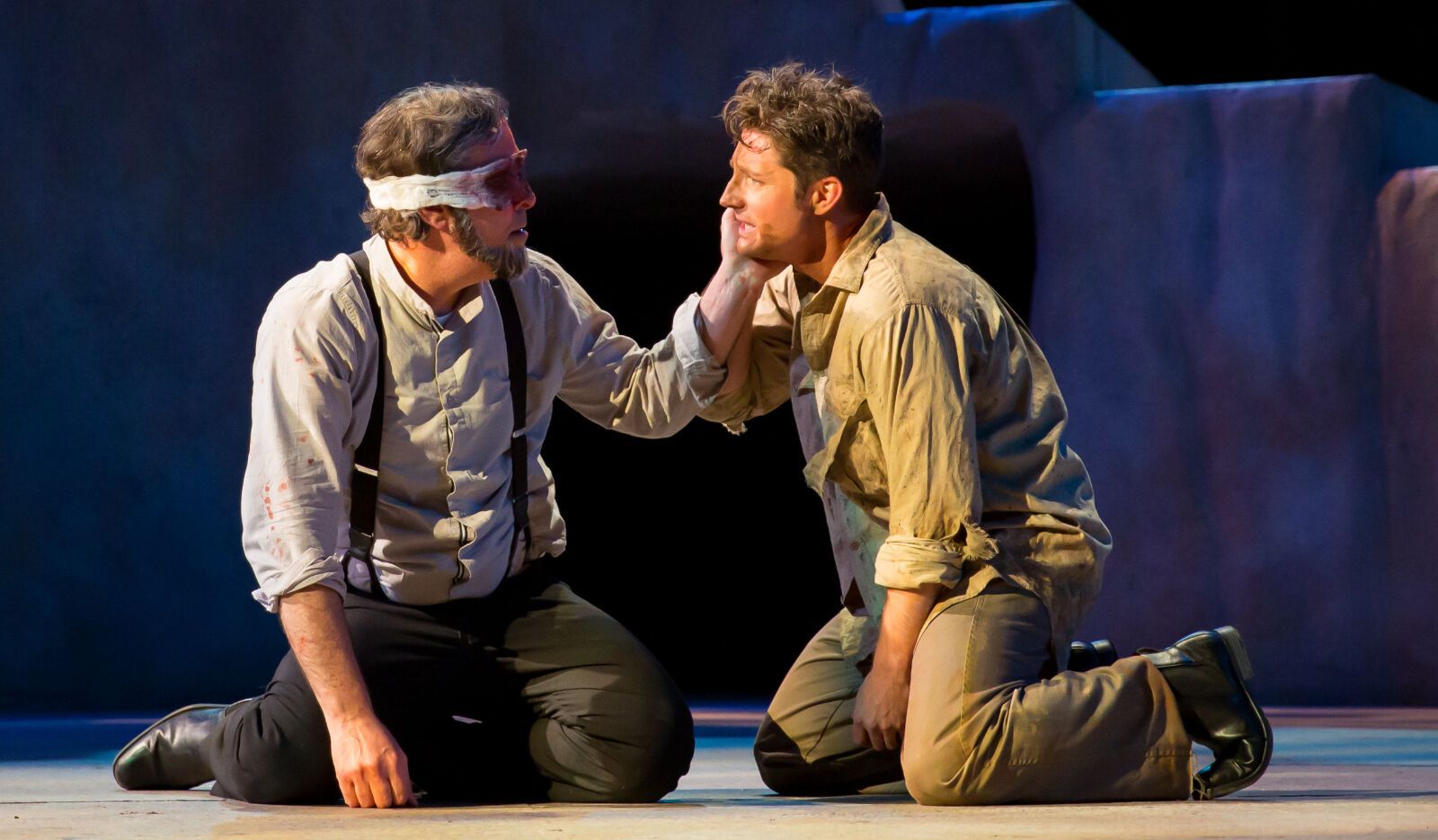
- ‘Twelfth Night’: June 7-Aug. 2, outdoors
- ‘Julius Caesar’: June 14-Aug. 2, indoors
- ‘Shakespeare in Love,’ June 28-Aug. 1, outdoors
- ‘Friends/Romans/Countrymen’: July 12-Aug. 1, indoors
- Tickets: $33 to $109
- Info: 303-492-8008 or https://cupresents.org/shakespeare-festival

Rippon Theatre/Improvements
- Atrium and lobby: Instead of entering the theater through a classroom hallway, visitors will now enter into an open atrium and lobby that look directly into the theater space through visible windows.
- Stingers Café: Replacing two rickety outdoor snack shed sheds is a new café offering beer, wine, coffee sandwiches and light salads
- New restrooms: No more snaking down into the basement Improved audience flow: Six new double doors from the lobby into the theater for smoother, faster exit and entry
- Seat cushions: They’re all new, and they will now be stored on eight custom racks rather than in a haphazard pile
- Accessibility: Four ADA-compliant entrances, and wheelchair seating available in every pricing zone
- Renovated seating: A bench is still a bench, but the Rippon’s distinctive red sandstone benches have been rebuilt by expert masons
- State-of-the-art lighting: More efficient, modern LED stage lighting