







Denver Realtors say rates, not prices, are holding back the market
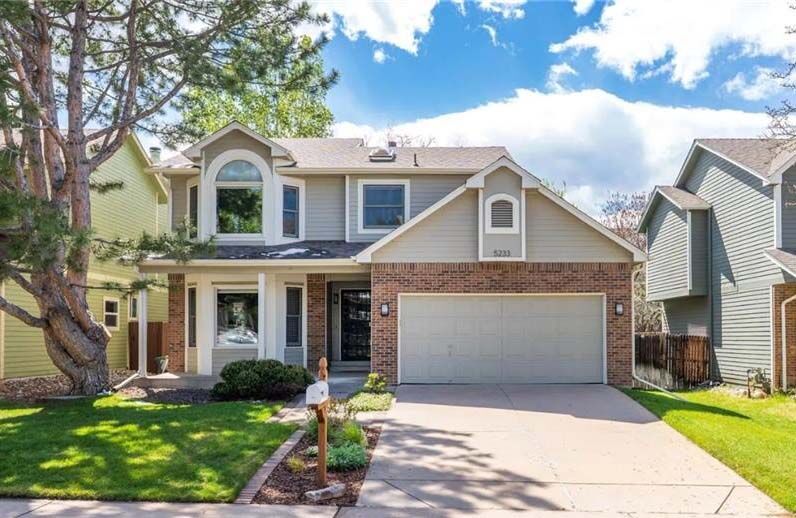
As median home prices in the metro Denver area continue their drift upward despite a sluggish market, Denver Realtors are warning that both buyers and sellers are being frustrated by stubbornly higher interest rates that raise the costs of financing a home.
The higher home prices that buyers face now, according to the latest monthly Market Trends report by the Denver Metro Association of Realtors, are in line with a typical 6% annual appreciation when viewed over the market’s long-term ups and downs.
“Buyers in today’s market are facing prices that align with the market’s long-run historical trajectory,” said Amanda Snitker, chair of the DMAR Market Trends Committee, which issues the report.
Compounded problem
Mortgage rates, rather than prices, are the issue holding the Denver market back, Snitker said in the report.
“The rate isn’t compounding the affordability problem; it is the affordability problem,” she said.
Those recent numbers for May show the median-priced single-family home in the 11-county Denver area as having climbed another point-and-a-half over the month to $675,000, from $665,000 in April. Attached homes, including condominiums, were also up, with a median price of $395,000, up 2.6% from the previous month.
The number of pending sales for the overall market climbed only marginally, by 1.17%, while the number of closed sales dropped over the month by 4.32%, resting almost 7% lower than sales a year ago. Meanwhile, the number of homes coming onto the market fell by almost 10%.
However, that still left the inventory of available homes in the broader area at 12,259, up 6% over the month. The number of days required for a median-priced listing to go under contract remained the same, 14 days.
Snitker added that the “rate lock” that was hampering buyers was holding sellers back from listing their homes, as well. New listings arriving from sellers had fallen almost 18% over the year, the report noted.
“Homeowners with three to four percent mortgages face a monthly payment increase of $1,500 to $2,000 on a typical move-up purchase, a gap wide enough to make even well-capitalized sellers pause,” Snitker said.
“That is keeping inventory constrained and transaction volume muted across the board.”
Rather than wait for prices to come down, DMAR’s advice to homebuyers is to look to sellers for some help on the financing side.
“Focusing on a rate solution is far more productive than waiting for a 40% price correction that the data simply does not support,” Snitker said.
Frenzied years
“Inspection contingencies, seller concessions, and rate buydown negotiations are all back on the table — tools that defined professional value before the frenzy years stripped them away,” Snitker said.
Despite the lackluster trend in the overall market, properties at the luxury end were performing better, according to Brad Colburn, broker with Madison Co., who reports to Market Trends on the $1 million-plus homes market.
Pending and closed transactions in the luxury market range were up 3.10% and 5.29%, respectively, over the month, with single-family sales being the driver, Colburn said.
“The attached market in this segment continues to lag, though it is beginning to show signs of life,” Colburn said.
Realtor Christina Ray, who reports on the market’s price range from $750,000 to $1 million, said that the combination of rising prices and elevated rates, as well as other rising costs of living, was combining to make buyers more cautious and reticent to make housing decisions.
“While the $750,000 to $999,999 price segment remains relatively stable, many are finding themselves caught between the desire to move and the affordability challenges of today’s market,” Ray said.
According to the report, the normality of price appreciation seen by the Denver market had held true when viewed over a 10-year span. But that was also the case when viewed over the past six years, from the soaring market that followed the onset of the pandemic, through to the slower market today.
“From May 2017 to May 2026, the median sale price grew from $382,000 to $615,000 — a 6% average annual increase that mirrors the market’s long-run historical norm,” DMAR’s Snitker reported.
“That same 6% annual trend holds when measured from March 2020 through May 2026. The pandemic surge and subsequent flattening settled into a textbook appreciation curve.”
DMAR’s Ray, an agent with Live Laugh Colorado Real Estate Group, added that buyers who are braving the market are showing a preference for move-in-ready homes — ones that have no projects awaiting that would represent additional, expensive upgrades to a purchaser.
Buyers seek concessions
“Expensive components such as roofs, HVAC systems, water heaters and windows are receiving increased scrutiny during inspections, and buyers are often seeking concessions or price adjustments when these items are nearing the end of their useful life,” Ray said.
She saw the principle in practice in a home that she listed in Centennial, set to close Thursday.
“The sellers did everything exactly as they should,” she said — repairing the roof, updating the heating and cooling systems, putting in a new water heater and new carpet.
“We were under contract in one weekend.”
DMAR represents more than 6,000 real estate agents in the metro Denver area.