







DPS adopts balanced budget plan while tax request looms
The Denver Public Schools (DPS) Board of Education unanimously approved a $1.5 billion balanced budget for next school year without discussion on Monday.
Earlier discussions on the budget had outlined a series of financial pressures — declining enrollment, uncertain state funding and rising costs — that officials had said would require new revenue to sustain current services.
While the budget discussion last month included the district’s push for a new mill levy override, the approved budget was largely silent on the issue.
A district advisory committee last week recommended that DPS ask voters to raise their taxes. The board is expected to take up the issue in August.
If approved by voters in November, the mill levy override is expected to generate about $43 million annually.
The push for a new mill levy override comes just 18 months after district leaders told voters a nearly $1 billion bond in 2024 would not raise taxes.
Had voters rejected the $975 million bond measure, Denver taxpayers could have saved about $20 million a year, as previous bonds mature, Chuck Carpenter, interim deputy superintendent of operations, has said.
District officials have raised concerns about the state’s financial outlook, warning that future shortfalls could impact K-12 funding — the second-largest area of state spending behind Medicaid.
Colorado public schools are funded through a mix of local property taxes, state revenues and federal funding.
That mix has shifted over the past two decades, with state support shrinking. Property taxes now comprise the largest share of the district’s revenue.
The shift in the funding burden to local property taxes largely reflects Colorado’s school finance formula, which reduces the state’s contribution as local property tax collections rise.
About 17% of the district’s revenue comes from the state.
The district is projecting a $28 million funding gap over the next four years. Officials warn more school closures are likely if enrollment continues to decline.
DPS has been losing students since 2019 — although the district got a boost from new-to-country students with the influx of immigrants three years ago.
Since 2023, the district has closed 10 schools and restructured three others in an effort to address declining enrollment. Officials have frequently cited lower birth rates, rising housing costs and gentrification as the key drivers of the district’s enrollment declines.
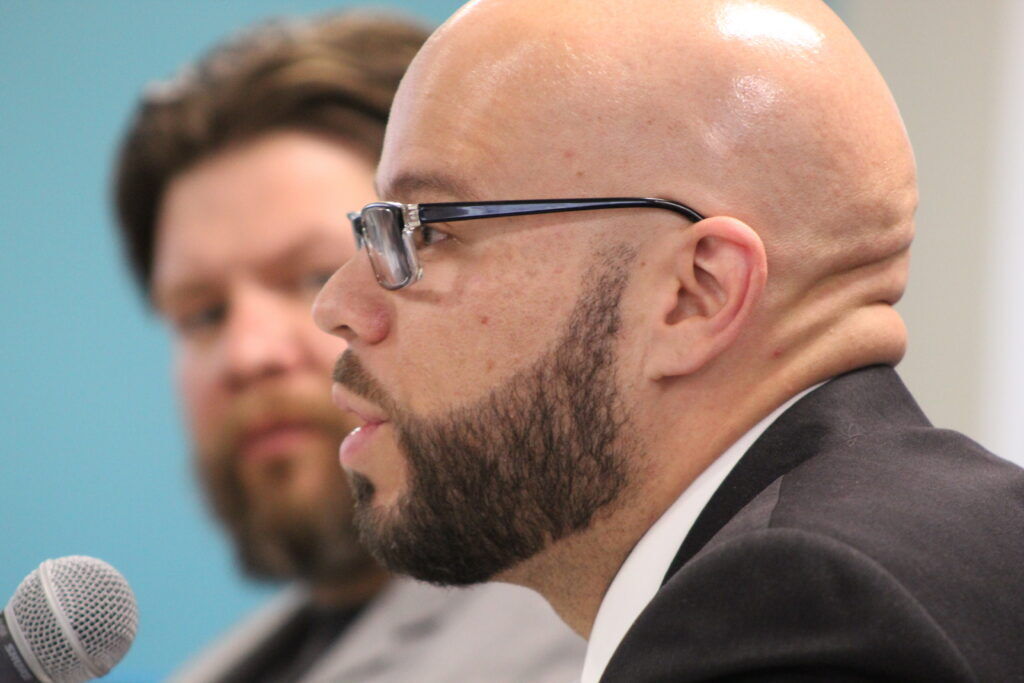
In December, DPS Superintendent Alex Marrero told the board that enrollment losses now outpace what school closures alone can address — although more are expected.
District leaders have begun to point to boundary and enrollment changes as the next lever.
Typically, school districts use school boundaries to address increases or decreases in student enrollment when opening or closing schools. But DPS, under the direction of Marrero, has shuttered campuses based on size and utilization, without revisiting attendance boundaries.
“The only thing that will turn this around is if birth rates level off or if there are families moving into the system,” Carpenter has said, adding that declining enrollment will likely be a fixture for the foreseeable future.