




Once believed to be proof of ‘sea monsters’ in Colorado, only one fossil of this species has ever been found
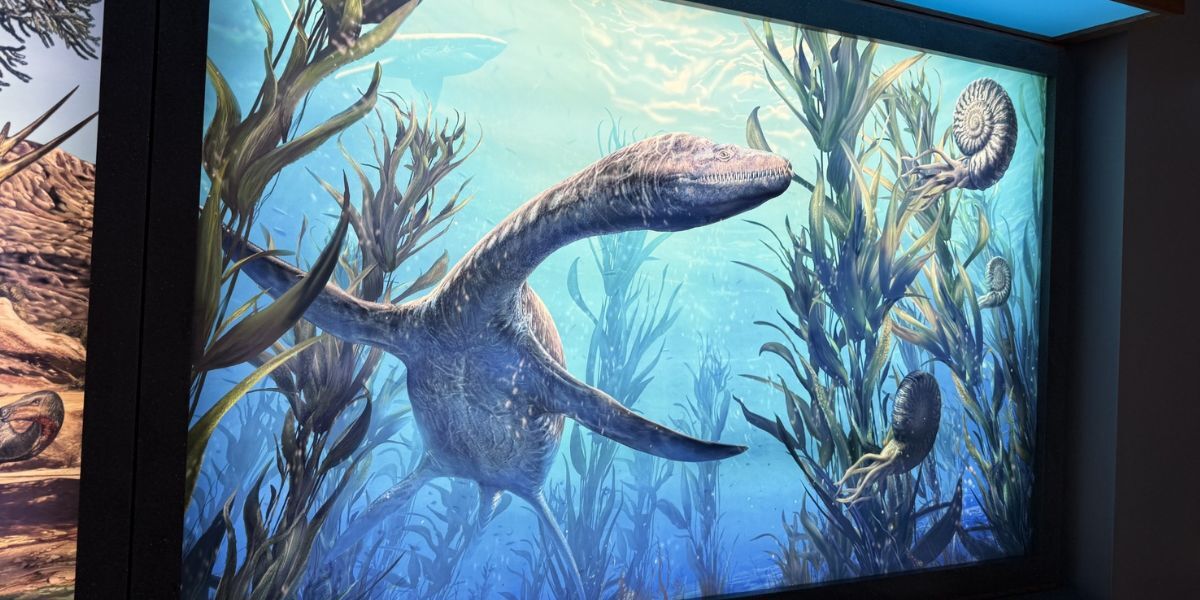
Once upon a time, all the way back in 1878, a professor by the name of James H. Kerr discovered what he thought was a mix of “21 different sea monsters” in Colorado Springs’ Garden of the Gods. Little did he know, what he found were the remnants of a species of dinosaur that had yet to be discovered and – to this day – has never been found again.
Now, before digging into this topic, it’s important to note that while Kerr’s initial belief that he had found ‘sea monsters’ might sound outlandish considering Colorado’s landlocked nature today, about 80 million years ago, the area that’s now Colorado was covered by the Cretaceous Seaway, which was filled with all sorts of… well… sea monsters. The 35-foot-long Mosasaur, for example – an apex predator that weighed more than 8,000 pounds. Kerr, however, had found something that walked the earth a long, long time before that.
Eight years after Kerr’s discovery, a famous paleontologist named Othniel Charles (O.C.) Marsh headed from Yale University to the Centennial State to inspect the fossil, according to Garden of the Gods. Upon arrival, he identified it as a Camptosaurus skull – not the various ‘sea monsters’ that Kerr had suspected, but a land-dwelling dinosaur species that was discovered in Wyoming in 1879… though that wouldn’t be correct, either.
According to Garden of the Gods, the ‘Camptosaurus’ skull was shipped to the Peabody Museum in Connecticut and mostly forgotten about for more than 100 years.
Flash forward to 1997, when two employees of The Denver Museum of Nature and Science – Dr. Ken Johnson and Dr. Ken Carpenter – would track down the ‘Camptosaurus’ skull for a new dinosaur-themed exhibit, making a replica of the skull for display at the Garden of the Gods Visitor and Nature Center, too. At the time, one of the employees, Dr. Carpenter, doubted its identity, but either way, ‘Campi’ the dinosaur remained on display as part of a Mile High City Jurassic exhibit.
It wouldn’t be until 2006 that Dr. Carpenter and Kathleen Brill would pin down exactly what species the fossilized skull represented – one that had never been encountered before.
The pair noticed some differences between the ‘Campi’ skull and its Camptosaurus counterparts – its shape, length, and the position of its nasal opening and eye sockets. It didn’t seem quite right and couple that with the soils found around the fossil, and it was clear that this fossil was that of something else.
According to Garden of the Gods, in May of 2008 it was announced that the fossil was actually that of a newly discovered species dubbed the Theiophytalia kerri – with ‘theios’ meaning ‘belonging to the gods’ in Greek and phytalia meaning ‘garden.’ The latter word, kerri, paid homage to Professor James H. Kerr.
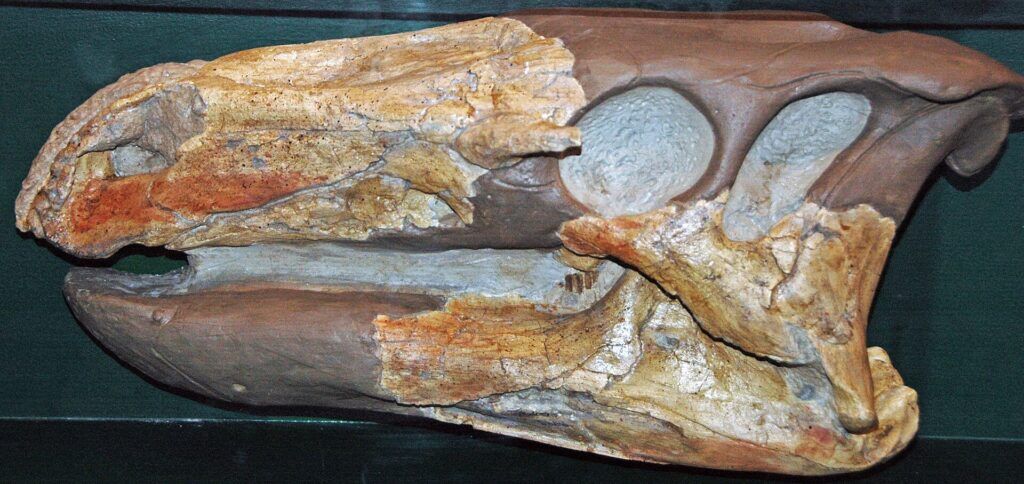
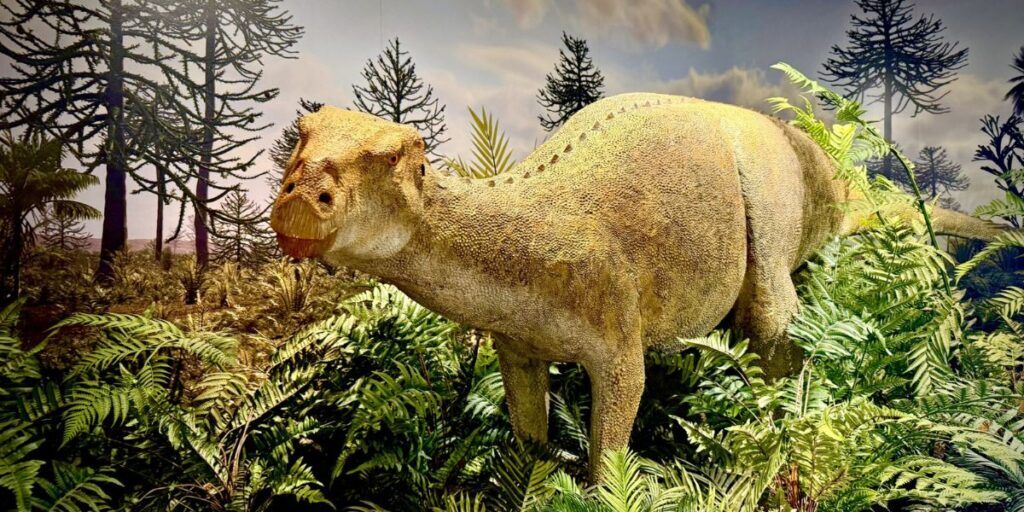
Estimated to be about 125 million years old, this still remains the only fossil representation of the species to be found worldwide. The Theiophytalia kerri is believed to be a herbivore that lived during the Cretaceous period – not the Jurassic period as was initially suspected by Marsh – stretching about 30 feet in length and weighing around three tons.
Reporting from Westside Pioneer indicates that a piece of rock attached to the fossil points to the area around Juniper Way Loop and the former visitor center at the park as being the area where the fossil was likely found.
Today, visitors of Garden of the Gods are able to see an exhibit related to the Theiophytalia kerri at the park’s visitor center, which includes a realistic model of the dinosaur and a cast replica of the skull that was found. Perhaps even more interesting is how a part of the exhibit includes a walk through the prehistoric existence of the land that’s now Colorado, looking back more than 500 million years.
Could there ever be an effort to find more local evidence of the Theiophytalia kerri species? We’ll have to wait and see.
STAY INFORMED: Get free Colorado news with our daily newsletter (Click here)
Get OutThere
Signup today for free and be the first to get notified on new updates.
PREV
PREVIOUS
"Fast growing" wildfire sparks in western Colorado amid dangerous conditions
Amid extreme fire risk on the Western Slope, a “fast growing” wildfire has sparked. According to the Montrose County Office of Emergency Management, smoke is visible in the West End area of their county and it’s coming from a blaze that’s burning in the Carpenter Flats area, north of Paradox. Per the most recent report […]

Colorado town plans to block non-residents from driving on some public roads
In February of 2026, a plan went public that aims to address ongoing concerns that have been expressed by residents of the Town of Bow Mar, Colorado, which is located just northeast of Littleton. It involves using a gate system to block non-residents from driving on some public roads, and per recent reporting from KDVR, […]