







Is Colorado’s housing market getting bad rap?
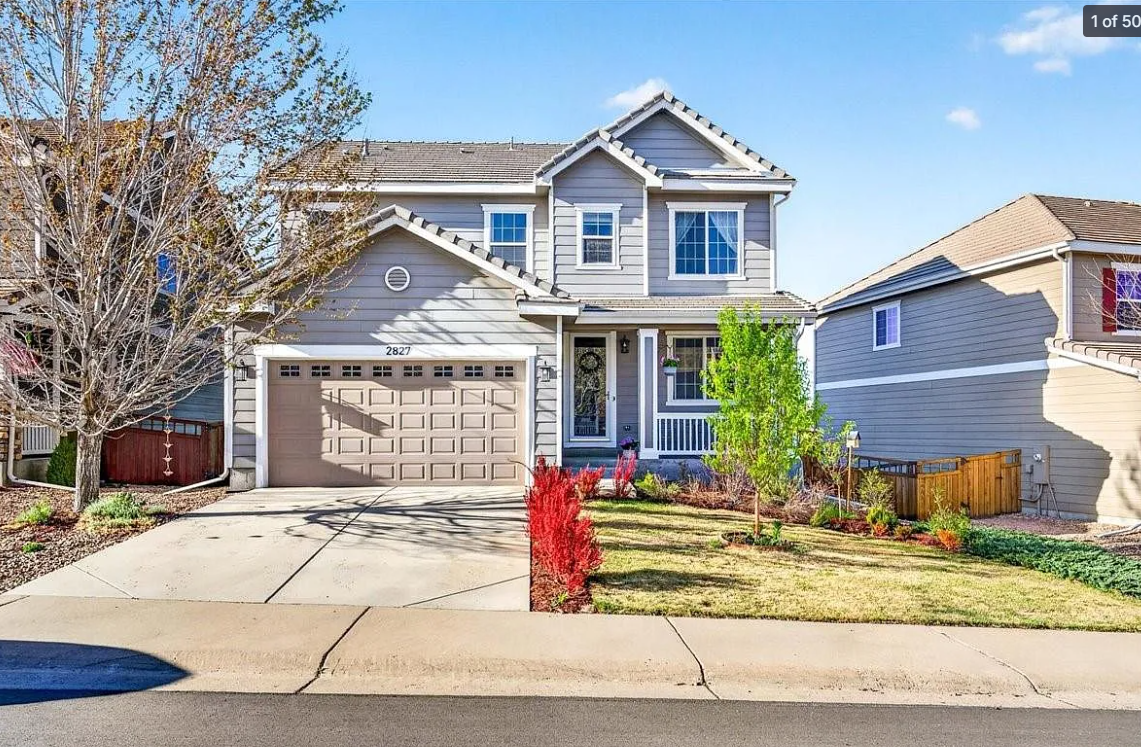
Has Colorado’s residential real estate market — Denver’s in particular — gotten a bad rap this year?
That’s what observers are noting, as actual reports on the state show rising home prices and a stabilized market.
That steadied — even improving — outlook was reinforced again this month, when the median price of a single-family home in the state increased another 1.7% over the price a month back, according to a newly released Market Trends report Thursday by the Colorado Association of Realtors.
The new numbers show a continuing pattern of price increases that have marked both the statewide and the local Denver metro markets throughout spring 2026. Even condos and townhomes — the weakest sector of the market recently — appear to be stabilizing now.
“The seven-county Denver-metro housing market is showing its resilience with buyer demand remaining steady despite a slower pace,” the new report said.
It added that although new listings coming on the market are down 5% year-over-year, pending contracts have increased 2.7% over the year.
That hasn’t kept a number of housing-related stories by media from portraying Denver and Colorado as on the brink of a price collapse with some YouTube and other social media features that target viewers who show interest in moving to the state.
Even some national media have taken the same drift.
In late April, a prominent story in the Wall Street Journal said that Denver had replaced Tampa as the “weakest major U.S. housing market,” based on Case-Shiller Index data.
At a moment when Colorado’s population growth has slowed, concentrated primarily in just a few counties along the Front Range, the new CAR data shows prices continuing to increase despite wider concerns about the economy.
Agents here said that the incongruity reflects a city that is changing, losing some population due to affordability, but gaining other buyers who see the higher prices as a value against their home markets.
The median price of that Colorado home, rising again month-over-month, was also up 3.4% over the price a year ago, a span that was widely viewed as offering up concessions from the boom market of the COVID years.
Indeed, population growth in Colorado, which had helped drive the region’s burgeoning economy over recent years, has slowed markedly, with some counties in metro Denver experiencing losses, according to a new report. That rate of growth poses repercussions for Colorado’s housing market.
From 2024 to 2025 the state added just 33,151 residents, marking one of the lowest annual growth cycles it had posted over the past decade, according to a study issued last week by the Greenwood Village-based Common Sense Institute. That recent total shows Colorado’s annual population growth having slipped by some 60% from 2015, a summary of the study concluded. During the span of 2015 to 2016, Colorado saw a population increase of 83,036, the study said.
Although recent data show the state is still gaining residents, those tend to be concentrated in a small number of counties, according to the report. Meanwhile, some other counties that had reflected growth in previous years are now posting declines, the study said.
Housing affordability unchanged
At the same time, the number of sold listings in the state dropped by 2.5% over the year, while the housing affordability index, an indicator of whether home prices are well placed with respect to typical incomes, stands virtually unchanged.
Other data suggest that Colorado’s market is showing better analytics than many markets under duress now.
That includes foreclosure filings, which had jumped here as they had in many other states with a rise in mortgage rates. But as of April, the rate here is still running below the national average.
A national report issued earlier this week shows western markets in general are outperforming other regions of the country with respect to foreclosures and home construction. That is according to consumer analytics by LegalShield, a company that refers legal support for property related cases.
“Looking at Colorado, the raw numbers on foreclosures are on same trend as the overall western region and show Denver’s specific trend moving in the same direction,” Matt Layton, senior vice president for consumer analytics at the Oklahoma firm, told The Denver Gazette.
The new CAR data also showed real estate agents in the statewide market as currently getting 98.8% of their listing prices.
Those reports run counter to a disproportionate number of videos featured on YouTube and other social media, focused on Colorado and Denver, in particular, framing the market in starkly negative terms.
Among titles running now: “Kiss Denver’s housing market goodbye,” and “The biggest artificially induced housing bubble ever witnessed in human history.”
Colorado real estate agents who specialize in videos for marketing speculate on the reasons why Denver gets outsized negative coverage.
Those include, they said, the fact that the metro area lies in the nation’s empty middle far from the coasts, making it an easy focus for numbers that may apply across other regions. Also, video generators tend to love a story about a collapsed idol — a market that rode the crest of the pandemic boom, now seeing its comeuppance.
“Denver is changing for the long term,” said Eli Schmidt with LPT Realty, one of a number of local agents that are featured in video channels about the Colorado market and who comment on the outsized dissonant coverage Denver has drawn.
“It’s easy to hit on Denver,” Schmidt told The Denver Gazette. “The core issue is that since 2019 prices have gone up so dang much, it’s significantly more expensive.”
That, Schmidt said, translates into some buyers leaving the market, searching for better affordability, while expressing bitter sentiments about the change.
Buyers from out of state
“But there is also significant increase in household income (here). Buyers from California, New York or Chicago can get a great deal here. They’re the ones who can afford (homes) and that’s why we’re not seeing those prices drop,” Schmidt said.
Landin Smith with REMAX Professionals, who practices in Highlands Ranch and Douglas County and produces a stream of news programs on the Denver market, said that negativity runs strong at a time some buyers are migrating elsewhere.
“I get negative comments from a lot of people frustrated with the affordability issues,” Smith said.
“There’s a lot of negativity seeing Denver change. But there are also people who say that Colorado is great, that you can’t beat the weather, and that it feels like taxes are being held in check.”
Smith added, “Zoom out and there are 11,500 homes (on the market) in the seven-county area. That feels like a balanced market, not a doomsday market.”
The new CAR report also shows condominium and townhome values having stabilized somewhat, despite having given up the most ground during the past two years.
Year-over-year data shows prices in that sector having hit a peak late in 2023, when the median stood at almost $425,000. That median price last month was $400,000, up from a pre-pandemic price of $319,000 in December 2019.
In the mountain resort markets, agents were seeing the same, stabilized outlook on sales.
Dana Cottrell with Summit Resort Group, who reports to CAR on Summit County, said single-family sales were up 27% year-over-year, with average prices up 6%. Multifamily home sales were down 32%, but the average price was up 19% over the year.
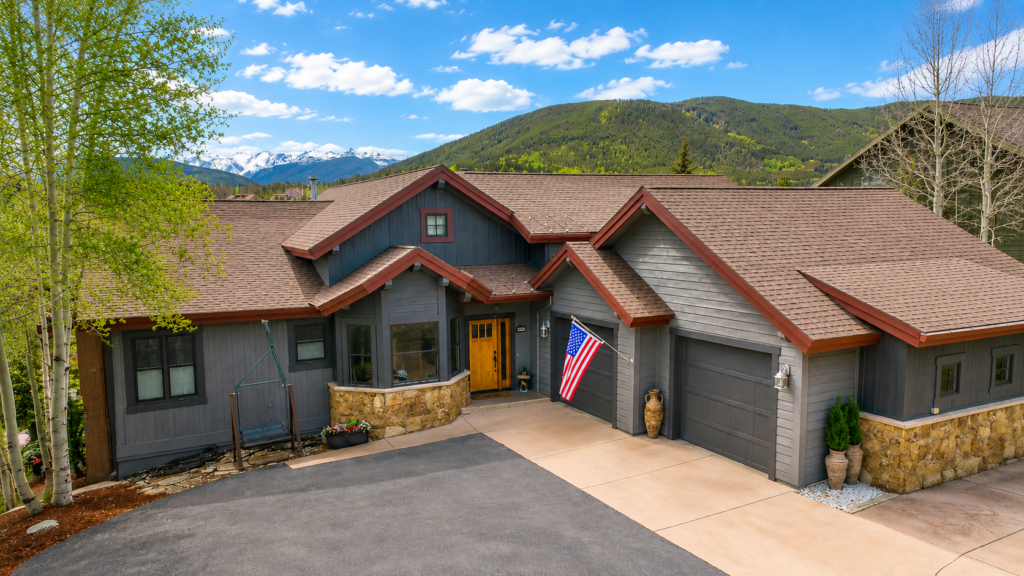
“While inventory is gradually building, prices continue to show resilience across much of the region,” Cottrell said in the CAR report. “Buyers are finding more choices than they had a year ago, but well-positioned properties are still attracting strong interest and commanding healthy prices.”
Market could gain intensity
The CAR report added that Colorado buyers appear to have adjusted to mortgage rates above 6%. But some agents speculate that the market could rapidly gain intensity with a relatively small improvement in the rate.
“We’re not seeing the crash everyone is waiting for. I think we’ll stay flat for one or two years, up until the point where rates can adjust,” says LPT’s Schmidt.
“But once they see that five (in the mortgage rate), buyers will flock back to the market.”
Schmidt suggested a strategy buyers can use now with respect to monthly payments at a time when sellers are showing a willingness to negotiate about prices.
“If your first intuition is for getting the price under the asking price, if the price $10,000 under that will save you about $50 a month (on a payment),” Schmidt said. “On the inverse, instead of lowering the asking price, if you ask for a $10,000 seller concession toward your closing costs, then you can buy down your rate. But that could easily save $200 a month.”