







JeffCo fire agencies use tech, mitigation efforts to fight growing wildfire danger
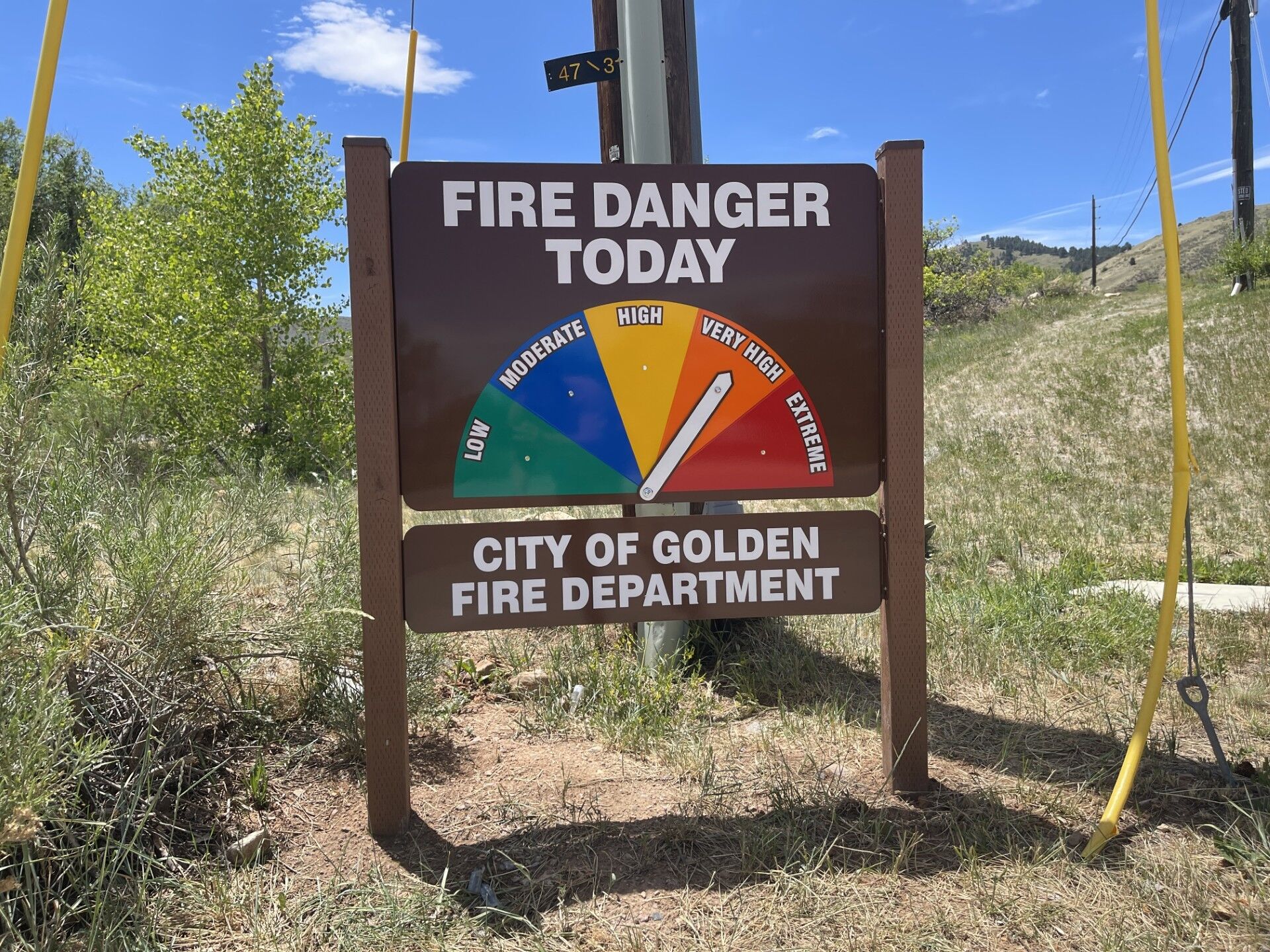
While Colorado may have seen a warm winter with historically low snowpack and drought, bringing with it the possibility of an increased danger for wildfires, Jefferson County fire agencies say they are well prepared for any blazes that may pop up.
Jefferson County faces a particular high threat for wildfires. Its location along the Front Range brings with it the threat of high winds coming off the mountains, which can pick up and carry small sparks and spread them across dry areas with high fuel accumulation.
The large number of homes, especially in the mountain foothills, ups the danger posed to the population, compounded by the extended drought Colorado has faced, which has led to a larger amount of dried-out grasses that can serve as wildfire fuel.
But officials are confident heading into the summer about their preparation for wildfires because wildfire season isn’t just confined to the summer. It’s a year-round prep process that fire officials say never ceases.
One new piece of firefighting technology fire departments across the state have started using is called PanoAI.
Developed in the last two years by an Australian company, Pano uses 360-degree cameras installed on towers to continuously monitor for smoke during the day and heat signatures at night. The system then sends warnings to human monitors and local emergency departments, who can then work to verify if the wildfire threat is legitimate.
Kasey Beal, fire chief in Golden, said the department has been using the technology for about a year.
Brian Keating, wildland fire programs manager with the Jefferson County Sheriff’s Office, said Pano provides its cameras to first responders free of charge, with the cameras being used in Jefferson as well as other Colorado counties such as Douglas.
Norris Croom, fire chief in Castle Rock, said Pano was recently able to alert Castle Rock firefighters to a wildfire so early that first responders were able to be on scene before anyone ever called 911.
Beal and Keating each said Pano has been an effective tool for spotting wildfires early, especially in unincorporated areas that have more spread-out populations.
“If it happens to be in areas where people aren’t typically looking, especially over the foothills, it will start to detect small starts and then those are validated by a human through Pano and then the alerts will also be sent to myself and 911,” Beal said. “So you get a lot of alerts, but the ones that are facing to the west are really helpful. Golden Gate Canyon is an all-volunteer department, and there’s not somebody typically staffed.”
Beal said the department also utilizes alert systems to notify residents about impending fire danger, which he recommends residents sign up for. Other technologies being used to spot wildfires include Deepfire, a satellite-based technology that looks for thermal heat signatures, Beal said.
With many of the wildfires being in either unincorporated areas or in between city and county lines, interdepartment collaboration is key when it comes to responding to wildfires.
In his role, Keating oversees wildfire response for the entirety of Jefferson County, which he said has a 98% higher risk for wildfires than any other county in the country.
Jefferson is split into 17 fire districts, mainly based on city jurisdiction. Fire calls are handled by the sheriff’s office, which coordinates with fire departments to respond to the scene. Many of the departments have mutual aid agreements between them, which allow for departments to share resources and crew to respond to fires, as well as work on mitigation efforts.
Many departments in Jefferson County also frequently send teams to fight wildfires in other states, not only to help other departments facing a severe wildfire threat but also so their firefighters gain valuable experience in facing a wildfire.
Mitigation and community engagement are also big parts of the wildfire response plan.
Jefferson County recently passed new building codes, which take effect July 1, meant to protect newly constructed structures from wildfires, which county Commissioner Lesley Dahlkemper said has been in the works for a few years now after the state legislature passed a law requiring counties to adopt new codes.
The newly revised codes are designed around removing wildfire fuel, such as accumulated logs and dried grass, from nearby buildings, while also promoting the use of flame-retardant building materials.
Dahlkemper said the codes can increase a home’s survival rate by 40% to 60%.
“We’ve been working on this issue for a couple of years now, really thinking more strategically about how we build greater wildfire resiliency through home hardening and through defensible space,” Dahlkemper said. “The revisions are incredibly important to saving lives and also saving homes, buildings and other kinds of structures in a community where you’ve got a severe wildfire threat.”
Each department in Jefferson County also has community wildfire protection plans, which are plans meant to educate the population in cities and municipalities about how to better protect themselves from wildfires and are updated every five years.
Community education is a big part of preventing wildfires, Beal said, as the county doesn’t have enough resources to go out to every home and property in the area and ensure it’s protected against wildfires.
By educating the public, everyone is able to do their part in stopping wildfires before they ever get the chance to start.
While the fire threat heightens in the summer due to higher temperatures and lower rainfall, officials said there is no real wildfire season anymore.
Departments said they are ready for wildfires to spark year-round. The devastating Marshall fire a few years ago was sparked in late December, when temperatures were low.
Kirk Lock, Arvada fire chief, said his department is always on the ready for a grass or wildfire to start.
“We’re as prepared as we can be, but we’re always concerned,” Lock said. “It just takes the right conditions on the right day and the right spark to set for everybody to have a bad day.”