







How the Denver Nuggets run a year-round global scouting process for the NBA draft
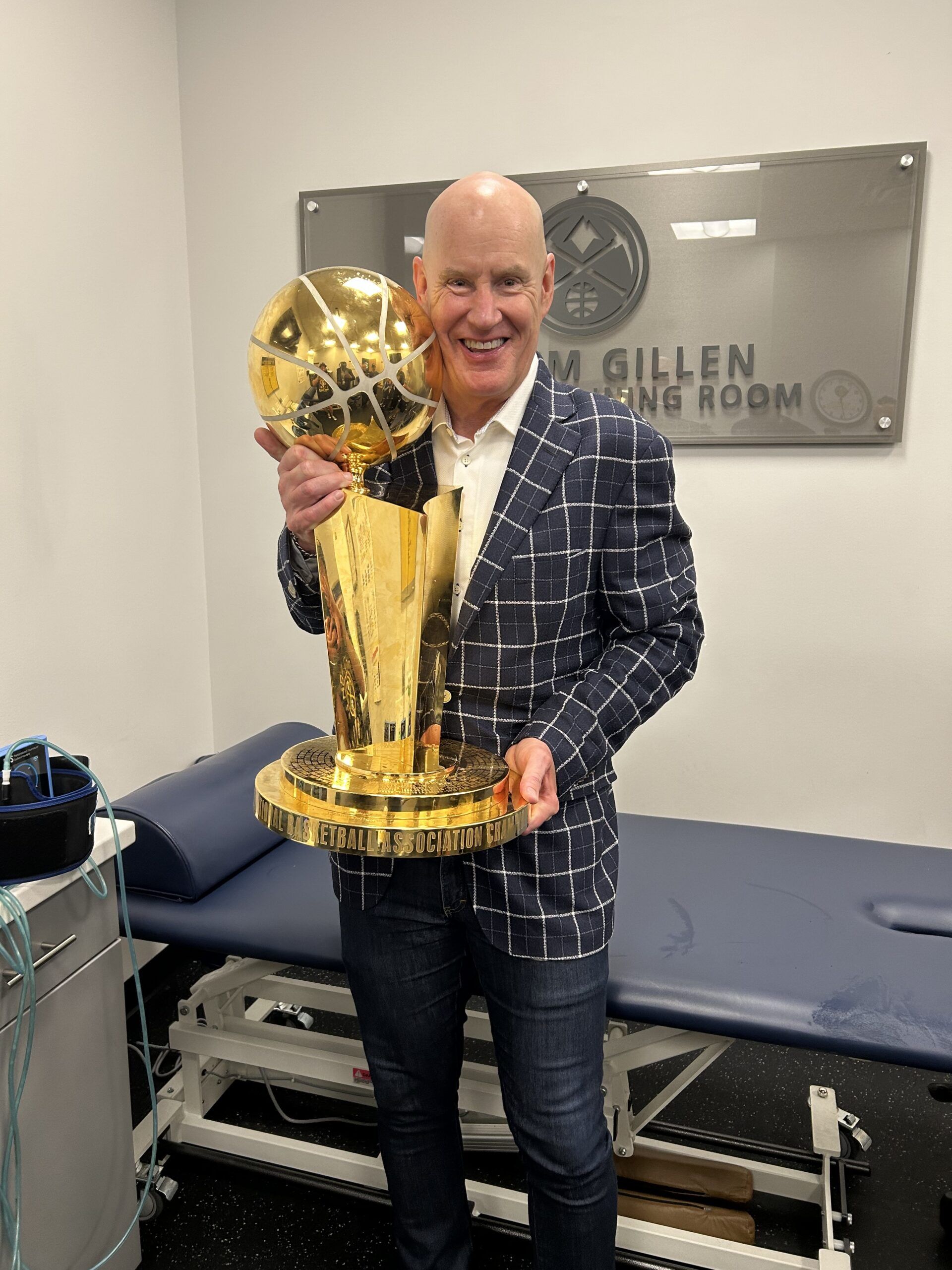
Scouting hardly stops for Scott Howard and Jim Clibanoff.
The NBA draft starts with Tuesday’s first round and ends after Wednesday’s second round. Then, Howard, the Nuggets’ director of college scouting, is headed abroad.
“Two days later, I leave to go to Turkey,” Howard told The Denver Gazette.
While there might be time to sneak in a visit to the Blue Mosque or Hagia Sophia, it’s hardly a vacation. Most of Howard’s time in Istanbul will be spent analyzing some of the game’s best young talents at the FIBA Under-17 World Cup. From there it’s back to the United States to take in some of the grassroots competitions that run for another month before there’s a brief chance to reset.
“Even during that downtime, you’re kind of starting to prepare for or look at ‘OK, what (college) teams am I going to want to start going to watch practice in September?’” Howard said. “Who’s got the best talent? Where am I going? You’re starting to line things up during that quiet period.”
Clibanoff’s role, director of amateur and grassroots scouting, includes checking out the sanctioned events from USA Basketball’s elite youth camps in Colorado Springs to the top AAU circuits put on by sneaker brands and the National Basketball Players Association’s Top 100 Camp.
“When you’re starting to watch kids at 15, 16, 17, it aids you so much,” Clibanoff told The Denver Gazette a day before the draft.
The man fondly called “Clib” around the organization briefly wondered if there is such a thing as starting too young when it comes to scouting. It didn’t take long to shake off that notion in the modern era of prep and college athletics where amateurism is long gone.
“With NIL and the way everyone is positioning themselves, it reminds me more now of when you would hear the soccer stories when the kid would turn pro at 13 or 14,” Clibanoff said.
After summer, Clibanoff joins Howard and the rest of the scouting staff across the country to cover the college basketball scene. Following the NCAA Tournament comes the pre-draft process headlined by the combine and individual workouts at Ball Arena in the days and weeks leading up to the draft.
The cycle starts all over again a few days later.
***
Denver enters this draft with the 26th overall pick Tuesday and a late second-round pick, the 49th overall, on Wednesday.
The scouting department doesn’t have the luxury of zeroing in on a specific range of picks even though it was a safe assumption Denver’s 2026 selection would fall somewhere in the 20s. Getting into the early lottery would require an unlikely trade.
“Part of our job is being prepared for every player out there,” Clibanoff said.
“If you only use that (narrow) focus, then you’re negating or blocking out all these players who down the road you need to know about.”
Even in a year like last, when the Nuggets started and finished the draft without a pick, there was plenty of work to be done. There was a chance, however slight, for a draft-night trade to snag a player who had dropped further than expected. That didn’t happen, but the scouting department had to be ready for any outcome.
“You have to prepare for the draft almost, in some ways, like you have all 60 picks, but you also have to prepare for the draft as if you have no picks,” Howard said.
“You have to know what undrafted guys you want to go after on two-way (contracts) and who you want to invite to training camp and all of that. You really have to know the entire draft from top to bottom.”
***
Only so much of the scouting is done in the gym.
Providing the most comprehensive report on a prospect includes getting to know the person as much as the player.
“We won’t take chances on jerks,” Clibanoff said. “When you establish your culture, it’s very important that you preserve it.”
“We value high-character players, so we spend an extraordinary amount of time with our intel work, talking to coaches, talking to grassroots people, the opponents of the players, the teams that the players played on, trying to find out ‘Hey, does this guy fit with us?’ Because we have such a high-character locker room,” Howard added.
“From top to bottom, we don’t have a bad-character guy on our team. It doesn’t work to bring a low-character guy in there.”
The process of getting to know a prospect continues over the course of the pre-draft visits to Denver. Some teams want to see how the athlete handles pressure or uncomfortable situations. Denver has operated in different fashion, something Howard credited to former executive Tim Connelly.
“I like to think our interviews, when we talk to them, they’re enjoyable. We want the guy to feel comfortable. We don’t want him to be uncomfortable,” Howard said.
“If we draft a guy, we want him to be enthused to be coming to our place at the start and not fear us. I think we’ve done a really good job of doing that. Because of that, I think that’s helped us. We haven’t had a ton of guys that just didn’t fit.”
***
Where are the Nuggets focused in the 2026 draft?
“We’ve talked a lot about length, athleticism, physicality, improving our defense,” executive vice president of basketball operations Ben Tenzer told nuggets.com last week.
Executive vice president of player personnel Jon Wallace, a former scouting coordinator for the Nuggets, considers the deep class “guard heavy.”
For much of the year, the decision-makers are dialed into their NBA priorities. Wallace and Tenzer are tasked with trying to improve the roster throughout the season via trade or free agent signings. Coach David Adelman is too concerned with winning games to grind through film of the top prospects, which makes being on the same page of increased importance.
“You understand who DA is as a coach and you can make it even more refined,” Clibanoff said.
While the coach and executives are managing their primary responsibilities, the scouts have an evolving list of potential targets that ebbs and flows over the course of the season.
“Early on, you’ll feel like ‘Man, these are the 10 guys that we should be focusing on with the 26th pick.’ You’ll feel that way in February,” Howard said. “Then, all of a sudden by the combine, 15 more guys come on the scene. Now, all of a sudden, your list is back to 40 guys. … I think we’ve done a really, really good job of making our coaching staff included in this, because at the end of the day, the player is going to play for David Adelman.”
***
As much work as the Nuggets put into getting the complete picture, scouting remains an inexact science.
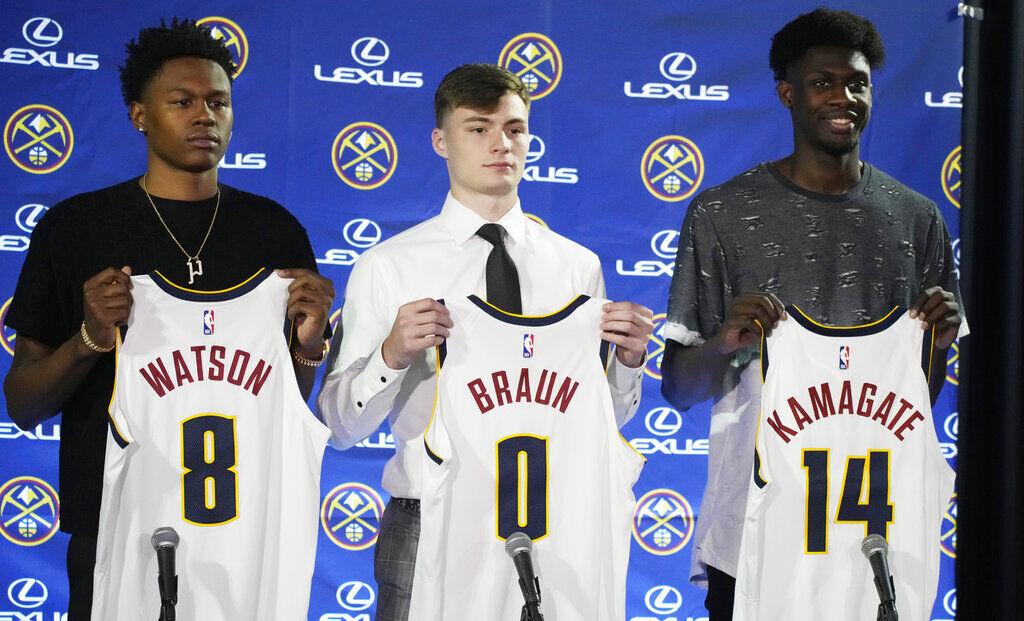
For every Nikola Jokic, Jamal Murray, Christian Braun or Peyton Watson, there’s an Emmanuel Mudiay, Tyler Lydon, RJ Hampton or Bones Hyland to keep the scouts humble. In such a demanding job where the stakes are high, the Nuggets have found a way to keep things light.
“Getting along with your work colleagues, it’s critical man. … We’re on the road so much, you better get along,” Clibanoff said.
“That’s been one of the most important things, just understanding where everyone else is coming from, respecting their opinions.”
While some teams are better than others, none can boast a perfect record when it comes to evaluating talent. The almost continual work done by Denver’s scouting department, led by Clibanoff and Howard, certainly has its stories of success.
“Shoot, I’m wrong probably more than I’m right. You just got to make sure your right is really right, and your wrong is only a little wrong. When you do it the other way around, you’ve got a problem,” Howard said.
“We’ve swung and missed, but we’ve got the rights really right.”