

Epicenter of Colorado’s most intense drought is located in heart of outdoor recreation country
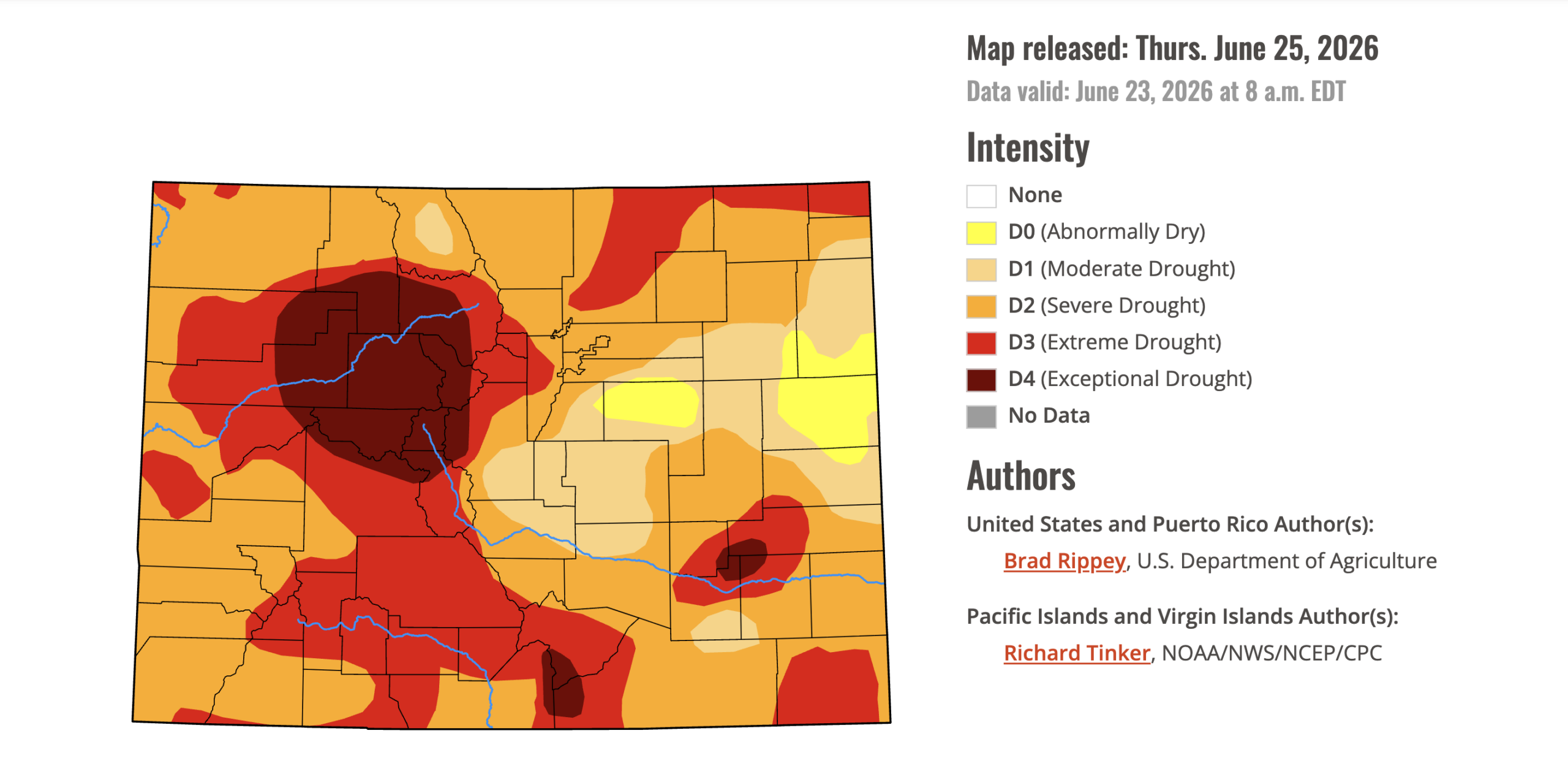
As Colorado makes the transition from spring to summer, nearly the entire state remains in drought – 96.56 percent of it, to be exact, with the largest swath of land experiencing the most intense drought located in the heart of outdoor recreation country.
Per June 23 data from the U.S. Drought Monitor published on June 25, the state’s current ‘Drought Severity Coverage Index’ score (DSCI) is 329 – a number that’s been on the rise since early June after a brief mid-May decline and at a level not seen aside from earlier this year since March of 2021. Even more concerning is that the most intense drought is centered on Eagle County, which is at a maximum DSCI score of 500 – it’s been at this level since the end of March and has never hit that score before with records dating back to January of 2000. For the first time, 100 percent of the county is experiencing stage four (of four) drought conditions.
It’s not just Eagle County, either – the entirety of Pitkin County and the entirety of Lake County are also at a DSCI score of 500 with all local land experiencing drought stage four conditions, as well. The counties surrounding the aforementioned trio also have large chunks of land at the same exceptional tier, including counties of Grand, Summit, Garfield, Routt, and others.
With this part of the state home to iconic outdoor recreation destinations like Vail, Aspen, Leadville, Breckenridge, Glenwood Springs, Winter Park, and a long list of other mountain towns, the impending flood of summer visitors may be major cause for concern. Not only will these visitors be facing off with outdoor recreation changes related to a lack of water and drought-induced camping implications, with people in the backcountry comes inherent wildfire risk – and amid an extremely dry year, that risk will be spiked for the foreseeable future.
All this to say, those heading into the backcountry for outdoor recreation this summer will need to exercise extreme caution when it comes to fire safety. Don’t park vehicles on tall grass, follow all fire bans and restrictions, and be adamant about reporting potential concerns and suspicious behavior quickly. Obviously, wildfires can be devastating, posing major safety concerns, draining state resources, and destroying landscapes. Another impact of wildfires that can be overlooked is how they can limit recreation in a far-reaching way. Smoke travels, and with that, a fire in the west might mean having to stay indoors in the east, etc. Protect the land, life, and the ability to enjoy recreation by being fire safe.
The only part of Colorado that’s not experiencing drought includes two small pockets of the Eastern Plains region. With hot weeks ahead, it’s likely drought will get worse.
Explore more of Colorado’s drought statistics here.
STAY INFORMED: Get free Colorado news with our daily newsletter (Click here)
Get OutThere
Signup today for free and be the first to get notified on new updates.