







How to heal the lonely American soul? | Pius Kamau

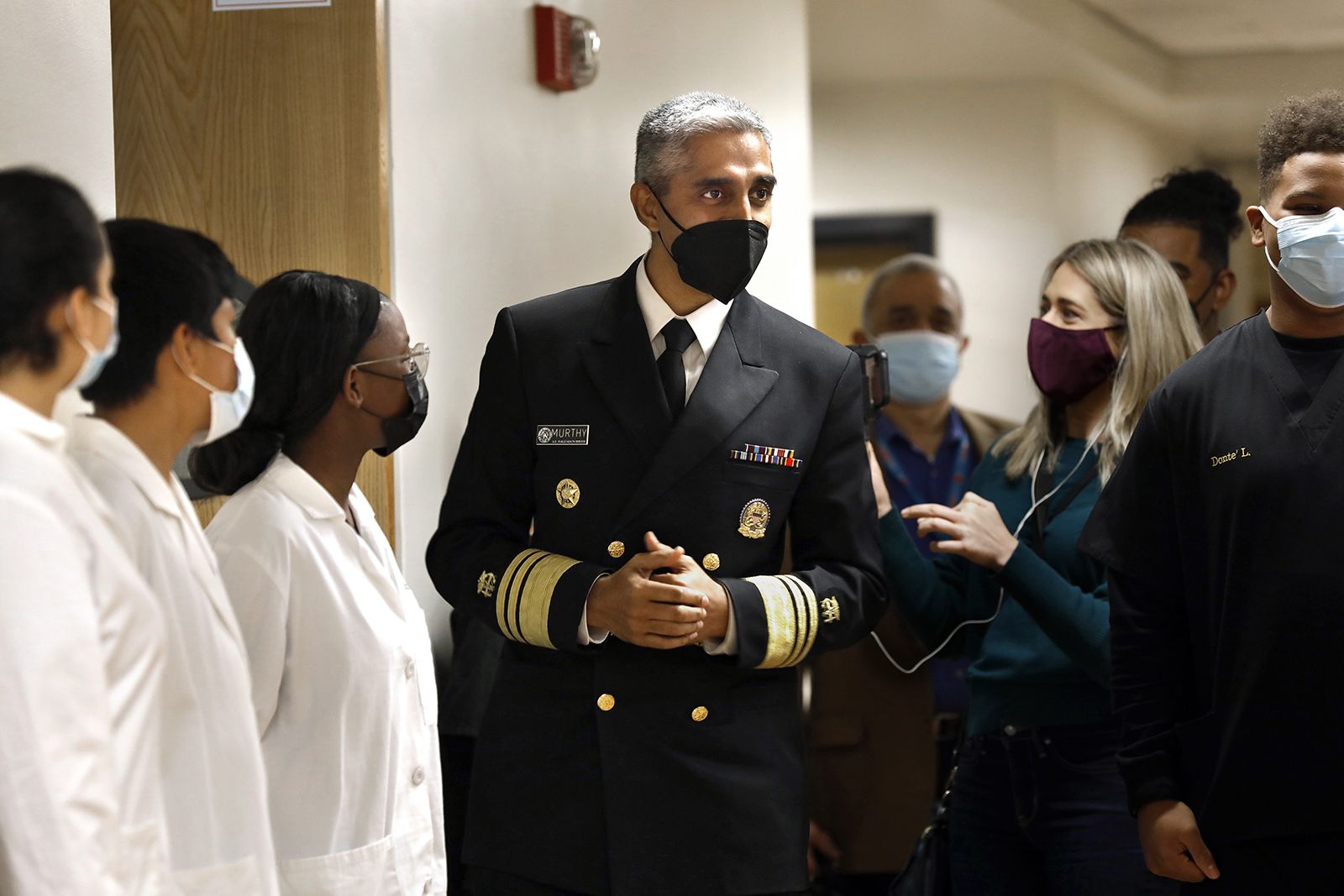
Americans are suffering from loneliness, Dr. Vivek Murthy, the former surgeon general, believes. He identifies loneliness as a significant public health crisis that poses serious risks to mental and physical health comparable to smoking half a pack of cigarettes a day. I agree with him even though I don’t know that we can quantify in mathematical terms the harm done to an individual American by his loneliness.
Solutions for the ailment exist, except it is doubtful that most Americans are in a listening mood to any authorities, least of all medical scientists. And in this we find ourselves in trouble; we have lost trust in each other, and in ourselves.
I have thought of how much good can be accomplished if most Americans learned to look outside themselves at the world they are part of. Like Vivek I, too, have seen our gradual withdrawal, our casting looks of suspicion at each other. It is a cause of deep sadness for many who would be willing to assist other members of their communities. A good example is our communal reluctance to stop and give a young woman a car ride, or help a mother and her children stranded in the rain on the road; or stopping for a man clearly in need of help by the roadside. It has a lot to do with the road: because of our poor public transportation, and great distances we must travel from home to work or to procure food. Daylight attacks, car hijackings and kidnapping of children and other atrocities have only served to increase our isolation and general reluctance to help. Many are the examples of ways in which we force ourselves and each other to isolation. As unwilling as I maybe to give a young person a car ride, he too carries suspicion and fear of imagined harm to himself.
Without trust in each other, we begin to look inwards; it gets harder to traverse the short distance between oneself and one’s neighbor, or coworkers. The suspicion of neighbors, people we meet on our way to or from work, is an ever growing phenomenon.
Our hand held devices disturb our communal dialogue; they often act as shields against those beside us. It’s astonishing to see groups of friends gathered together silently scrolling over their phones, evidence of our being alone with our stories even in the company of many. The temptation to whip out one’s cell phone for texts and phone messages is almost reflexive. I’ve become a bit more disciplined, I put away my devices in the company of others — New York Times, New Yorker, or The Denver Gazette can wait for a while until I’m done talking to my friends.
Reality is, it is so much more fun, entertaining and educating, to watch, to talk to, and get to know other people rather than transport ourselves to distant lands, and times on our cell phones. There is great value in hearing rumor and gossip from nearby tables or crowds; it’s what makes us human and members of society. According to Jane Goodall, language is what separates us from chimpanzees. Inability to communicate leads to isolation from neighbors, people who possess the potential medicine potions of friendship.
We are materially the richest nation on earth, the envy of the world. And yet, as a feeling of hopeless emptiness invades us, we find ourselves lonely amidst our plenty. We medicate ourselves with a variety of pharmaceuticals; various forms of self-harm and suicides are relatively more common in America.
In the Netflix series — Adolescence — a school boy comes under Internet influencers, in the so called “manosphere,” that promotes ideas about masculinity, dating and gender relations. Concepts of surrogate mentors and incels — members of online subculture — blame women for their insecurity, rejection and inability to find sexual partners. It is tragic cinema that uncovers the harm that isolation and feelings of unworthiness bring.
Upon my arrival in America, I found the proliferation of guns in the country puzzling. Why, I wondered would I want to defend myself from my neighbor, or fellow travelers on the bus? The truth is, we grasp onto our stuff with hoops of steel, our relationships are tenuous, our ability to befriend others always doubtful. Jane Goodall and Brené Brown — star social workers — would advise us to talk to those standing beside us, those who live next to us, those who work with us.
Brené Brown suggests we allow ourselves to be more vulnerable in friendship.
Pius Kamau, M.D., a retired general surgeon, is president of the Aurora-based Africa America Higher Education Partnerships; co-founder of the Africa Enterprise Group and an activist for minority students’ STEM education. He is a National Public Radio commentator, a Huffington Post blogger, a past columnist for Denver dailies and is featured on the podcast, “Never Again.”