







EDITORIAL: The Wright direction on energy policy
At long last, U.S. energy policy is being led by someone who actually understands the energy world — and recognizes the need for government to unleash, not restrict, energy innovation.
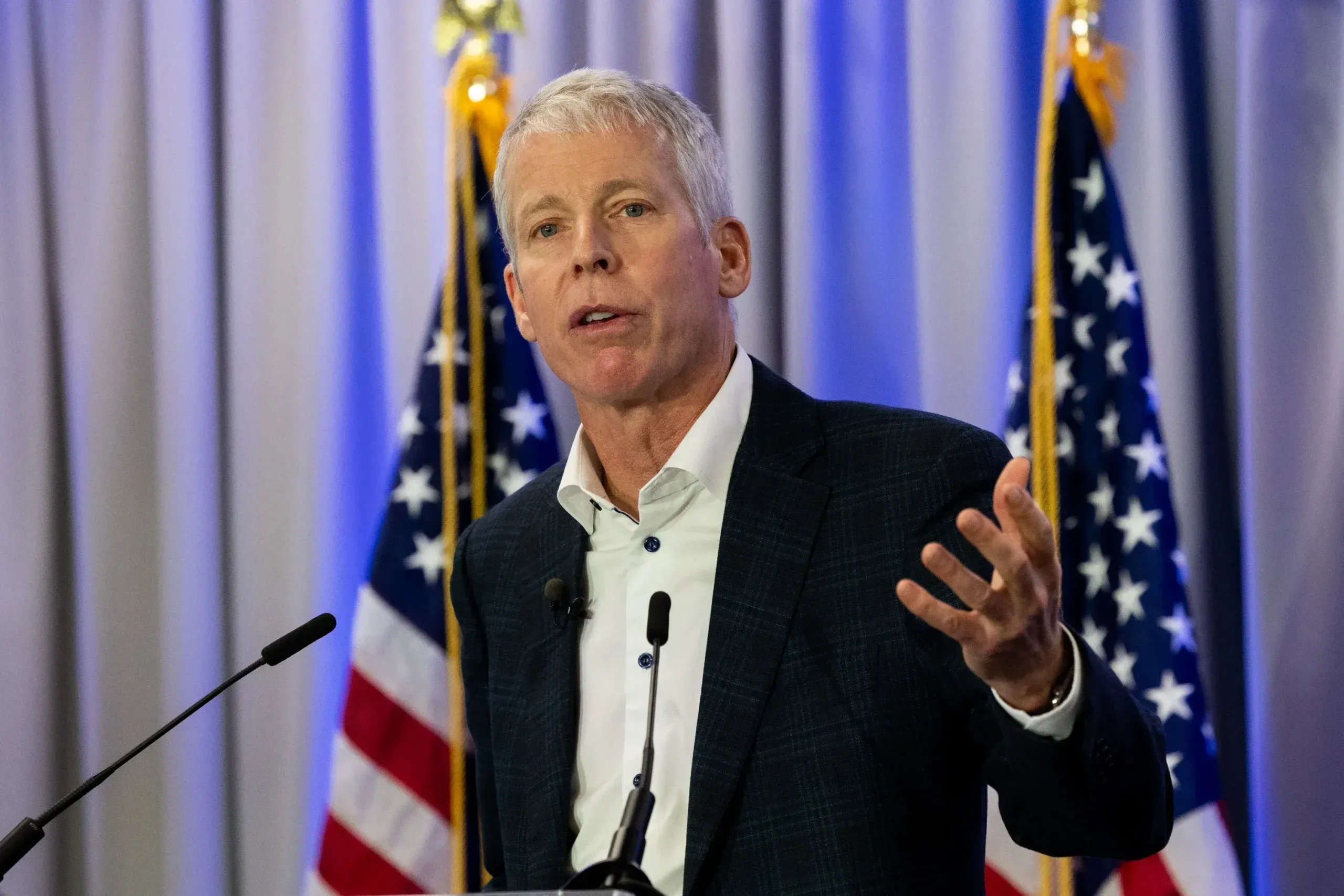
U.S. Energy Secretary Chris Wright made an appearance in his home state of Colorado last week, speaking at an energy forum in Thornton hosted by the America First Policy Institute.
Wright reaffirmed the need for increasing America’s capacity through an all-of-the-above strategy. That means oil, natural gas and nuclear. It also means wind, solar and hydroelectric power — but not through wasteful subsidies that jack up costs.
“I went to college to work on fusion energy,” Wright said. “I worked on solar energy in graduate school, and geothermal energy right after.”
“I don’t care where the energy comes from,” he added. “The lights are kept on by gas, coal and nuclear. We have got to grow the capacity, and we are majority focused on that.”
The secretary is right.
As The Gazette reports, critics argue that recent heat waves demand a faster transition from conventional fuels. But as Wright points out, a scorching summer underscores the need for affordable electricity to cool our homes and businesses.
“Most of these energy subsidies made energy more expensive. We will not lend a dollar that won’t be paid back,” he stressed, noting the administration has slashed loan programs that don’t decrease energy costs.
About $10 trillion has been spent worldwide on solar, wind, batteries and transmission to remote sites in recent years, he observed — only to yield a 3% boost in global capacity and just over 3% in the U.S.
Those returns are hard to justify if the goal is abundant, affordable energy.
Those driven by concerns over climate change should be encouraged. American nuclear-energy capacity is getting a major boost under Wright’s leadership at the Energy Department — and nuclear power produces zero carbon emissions.
“For the first time in more than four decades, a new, privately developed non-light-water reactor has reached criticality in the United States,” Wright said.
He pointed to two advanced reactor designs tested in June, including a successful demonstration on June 4 by Antares Nuclear at the Idaho National Laboratory.
As The Gazette reports, the federal energy office said the test confirmed the reactor could operate safely and provides a basis for future reactors to produce electricity beginning next year.
A second successful reactor test took place in Utah on June 18, with more expected in early July.
“It takes a small amount of material to make a lot of energy. We are going to make that nuclear renaissance that we have been talking about for 20 years,” Wright told the audience.
The nuclear push will put the U.S. in a stronger competitive position to meet soaring energy needs, especially with data centers supporting AI, quantum computing and other advanced technologies.
Wright also touted America’s status as the world’s leading exporter of liquefied natural gas. Often considered a “transition fuel,” natural gas reduces global greenhouse gases because it burns more efficiently than coal and fuel oil.
In recent years, Colorado’s ruling Democrats have treated natural gas as an enemy. Wright’s approach recognizes how essential it is to expanding America’s energy supply.
Whether it’s oil, gas, nuclear, wind or solar, foresight demands we take all the energy supply we can get.
Kudos to Secretary Wright for advancing the long-overdue vision of unleashing America’s energy potential.