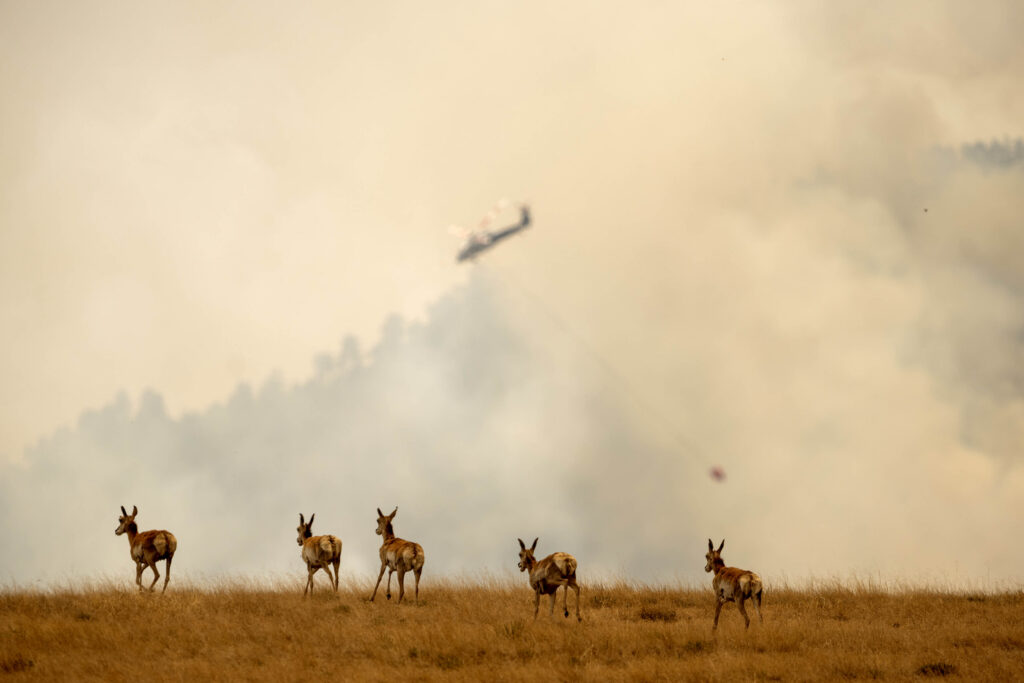
‘Have a plan’: Sheriff cautions Pueblo residents as erratic Aspen Acres fire reaches nearly 82K acres, 11K evacuees
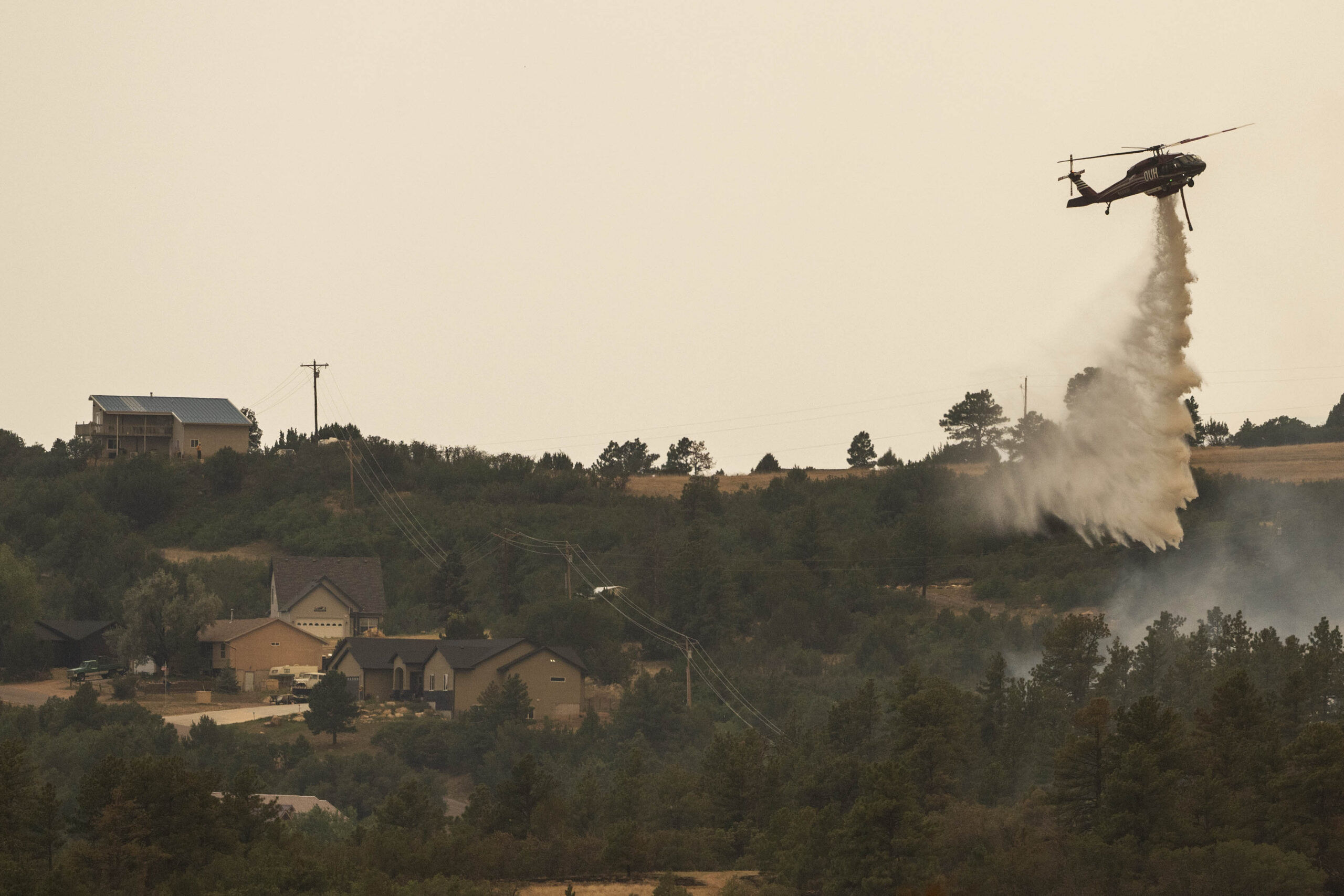
Pueblo County Sheriff David Lucero, like hundreds of firefighters, has worked long nights on little sleep due to limited resources to combat the Aspen Acres fire, which ignited on Monday, as it steadily marches toward the most populous cities in his jurisdiction with no containment.
“We’ve seen things I’ve never seen in 26 years in law enforcement with the behavior of this fire. You should have a plan, and you should be prepared,” Lucero said at a news conference on Friday with heavy eyes to residents of Pueblo and Pueblo West, despite it seeming unlikely to reach their city limits.
The fire has become one of the largest and most destructive in Colorado history after continuing to expand its perimeter in several directions in Pueblo and Custer counties on Friday, prompting Colorado City to join a growing list of towns under evacuation orders.
None of the mandatory evacuation or pre-evacuation orders for communities in Custer, Fremont, Huerfano and Pueblo counties have been lifted. Around 11,000 residents have been evacuated so far, Custer County Sheriff Rich Smith said on Friday.
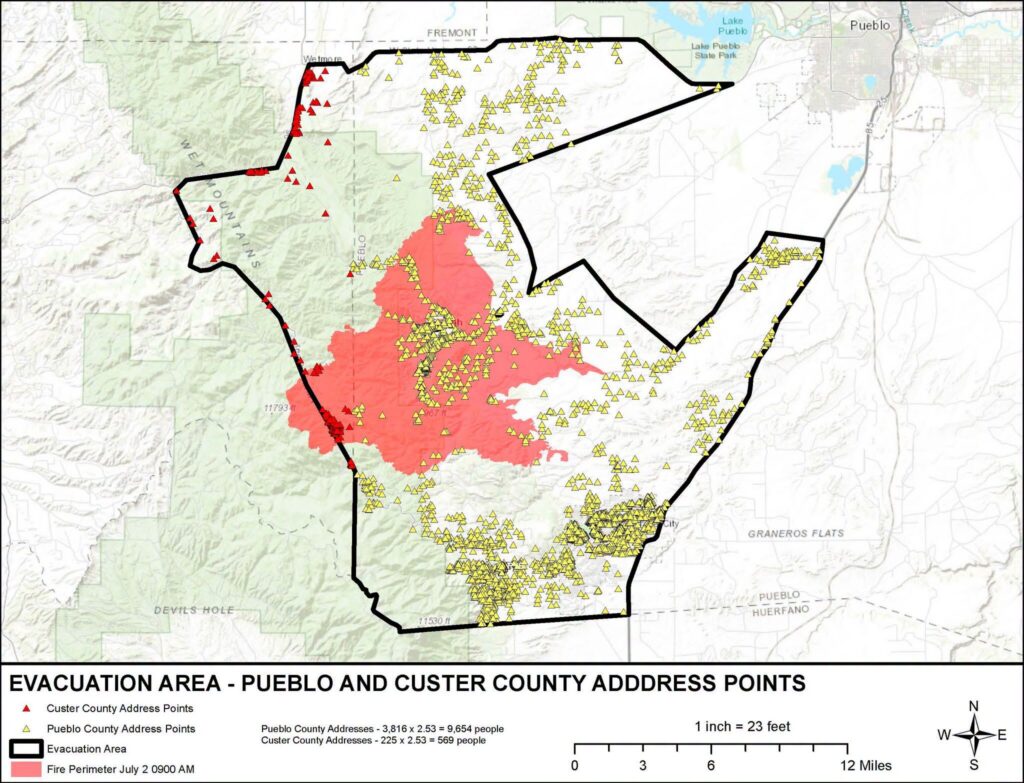
The 81,850-acre fire with no containment has left crews battling it for over 22 hours at a time, which Lucero said is atypical because they can usually rest in the evenings. Up to 1,000 firefighters and dozens of fire engines have been requested to allow crews battling the flames to split into day and night shifts.
The Aspen Acres fire remains the top priority fire for firefighting resources in the country, even drawing crews off fire lines in California and Utah. Some crews battling the Snyder fire along the Colorado-Utah border, which killed three firefighters but has become 95% contained, have also been sent to the Aspen Acres fire.
They will join several hundred firefighters already battling what became the eighth largest fire in Colorado history on Friday. Crews are currently focusing on point protection to guard life and property, rather than protecting fire lines.
“We’re not going to put firefighters out there and potentially impact them and have another fatality in Colorado this year,” incident commander Jake Livingston, of Alaska Critical Incident Command Team 1, said of the point protection strategy during a community presentation on Friday evening.
However, some lines are being created by the city of Pueblo and some local landowners as evacuation orders inch closer to the city, with one bordering part of Lake Pueblo State Park along Colorado 96.
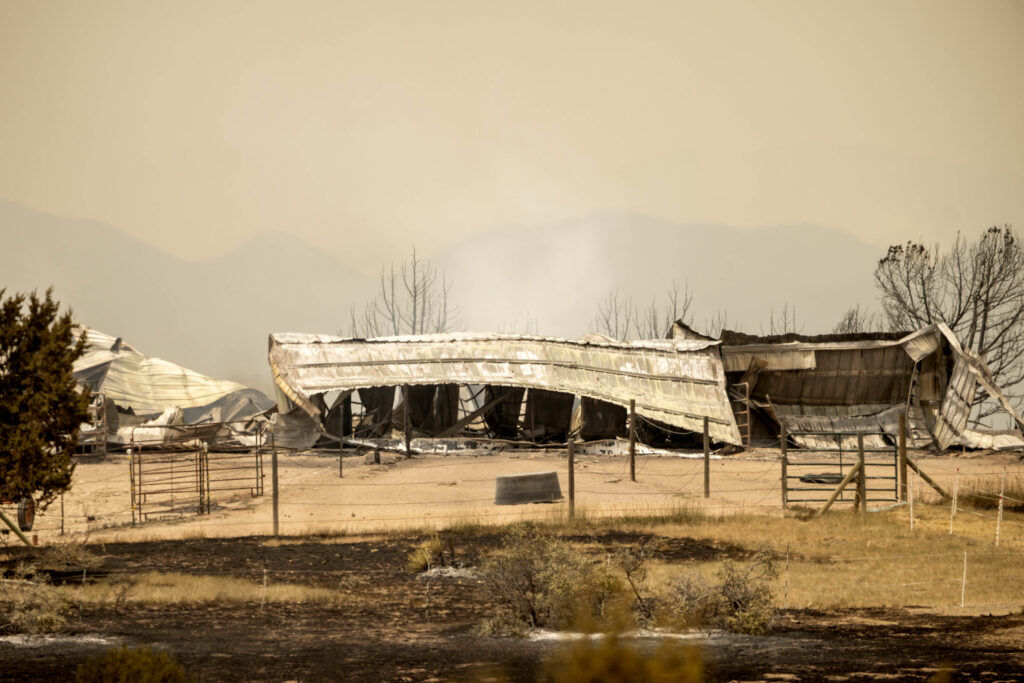
Gov. Jared Polis told reporters on Thursday that at least 160 structures were damaged or destroyed in the Aspen Acres fire so far. Officials did not update the total at a news conference on Friday, partially because dangerous conditions prevented damage assessments.
Additional damage assessments by search and rescue crews will begin in Custer County on Tuesday, Sheriff Rich Smith said, adding that the fire was within 200 yards of Bishop Castle.
Officials have previously said it will take days for investigators to reach the origin of the fire to determine its cause.
Livingston believes harsh winds, heat and low humidity will continue to plague the region full of dry fuels, making it difficult for firefighters to contain the fire, which has had no publicly announced containment since its ignition.
“We’ve been largely in what’s called defensive mode, so what we’ve been responding to is what the fire is doing. We haven’t really been able to go offensive,” Alaska CIMT 1 Operations Section Chief Brad Washa said during the community presentation.
Limited fuel between the fire and Pueblo means only a “rare event” could allow it to reach the city’s limits, Livingston told community members.
Livingston and Washa, along with other members of Alaska CIMT 1, were sent to take over incident command of the Aspen Acres fire from the state on Thursday morning.
Incident command officials made their first presentation to community members on Friday evening for an opportunity to explain their operations and ask questions. They include members of Alaska CIMT 1, the United States Forest Service, the Bureau of Land Management, the National Weather Service and Pueblo and Custer counties.
They plan to hold in-person community meetings in the areas where evacuees have been relocated in the coming days.
Fifty National Guardsmen were also deployed to the fire on Friday to help with managing road closures, which could soon include Interstate 25.
The interstate could close if the fire changed direction and prompted additional evacuations, but it would only come after allowing time for evacuees to escape, Livingston told reporters.
The Colorado Department of Transportation warned drivers of low visibility caused by smoke from the fire between Pueblo and the Huerfano County line, which also blanketed America’s Mountain the day before the Fourth of July.
Officials have repeatedly warned their communities along the Interstate 25 corridor to avoid using fireworks or flames on the 250th anniversary of America’s independence, as they worry another fire would draw fire crews away from the Aspen Acres fire.
“If you care about our state, if you care about our firefighters, do not use fireworks or other types of flames this Fourth of July,” Polis told reporters on Thursday.