







In 1976 when it celebrated its centennial, everything was headed for Colorado
When the nation’s 200th birthday arrived in 1976, everything was headed for the Centennial State.
Colorado had captured the nation’s imagination. On the radio, John Denver serenaded endlessly about a place so pretty, you could get high just looking at it.
Everything was coming to Colorado — including people. The population living way out in the Rocky Mountain West had jumped 330,000 in five years to 2.6 million. Another 346,000 were on their way over the next five.
I know, because I was in that throng.
Watergate had left the country feeling glum and unsettled about where it had come from. But out in Colorado things looked untarnished and self-assured.
Newer pioneers
The mountains were 70 million years old, and the oldest part of Denver was looking down-at-the-heels — old cowboys leaning against the walls of wino bars, smoking cigarettes. But newer pioneers were buying entire buildings, restoring them, betting that you could clean out that smell of urine and stale beer and that a new crowd would want to eat and drink and hang out there.
Coors Field was still two decades in the future. The baseball team was the Denver Bears, playing in the original Mile High Stadium, where the east bleachers were on wheels that could be rolled out in spring to make room for line drives to left field.
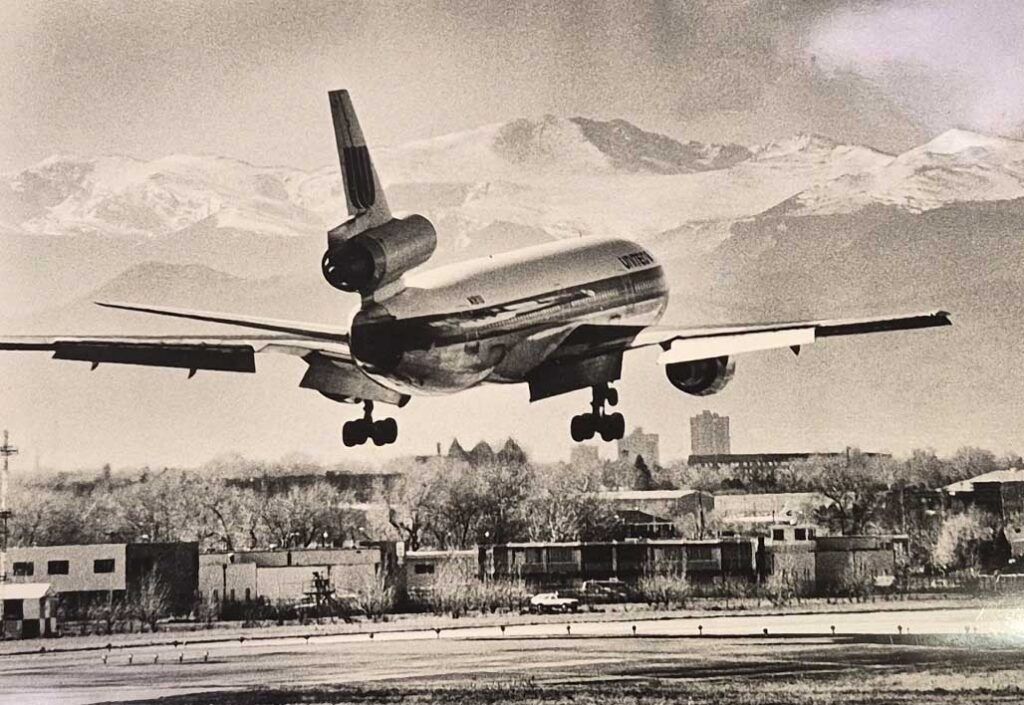
Back then, the Prairie was closer. The DC-8s and 727s arriving at Stapleton International flew low over the bank and oil company buildings of downtown to runways just four miles east. South of Arapahoe Road, the Valley Highway (Interstate 25) gave way to empty countryside dotted by gimmick attractions — the Hungry Dutchman, Trail Dust Steakhouse and Country Dinner Playhouse.
At Arapahoe County Airport (it wouldn’t be renamed Centennial Airport for nine more years) the landscape just beyond was sagebrush.
Two years before Colorado turned 100, James A. Michener — “Hawaii,” “The Source” — came out with a 1,000-page novel about a fictional town, “Centennial.”
Fictional town of Centennial
If you were headed for Colorado, you read that book. You drove out and saw the places that Michener had seen — the Platte River east of Greeley (too thick to drink, too thin to plow) and the Pawnee Buttes way out in Weld County. You climbed Long’s Peak.
Everybody was heading for Colorado. There were jobs here.
The rest of the country’s economy was in the tank after a distant Asian war that had run on for 14 years. Things grew worse when Arab states shut off the oil spigot in 1973, driving gas prices to an unheard-of 55 cents a gallon.
But out in Colorado there was plenty of oil. And beyond what could be pumped out of the prairie, there were operators figuring how you could squeeze the stuff from shale deposits — or liquefy it from coal.
And out in Colorado there was sunshine, 330 days a year of it.
As every schoolkid knew, oil was liquid sunshine. So why not close the loop and run the country on energy from the sun? No fumes, no embargo, no line at the pump.
Solar energy was starting to sound like magic, and the minds that were marching to the solar energy drummer were headed for Colorado — to Boulder, to Golden and to Aspen.
Out-of-the-box thinking was luring brainiac science here — to Martin Marietta in Littleton and to the National Center for Atmospheric Research in Boulder.
Two weeks after the big national birthday party, on July 20, 1976, a Viking lander touched down on Mars — 50 years ago! — and started sending pictures home that looked as if they might have been shot near Moab.
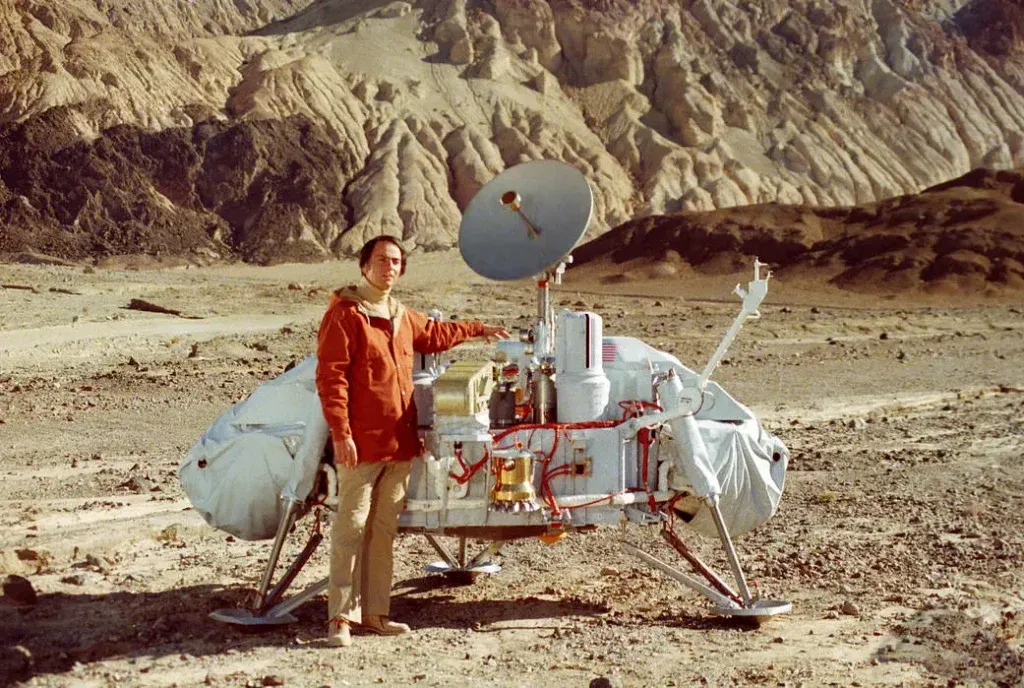
Colorado’s footprints were all over the alien craft. The big Titan rocket had been built in Littleton. The landers were designed, built and tested there and the mechanical scoop arm that began sifting through the red soil as well.
A month later, a backup NASA Viking (made in Colorado) pulled off the stunt again.
Solar scientists were headed for Golden (President Gerald Ford commissioned the Solar Energy Research Institute in 1974 and it opened in 1977). And anybody that was anybody was headed for Glitter Gulch.
Malibu in the mountains
Aspen was becoming a kind of alpine Malibu 1,000 miles from California, a Hyannis Port 2,000 miles from Massachusetts. After the Kennedy family gathered there in the 1960s, Jack Nicholson, Robert Redford and Jimmy Buffett were fast on their tracks.
All of the allure that Colorado had, Aspen had in spades — landscapes so enchanting a tourist might overdose on a single walk around Maroon Lake. There was a music festival drawing a highbrow crowd. And there was snow, and politics and creativity.
And a certain, seductive lawlessness.
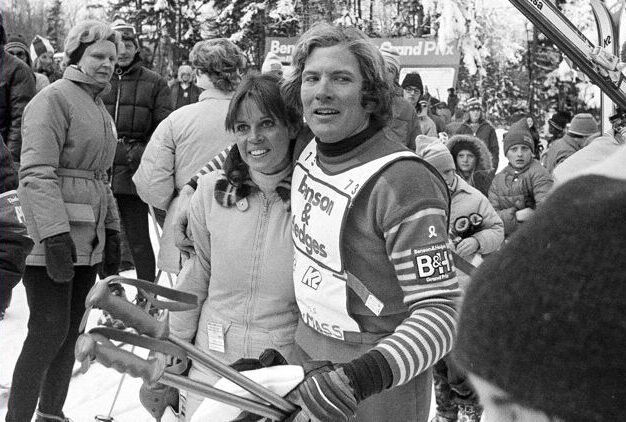
As the state’s centennial drew near, pop singer Claudine Longet held a .22 Luger belonging to her Olympic skier boyfriend, Vladimir Peter “Spider” Sabich Jr. At their house in a tony Aspen enclave, she shot him dead.
For Longet, justice was swift. She got 30 days in the slam, spent on consecutive weekends. Aspen police had made mistakes at the crime scene and the Colorado Supreme Court ruled to suppress critical evidence.
The sheriff of surrounding Pitkin County was Dick Kienast — whose walk-soft approach to drug enforcement would get him a CBS 60 Minutes story, for refusing to cooperate with the feds probing trafficking at Aspen Airport.
Fear and loathing
A few miles north, “gonzo journalist” and author Hunter Thompson — “Fear and Loathing in Las Vegas” — had already set up housekeeping in Woody Creek.
There was a tacit irreverence afoot in Aspen that might have been looked down on in a similar backwater in, say, Kansas or Alabama.
But this was Colorado, and Colorado didn’t do things the way other states did. Coming into its centennial there was a Butch-and-Sundance romance to violating rules.
Where but Colorado would a state with famous ski towns have the chutzpah to turn down hosting the international Winter Olympics?
When the Committee awarded the 1976 games to Denver, the state had already spent a sizable sum luring the body’s attention, in hopes of much bigger receipts — maybe $30 million in grants and broadcast licensing (a lot back then), not counting construction and tourism revenues.
But then Gov. Richard “Dick” Lamm, who came into office the year before the games would open, had already led a voter drive to turn the committee out. Citizens voted to disallow public funding and the games went to Innsbruck, Austria. (Later experience suggests that it had probably been the right move.)
The Olympics, Lamm and others told Colorado voters, would have a price tag higher than advertised and an infrastructure that could wreak ecological havoc along a 150-mile swath from Denver to Steamboat.
Those ideas resonated with Colorado’s new population. But they were also worried about something else: that the games would draw more people here.
That new dynamic — Coloradans feeling their countercultural oats and at the same time worrying about growth — was changing the political landscape as the state turned 100 years old.
Light in the darkness
For anybody unable to sleep on the red eye from LAX to Washington, the towns along the Front Range passed by below as three north-to-south splotches of light against the vast darkness. The biggest splotch, Denver, was in the middle and the smaller ones, Fort Collins and the Springs, were further apart.
But the splotches were growing closer together.
A prevalent bumper sticker in the Bicentennial year showed the Colorado green-and-white mountain license plate and said simply, “NATIVE.”
Colorado and Denver itself had been reliable assets of the Republican Party during practically all of its century as a state. But a new, hipper, post-Watergate mold of Democratic candidate was arriving that could speak to those rising anxieties.
One year before the centennial the upstart class came into office. Each sported a thick, JFK-like haircut, an Ivy-esque diploma and impeccable anti-war credentials.
Tidal shift
Dick Lamm (Berkeley Law 1961) campaigned for governor on limiting growth. Tim Wirth (Harvard 1961) ran for the House on ecological protection. Gary Hart (Yale Law 1964) won a Senate seat after having managed George McGovern’s 1972 anti-war presidential campaign.
However, all paled in luster to a Harvard law graduate of 1964, born Patricia Nell Scott, who seized Colorado’s 1st Congressional District in 1972.
The vote was close, but Pat Schroeder was running against a Republican incumbent in a year when Richard Nixon had won the presidency by the largest popular vote margin ever.
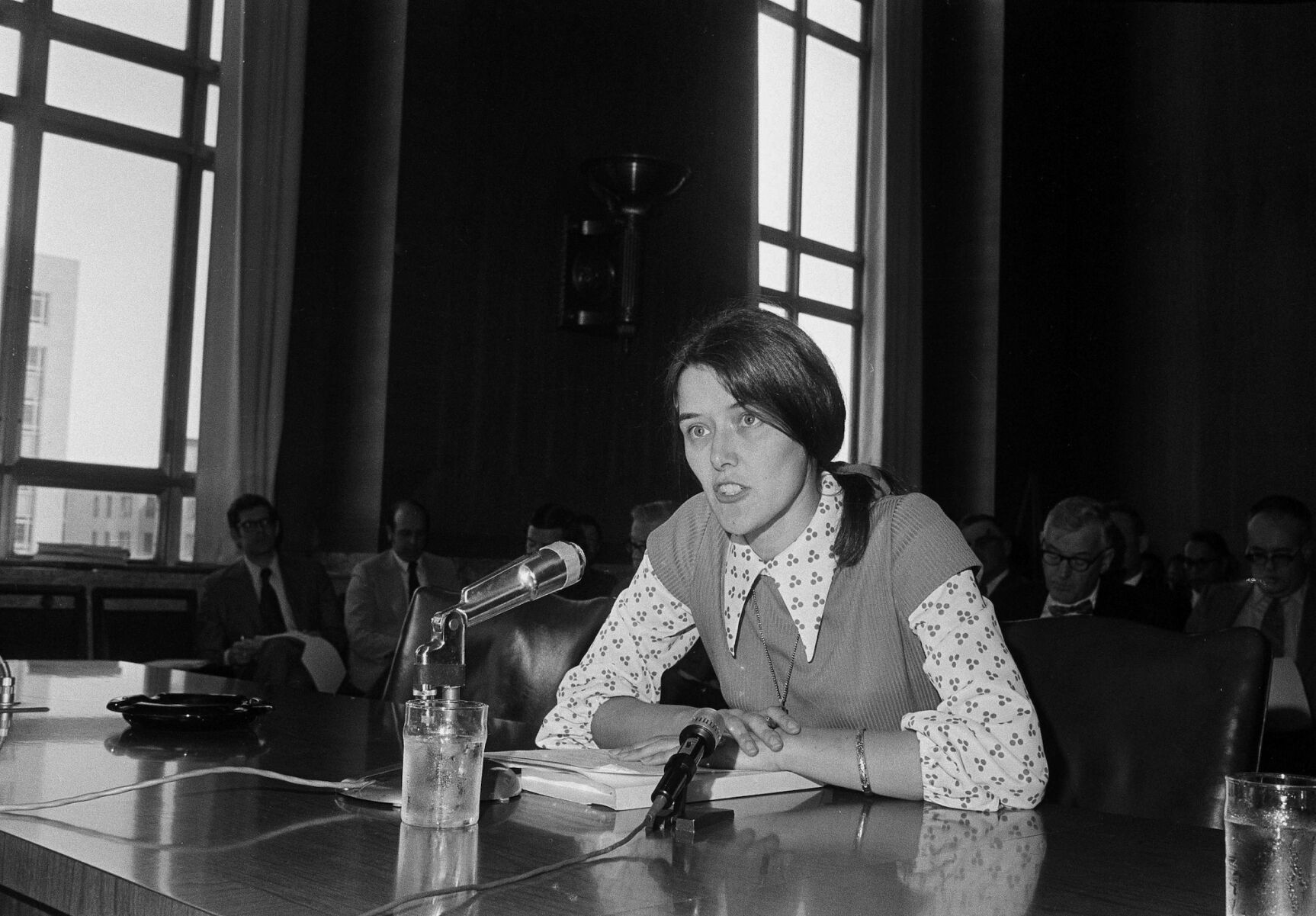
When the big birthday for the Declaration of Independence arrived, I had my first, up-close look at her. I was working 12-hour days at the U.S. National Archives in Washington, where the Declaration was on display along with the Constitution and the Bill of Rights.
One perk of my job was sneaking into the exhibit hall on Constitution Avenue at 10 p.m., when a guard would push a button and I would watch the trinity of founding documents slip slowly down out of their bronze display case, deep into a bombproof vault.
One Saturday morning I drove out to Dulles Airport with a plywood crate in the back of my VW. It held the 1783 Treaty of Paris, signed by Benjamin Franklin, John Adams, John Jay and by David Hartley on behalf of His Majesty King George. It was the parchment that formally ended the Revolutionary War.
I walked across the terrazzo floors of Dulles’s gleaming terminal and there she stood, Pat Schroeder, classily dressed with a warm, genuine smile for me. She took the document, turned and headed for her plane for Denver, where the treaty would stand for a brief exhibit.
She was headed for Colorado, and I decided I was too.