







U.S. reinstates blockade in the Strait of Hormuz
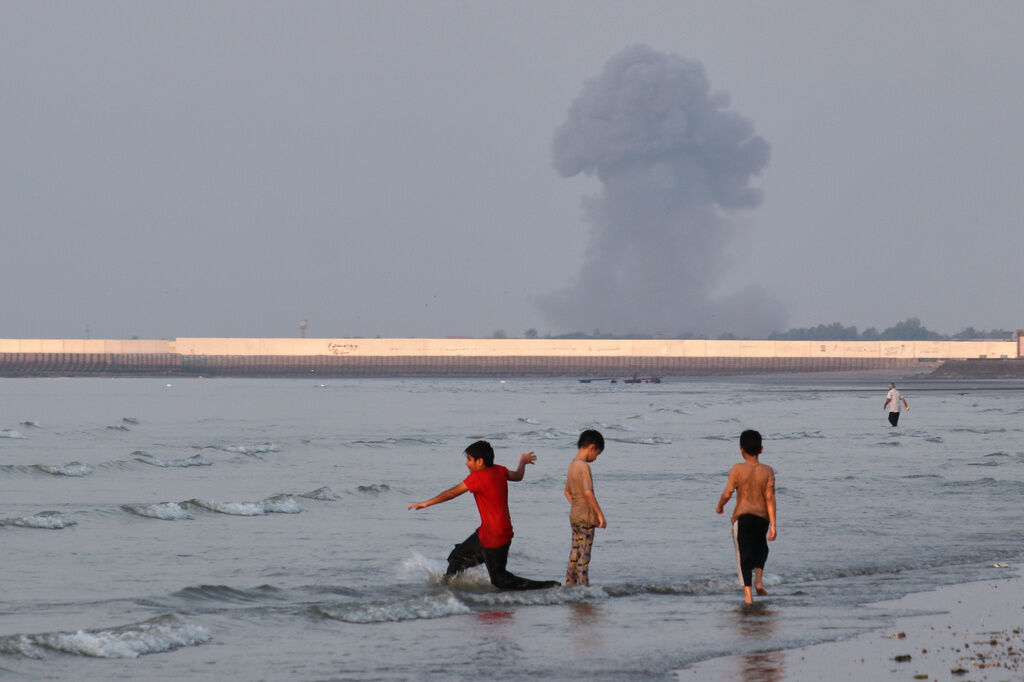
DUBAI, United Arab Emirates • The U.S. announced a new round of strikes on Iran on Monday, hours after President Donald Trump said Washington is “reinstating” a blockade on Iran in the Strait of Hormuz and will charge other ships for safe passage.
All of that comes as Iran has insisted it actually controls the critical waterway and as the new exchange of fire threatened a return to all-out war.
U.S. Central Command announced on social media that the U.S. military had begun another round of strikes against Iran.
“These strikes will continue imposing a heavy cost on Iranian forces and degrade their ability to attack innocent civilians and commercial shipping in the Strait of Hormuz,” the U.S. military said.
Moments after the military announced the new strikes, Trump called it “another major attack.”
“We’re hitting them very hard. And it’ll continue, and we’ll see what happens,” he told reporters in the Oval Office. “We’re knocking out all of their offensive capability and we’re controlling the straits. We’re putting the blockade back.”
Trump also provided new details on his administration suggesting it will charge tolls for ships going through the strait after previously suggesting that it wouldn’t.
“We’re protecting a very rich portion of the world,” he said. “We’re spending money. And so, what we’ve done is, we are going to be reimbursed for protection.”
Until now, U.S. policy said the strait should remain open to all without tolls — as it was before the U.S. and Israel attacked Iran on Feb. 28. Any attempt by the U.S. or Iran to charge fees would violate global norms on freedom of navigation, likely causing further economic disruption far beyond the region.
The price for a barrel of Brent crude oil, the international standard, rose 7.8% to $81.92 a barrel on Monday, still well below the nearly $120 reached at the height of the war.
Trump says Iran failed a test
Earlier, Trump told conservative radio host Hugh Hewitt that the agreement reached last month was “built to test” Iran, calling the latter “sleazebags.”
Trump said he questioned why the U.S. was entering into a deal to create a ceasefire with Iran, rather than moving toward a full deal first. Trump last week declared the ceasefire was “over.”
“They didn’t honor the test,” the president said.
Exchanges of fire in recent days, sparked by Iranian attacks on ships, had already cast further doubt on the interim peace deal. Washington had lifted a blockade it imposed in mid-April as part of that deal, which also called for the strait to be fully reopened.
“We are reinstating the THE IRANIAN BLOCKADE,” Trump said on social media. “All other countries will have fair and open use of the Strait.”
The president said the U.S. would be “reimbursed” by 20% of the value of cargo to help cover “any and all costs necessary to do the job of providing safety and security.”
The U.S. military said it will resume its blockade of Iranian ports Tuesday at 4 p.m. EDT.
The struggle over the strait escalates
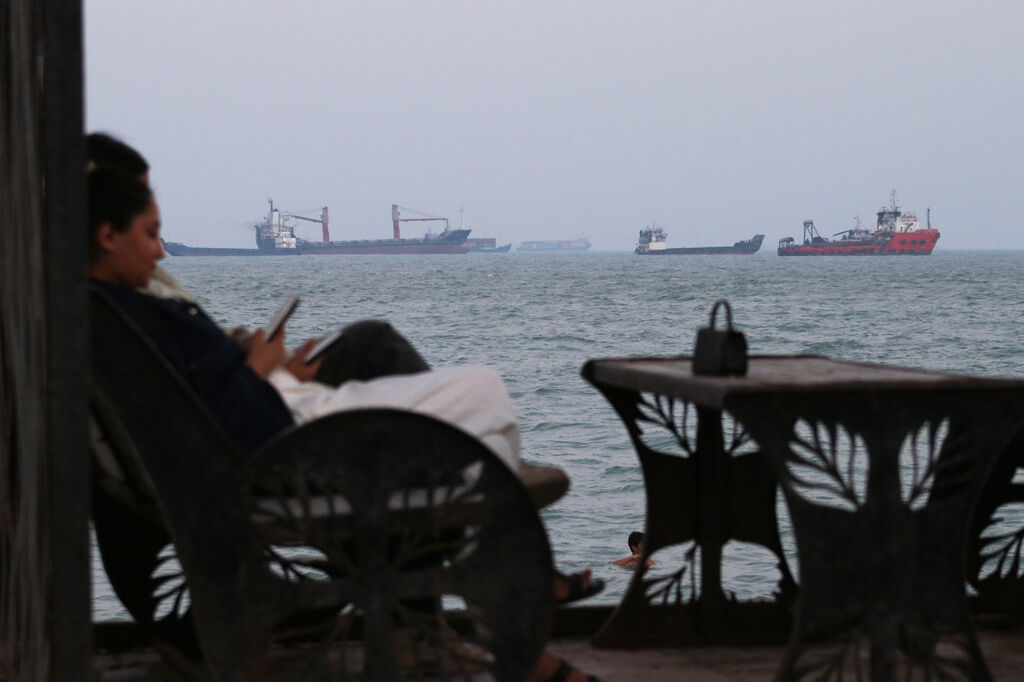
Iran asserts it has the right to manage traffic through the strait and potentially charge fees in accordance with the interim peace deal. The U.S. has disputed that.
Iran on Monday vowed to fight back against any U.S. interference in the strait. Iran’s foreign minister, Abbas Araghchi, mocked Trump on social media and used his support for tolls to legitimize Iran’s position.
“POTUS is absolutely right. Whoever provides secure and safe passage of commercial vessels through the Strait of Hormuz should be compensated for this service,” Araghchi wrote on X. “Iran has always been the GUARDIAN of the Strait and will remain so FOREVER. 20% is of course too much. We will be fair.”
The International Maritime Organization, the United Nations agency overseeing international shipping, said it is waiting to find out more about Trump’s proposal but remained opposed to tolls for passage through international waterways.
“There is no legal basis through which to introduce mandatory tolls simply to transit through a strait,” the group said in a statement.
The U.S. had opposed charging fees in the strait
Meeting with Gulf leaders late last month, Secretary of State Marco Rubio had spoken forcefully against Iran charging fees for transit through the strait.
’s an international waterway. There isn’t a nation on Earth that supports having to pay money to go through the straits,” Rubio told reporters in Bahrain on June 25.
Rubio also said there was “zero support among the Gulf countries for any sort of toll or fees or anything that charges for the use of international waters. The president’s made it clear that’s not going to happen.”
A fifth of the world’s oil and gas passed through the strait before Iran effectively shut it down at the start of the war, driving up global prices of energy, fertilizer and other goods. Traffic had picked up after last month’s agreement but remained well below prewar levels.
The latest exchanges mark an escalation over the past week, throwing into question the interim U.S.-Iranian agreement signed last month to reopen the strait and halt hostilities.
The war was launched by the United States and Israel earlier this year. Iran responded by striking its neighbors, as well as U.S. bases in multiple countries. Its proxies, notably Hezbollah in Lebanon, also attacked Israel.
Yemen’s Houthi movement fired missiles at Saudi Arabia after accusing the kingdom of bombing an airport under its control on Monday, breaking a four-year truce between Riyadh and the Iran-aligned group.
Oil prices jumped more than 9% on Monday, with Brent futures posting their biggest single-day dollar gain since April 2 and highest settlement since June 12. U.S. crude futures made their largest daily gain since April 29 to settle at their highest since June 15.