







Cheyenne Frontier Days kicks off 10-day run
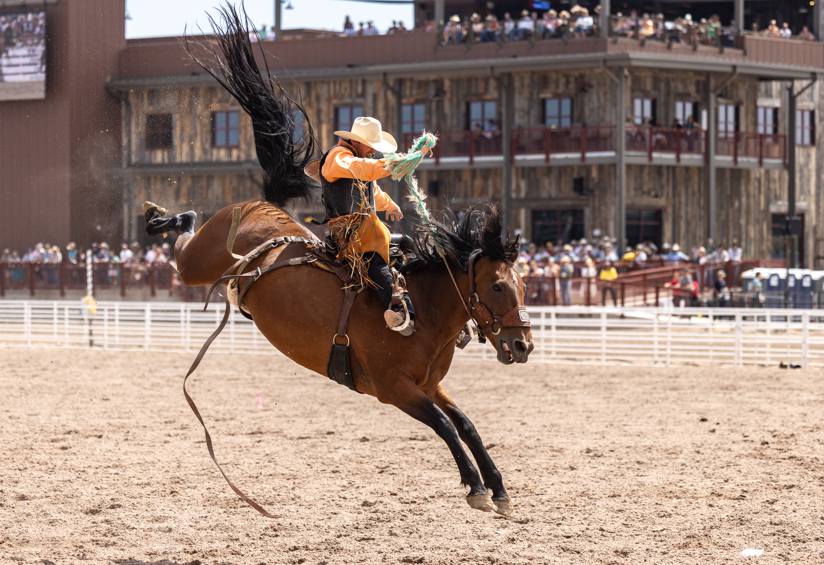
CHEYENNE, Wyo. — Calling a shot is a difficult feat to perform, no matter the venue or, typically, the stakes on the line.
It takes gumption, guts and whatever other descriptor one might apply.
When one comes through at the highest of levels, it forces others to pause and take notice and can even cast one into lore.
Tom Hirsig has immersed himself in rodeo lore.
His story reads a bit like a fairy tale. Hirsig began attending Cheyenne Frontier Days as early as he can remember, volunteering and working the rodeo events with his father when he was 10, making the 45-minute drive from Iron Mountain to Cheyenne.
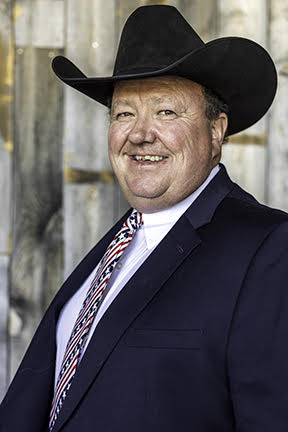
The cowboys had an impact on Hirsig. He wanted to follow in their footsteps, so he did. He competed collegiately at the University of Wyoming and then professionally for a few years along the way.
Hirsig had his share of victories during his career, but none likely topples the victory he had in 2002 when he won the Cheyenne Frontier Days Steer Roping Championship.
“I mean, I spent my whole life as a kid working in the arena and watching the very best rodeo contestants in the world compete, so I guess it’s pretty hard to stay away from it,” Hirsig said. “I won Cheyenne, and really that’s all I wanted to do.
“I was actually the rodeo chair when I competed in my last one. I told the rodeo announcer, Justin McKee, who is a good friend of mine, that it was going to be the last one I ever run, win, lose or draw. It really couldn’t have turned out any better.”
Now 64, Hirsig is the figurehead of Cheyenne Frontier Days as its chief executive officer — a position he has held since 2015.
This year marks the 130th year of the “Daddy of ‘em All” running with the 10-day event set to begin Thursday and going through July 26. It will feature top-flight rodeo competition with prize money totaling more than $1 million, a carnival midway, multiple music performances and plenty of other bells and whistles, some of which are making their debut this year.
General admission tickets to the grounds are $5, with ticket prices varying for rodeo events, concert performances and VIP packages.
“It’s very exciting,” Hirsig said. “When you look at our rodeo, and you compare it to the other top four or five — Houston, San Antonio, Calgary, Fort Worth and even Denver — those are populations with over 2 million people, and we’re a community of 60,000. Their facilities are all city, state or county funded. We have built our event without any assistance from taxpayers. Cheyenne Frontier Days has been built by the volunteers. The support we receive from our volunteers, patrons and sponsors is second to none.”
Lending a helping hand
Shellie Hardscog is one of the about 2,500 volunteers Hirsig is quick to praise. As the chair of the public relations committee, Hardscog and her team of volunteers help make sure the CFD sponsors are well taken care of.
Hardscog was a former teacher of 32 years and has volunteered for CFD for 34 years and counting. She said being named one of the committee chairs was probably the “biggest honor” of her life.
“It’s something that you can’t really explain, but if you become a volunteer and you’re involved, you make these friendships and connections where you have this other family and if you need anything, they will help you out at the drop of a hat,” Hardscog said.

Like Hirsig, Hardscog grew up attending Cheyenne Frontier Days.
Her father volunteered at the event for a number of years and would often put Hardscog on his shoulders while the two would walk to Frontier Park from their family’s Cheyenne home.
“We lived two blocks away from Frontier Park, and I remember how exciting it was watching the carnival get put up,” Hardscog said. “We would get on our roof and eat popsicles. It was something we couldn’t wait for it to happen. It was contagious.”
Hirsig and Hardscog are prime examples of how volunteers pass down from generation to generation. She said CFD has a “great youth volunteer program” in place and that they are “bringing up the next generation of volunteers.”
Not resting on their laurels
Rodeo is big in Colorado and Wyoming. One might say June and July are Christmastime for local rodeo enthusiasts with the Greeley Stampede running from the end of June to the beginning of July.
Fort Collins and Colorado State University, meanwhile, just got through hosting the 2026 Professional Bull Riders (PBR) Bulls and Beats.
Denver kicks things off yearly with its National Western Stock Show in January.
Consider Cheyenne Frontier Days, or the “Daddy of ’em All,” though could easily be seen as the crescendo of rodeo season in the area.
That’s not to say the event is relying on tradition alone.
Hirsig, Hardscog and others associated with the event make it a point to travel to other rodeos to see what they are doing and where they can make improvements to CFD.
“We have very good relationships with all of those rodeos,” Hardscog said. “We have what we call the Tri-Committee that involves the Greeley Stampede, Denver National Western Stock Show and us. We all kind of get together, host one another and just learn from one another.”
Those closely affiliated with CFD will also make treks to rodeos in Houston, San Antonio and Calgary to gain additional perspective and ideas. Hardscog said the Hirsig name screams credibility in the rodeo world.
“Nobody knows rodeo better than Tom,” Hardscog said. “He’s got the connections, and he knows everybody. When we travel, good gravy, it’s hard to get from Point A to Point B because of all his connections. He does his very best to guide us, and he works really well with his staff, which trickles down to our volunteer force.”
New improvements
Making its debut at this year’s Cheyenne Frontier Days will be the rebuilt Chute 9 — a state-of-the-art, three-level VIP viewing and entertainment space at the arena’s most recognizable gate for timed events.
The new structure features premium sponsor boxes, a rooftop terrace, two rows of stadium seating and table seating and dedicated food and beverage service.
Another big-ticket item that has been renovated or relocated is The Morning Star American Indian Village.
Bill Oates covers the cultural aspects of The Morning Star American Indian Village as the Indians Chair for CFD. He says the new location will feature a much larger and expanded dance arbor and various other stages for flute playing and storytelling, along with 30 vendor spots and plenty of other amenities and features.
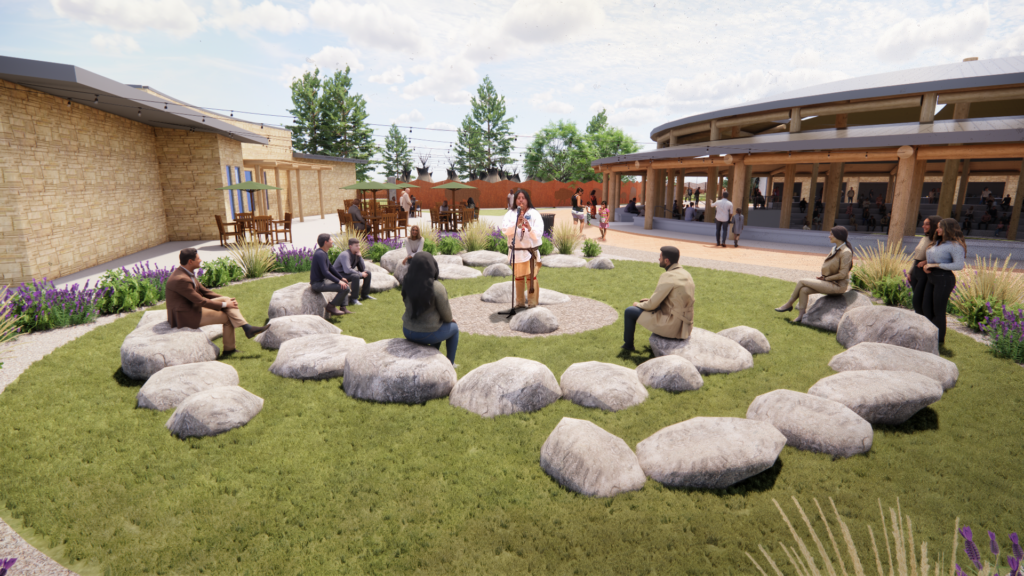
The two projects cost around $24 million, with the majority of the money coming from sponsors.
“You have to grow in this industry, and that’s one of our primary objectives,” said Oats, another Wyoming native who has been volunteering for the past 24 years. “But you have to do it in the right way. You don’t just want to go to Calgary and copy everything they do. We’re unique, and we’re doing our own thing. It’s a community and that’s what I like most about it.”
Right now, nobody appears to be more excited than Hirsig, whose legacy with Cheyenne Frontier Days began over 50 years ago, culminated by him winning the 2002 Steer Roping Championship, and now continues with him as the event’s president and CEO.
“It’s funny because this park will go from big chunks of vacant asphalt to in two or three days, a carnival and food court,” Hirsig said. “I mean, everything’s set up and ready to go. It’s a pretty amazing thing. The staff gets a little mad at me because I’m sad when it’s over because they’ve essentially given up their entire June and July and want to probably go home and take a nap. They make some tremendous sacrifices for this event. I just love the event, and it’s sad for me when Day 10 comes around.”