







Republican candidates pass on signing Colorado gubernatorial nominee Victor Marx’s ‘unity compact’
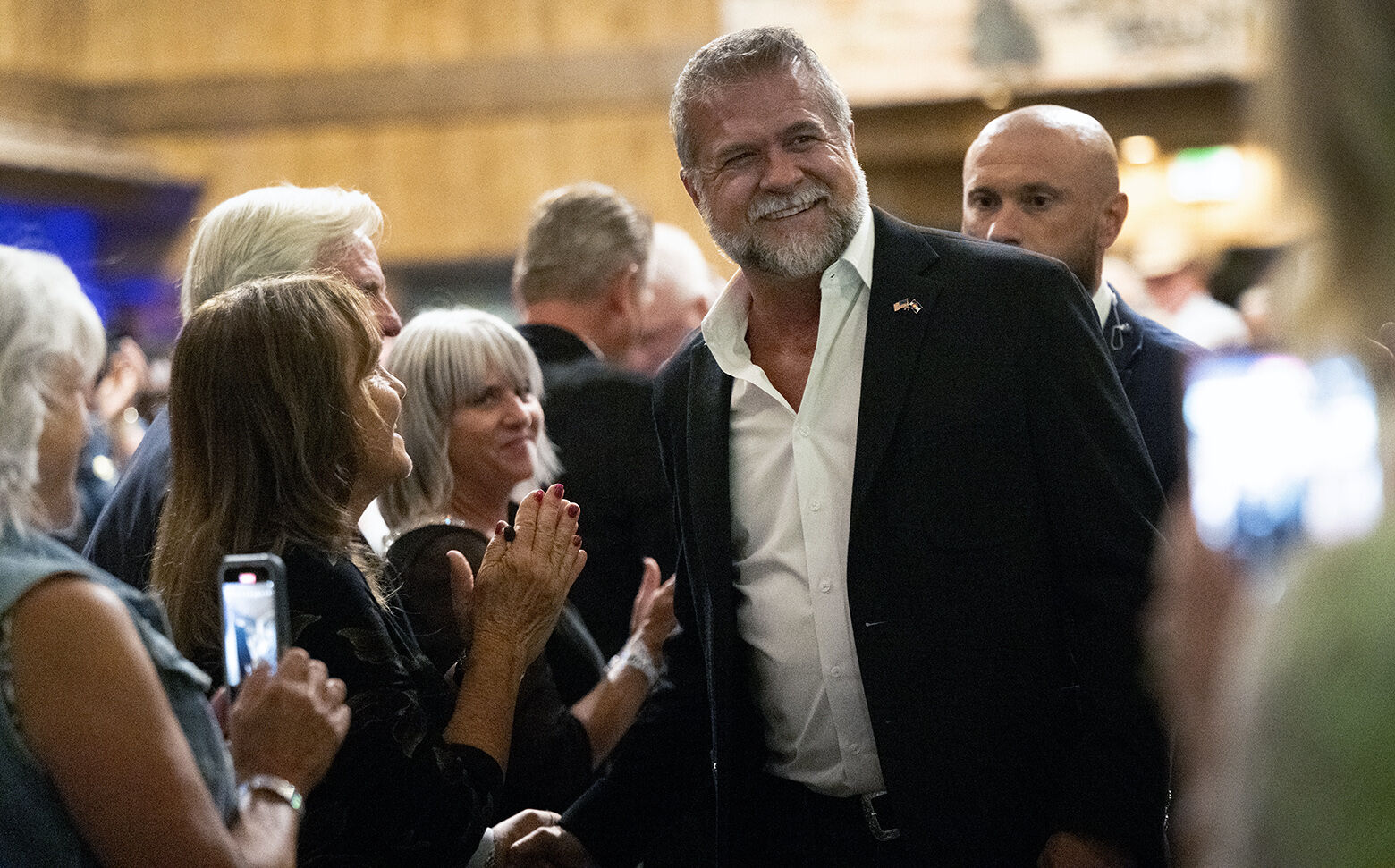
A spokesperson for Republican gubernatorial nominee Victor Marx said his campaign is “extremely encouraged” by responses to a document the campaign circulated late last week, asking fellow GOP nominees how they want to collaborate in the months ahead before Colorado’s November election.
Two of the four other statewide Republican candidates, however, told Colorado Politics that they aren’t signing on to the six-page agreement — dubbed the Republican General Election Unity Compact by the Marx campaign — while a spokesman for another said his campaign is “reviewing” the proposal. The fourth didn’t respond to multiple requests for comment.
Marx, a first-time candidate who runs a Colorado Springs-based Christian humanitarian nonprofit, edged past state Sen. Barb Kirkmeyer, R-Brighton, in the June 30 primary, securing the nomination by just 2,466 votes out of more than 500,000 cast, or less than one-half of a percentage point.
The race, which appears to be the state’s closest Republican primary for governor in decades, wasn’t decided until nine days after the primary. State Rep. Scott Bottoms, R-Colorado Springs, trailed in third place, with about half as many votes as either of the two leading candidates received.
Marx faces Democratic nominee Phil Weiser, the state’s two-term attorney general, in a race to succeed term-limited Democratic Gov. Jared Polis.
Former U.S. Rep. Greg Lopez, who served six months in Congress in 2024, sought the Republican nomination for governor last year but left the GOP in January to run as an independent. He submitted petition signatures to qualify for the ballot earlier this month and is awaiting word from the Colorado Secretary of State’s Office.
During the GOP primary campaign, both Kirkmeyer and Bottoms said they weren’t going to endorse Marx if he won the primary, with Bottoms describing Marx as a liar and a “con man” and Kirkmeyer saying his nomination “could be the extinction of the Republican Party.”
It’s a sharply different response than the one that greeted Weiser after he defeated U.S. Sen Michael Bennet in the Democratic gubernatorial primary, when the two former rivals appeared together on stage and embraced two days after the election, alongside a dozen other winning and losing candidates at a unity rally sponsored by the state Democratic Party in Denver.
The day after he was declared the nominee, Marx distributed the general election agreement to other Republicans who will share the general election ballot, describing it in an accompanying email as a “practical coordination tool” intended to sort out “opportunities to coordinate during the general election while preserving the identity, strategy, and priorities of each campaign.”
“Colorado voters deserve to see a Republican ticket that can work together, communicate professionally, and offer practical solutions,” the compact reads, noting that it’s a “planning tool,” not a “legally binding agreement.”
Divided into sections, including “participation in coordinated Republican ticket events” and “message and issue coordination,” the document includes multiple-choice checkboxes covering a range of responses. The first section asks if fellow candidates are “prepared to publicly endorse and support Victor Marx” as the GOP nominee, with various options, including “not planning a public endorsement at this time.”
Further down, the document includes a section asking fellow candidates to indicate whether they agree with a statement outlining “professional communication across the ticket.”
“Republican candidates may differ on policy, strategy, or emphasis,” the statement reads. “A strong ticket can acknowledge those differences while communicating respectfully. We ask participating campaigns to avoid unnecessary public attacks on fellow nominees, address coordination concerns directly, and handle disagreements professionally.”
Candidates were also asked to say whether they want to join Marx in coordinated “branding and messaging,” under what Marx has called the “Colorado Works Better” framework, which he says focuses on “affordability, public safety, education, economic opportunity, government accountability, and restoring trust in leadership.”
The document included a line asking candidates to respond by 5 p.m. on Monday, July 13.
“We’re extremely encouraged by the response,” Marx campaign spokesperson Rachael Flick told Colorado Politics on Tuesday in a written statement. “Republican candidates, elected officials, the state GOP chair, county party leaders, and grassroots volunteers are coming together because they recognize the primary is over and the focus now has to be on Colorado’s future.”
Flick added that the campaign is enthusiastic about a planned rally on Sunday at a Colorado Springs music hall, where the campaign is “looking forward to bringing the party together around something bigger than any one campaign.”
“The best answer to questions about unity isn’t another press release — it’s seeing people show up together,” she said. “We believe Sunday’s event will speak for itself.”
State Sen. Mark Baisley, the Republican nominee for the U.S. Senate seat held by Democrat John Hickenlooper, told Colorado Politics he is passing on signing Marx’s compact.
“My pledge has always been to the people of Colorado and to American founding principles, not an individual,” Baisley said in a text message. “Phil Weiser has remained silent or supportive as our state’s regulations grew, contributing to the reduction in opportunity and increased cost of living Coloradans struggle with. If he is elected, the state will continue to struggle on matters of public safety and financial security.”
Republican secretary of state nominee James Wiley, who made an unsuccessful run for Congress on the Libertarian ticket two years ago, told Colorado Politics on Monday that he’d decided against signing the compact but is “open to more conversation” with Marx about how their campaigns can collaborate.
“Am I opposed to unity? By no means,” Wiley said. “I’m looking forward to getting to know Marx, and him getting to know me, and that being the basis of any potential coalition work we can do together.”
Wiley added that he hasn’t decided whether to endorse Marx, but an endorsement is “definitely on the table.”
“We’re still at the beginning stages of our relationship,” he said.
Fourth Judicial District Attorney Michael Allen, the Republican nominee for attorney general, didn’t receive the compact until Tuesday morning, a campaign spokesman said, adding that the Allen campaign is “reviewing” the document.
State treasurer nominee Kevin Grantham, a Fremont County commissioner and former state Senate president, didn’t respond to multiple messages asking about the compact.
A spokeswoman for Colorado GOP Chairman Craig Steiner didn’t respond to a request for comment.