







Rodeo a team sport? CSU and PBR team up for ‘Bulls & Beats’
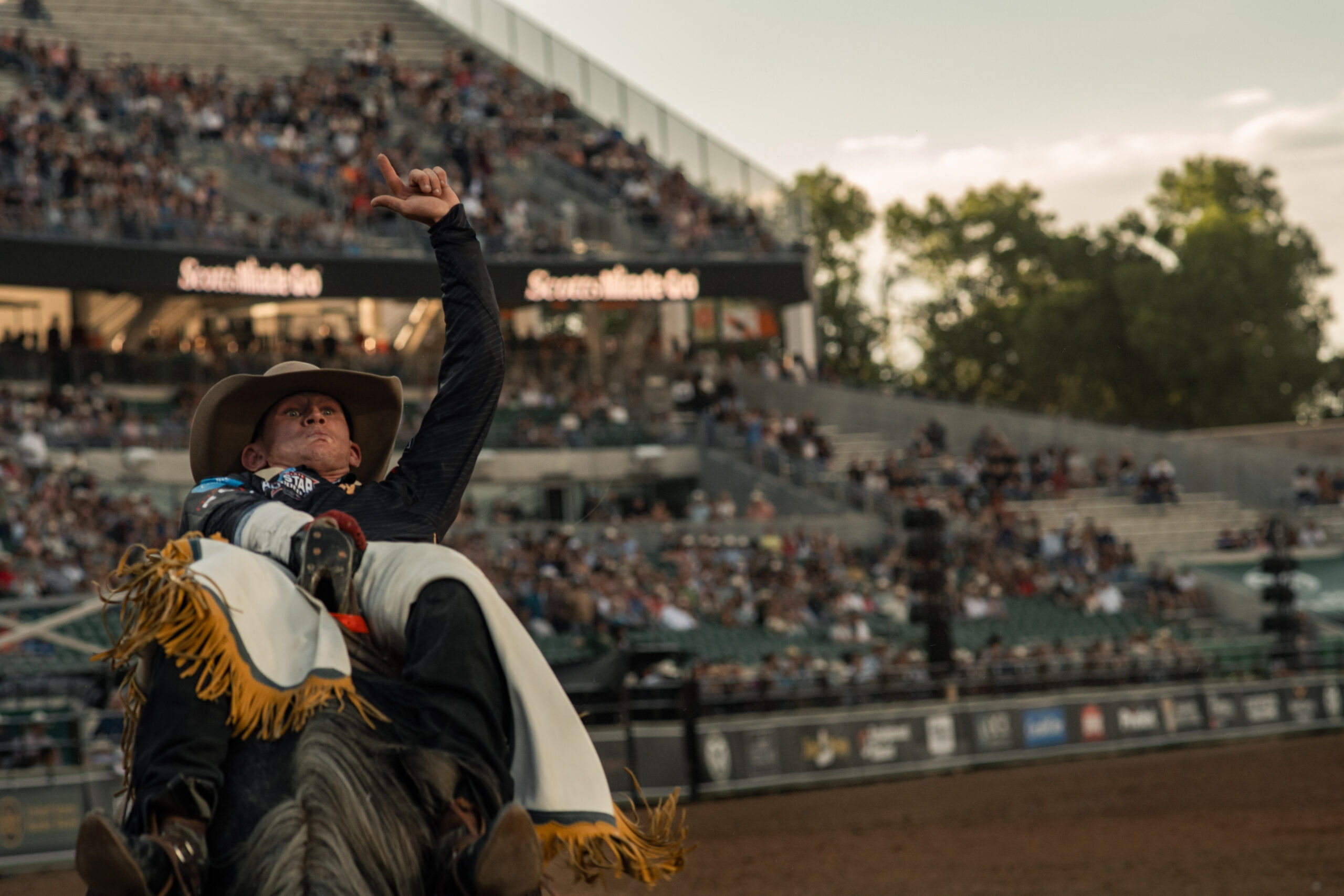
For decades, college rodeo has largely been an individual sport, contested in regional arenas before audiences familiar with its rhythms.

Last weekend at Colorado State University’s Canvas Stadium, Professional Bull Riders (PBR) and Learfield College Rodeo unveiled Bulls & Beats as an experiment in how college rodeo could be presented to a broader audience while giving its top athletes a taste of the professional stage.
Sixty athletes nominated by coaches from Learfield College Rodeo schools were divided into North and South teams, replacing the sport’s traditional individual format with a head-to-head competition. Rather than competing only for personal results, athletes spent the weekend chasing a team championship, a concept PBR says has rarely been attempted in collegiate rodeo.
“They all know each other,” PBR Senior Vice President Robert Simpson said. “They compete against each other all year, but to actually form a team… I think it’s a brand new concept in college rodeo.”

Simpson said organizers wanted a competition casual spectators could understand more intuitively, with a single North-versus-South storyline carrying through the entire evening rather than scattered individual events.
That philosophy extended beyond the scoring format.
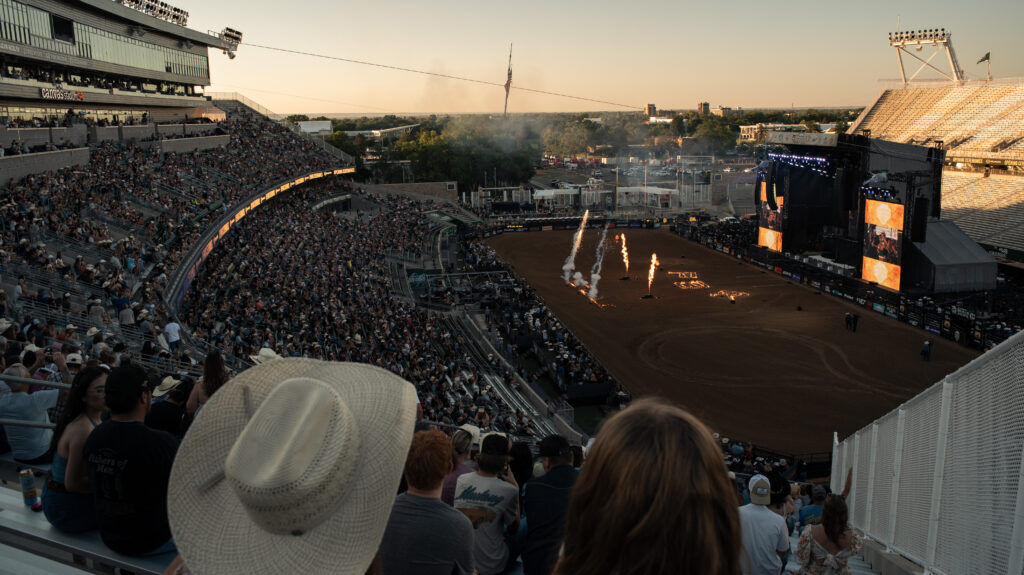
From the grandstands, spectators looked down on two complete rodeo arenas built side by side in the dirt across the stadium floor. Separate chutes and livestock pens framed the back end of the dirt while the concert stage that would later host Brad Paisley, Bailey Zimmerman and Miranda Lambert rose between them at the 50-yard line.
Before the events began, competitors walked through thick green smoke and pyrotechnics into a football stadium illuminated by television lights. Broadcast camera booms swept above the bucking chutes as the roar of arena announcers introduced athletes to thousands of spectators. More than 10,000 fans watched as the North and South teams lined up at midfield for prayer and the singing of the national anthem.
The machinery of professional sports wasn’t just visible in the arena production. Behind the chutes, PBR riders helped college bull riders tie in before competition while television crews, photographers and livestock handlers worked around them. The U.S. Border Patrol Safety Team and pickup men handled athlete protection while keeping the competition moving. For one evening, college athletes competed inside the same production ecosystem normally reserved for major professional sports.
According to PBR, Bulls & Beats featured a $180,000 purse, one of the largest single-event payouts in college rodeo history, where every athlete received an appearance fee.
“They’ve never seen money like that,” Simpson said. “One thing I’m proud of is our payout purse. We gave everybody a show-up fee … they’re not paying to come here to compete. It gives them room to perform.”
Simpson said the event was designed to create more opportunities for college athletes while also introducing the sport to new audiences.
“All tides raise all boats,” he said. “More opportunity, more events to actually showcase these amazing athletes to broader audiences.”
Whether the format expands beyond its inaugural year remains undecided, but Simpson said the reaction from competitors left little doubt about how they viewed the experiment.
“Everybody loved it. I mean absolutely loved it.”
Simpson believes blending collegiate rodeo with the presentation and team format of professional sports represents one path forward for the sport.
“Everything’s changing,” he said. “I’m a purist. I’m old school … but there’s always new ways to do things. It only enhances the sport that’s already great.”