







What permanent daylight saving time would mean for Colorado
For those looking to sleep in, the possibility of America switching to daylight saving time permanently would be a welcome change.
But what about everyone else?
The U.S. House of Representatives this week passed the Sunshine Protection Act 308-117. Now the bill will move to the Senate for approval before heading to President Donald Trump’s desk, who has voiced support for the move. If made into law, it will make DST permanent, leaving standard time behind.
Under permanent daylight saving time, both sunrises and sunsets will be later here in Colorado. From late November to early March, this puts sunrises between 8 and 8:20 a.m. and sunsets around 6-6:15 p.m., according to The Denver Gazette’s news partners 9News Denver.

Colorado is one of 19 states that has already ruled in favor of the act, with the legislature passing House Bill 22-1297 in 2022 and Gov. Jared Polis signing it into law, but federal approval is required to bring the law to fruition.
The federal bill has major implications for Coloradans, including students waiting at the bus stop in complete darkness, posing a possible risk of being less visible, and ski resort lift line openings being delayed.
As for Colorado’s millions of skiers, resorts may be forced to delay opening to 9:30 or 10 a.m. Safety and maintenance work is done each morning in preparation for opening the slopes, forcing employees to wait for natural daylight. This also pushes evening ski traffic even later.
“We are just beginning to digest the possible change,” an Arapahoe Basin Ski Resort spokesperson told The Denver Gazette in an email. “It feels a bit more real this time.”
“In the mountains, even when the sun rises over the horizon, it takes a little longer for it to get light than a city like Denver,” 9News Senior Meteorologist Chris Bianchi told The Denver Gazette in regard to skiing operations. “I would imagine that they would need to open a little later, with first chair at maybe 9:30 or 10 a.m.”
Bianchi also noted a positive consequence of the looming law, saying that Denver Broncos 2 p.m. games would be completely in the daylight if the shift were to happen. This is in contrast to the last 30 to 60 minutes of the 2 p.m. games usually happening under stadium lights.
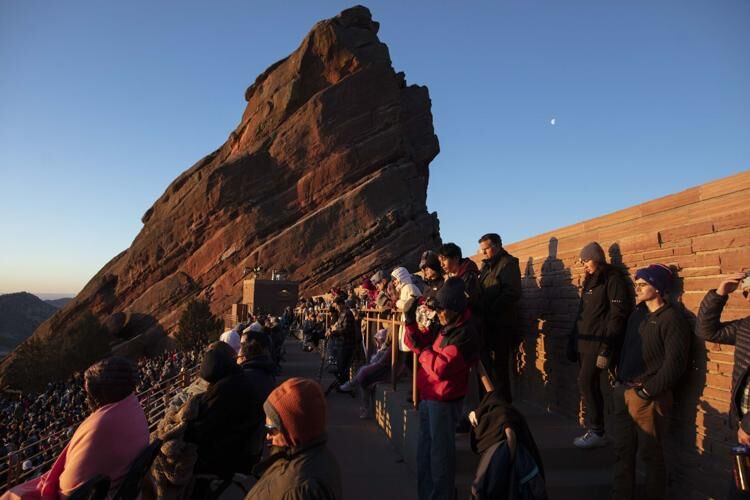
Another Colorado favorite, the Red Rocks Amphitheatre Easter Sunrise Service, will shift if the law passes. Held by the Colorado Council of Churches, the popular event would fall an hour later. Without the clock springing forward, the service will naturally occur later. This allows for a fully lighted service in the mountains.
Supporters of the act say that permanent DST would improve sleep quality, decrease workplace and traffic injuries, and boost winter economic activity, but studies “revealed that much of the changes in energy consumption, traffic and crime were ‘statistically insignificant,’” 9News said.
“Standard time aligns best with human circadian biology and provides distinct benefits for public health and safety,” according to The American Academy of Sleep Medicine. Delaying the sunrise naturally delays the body’s wake-up rhythm, as “morning sunlight is essential for mood regulation, especially during the shorter days of winter.”
A counter-bill has been introduced in the face of the Sunshine Protection Act. Sunshine for Our Kids Act of 2026 proposes that standard time is made permanent instead of daylight saving time. Arguments for this act center on alleged favorable learning and safety conditions for children, according to the AASM.
While Americans continue going back and forth in this debate, their clocks will do the same if the federal bill fails to become law.