







Colorado’s road to ‘net zero’ is death by a thousand cuts | Jimmy Sengenberger

Across the country, electric and gas utilities sought a record $9.2 billion in rate increases during the second quarter, per the consumer advocacy group PowerLines.
As The Gazette reports, utilities are seeking billions of dollars for grid upgrades, reliability improvements and expanding electricity demand — affecting more than 56 million customers and pushing total annual requests to $18.6 billion.
Colorado wasn’t much of a player in the latest report, but that’s only because Xcel Energy — the state’s largest energy utility — filed its latest hike requests back in November and December, with outcomes still in the pipeline.
Xcel originally sought natural gas and electricity rate increases of 11.6% and 9.9%, respectively. Recent settlements, including one just this week, reduced its requests to 7.5% and 5.86%.
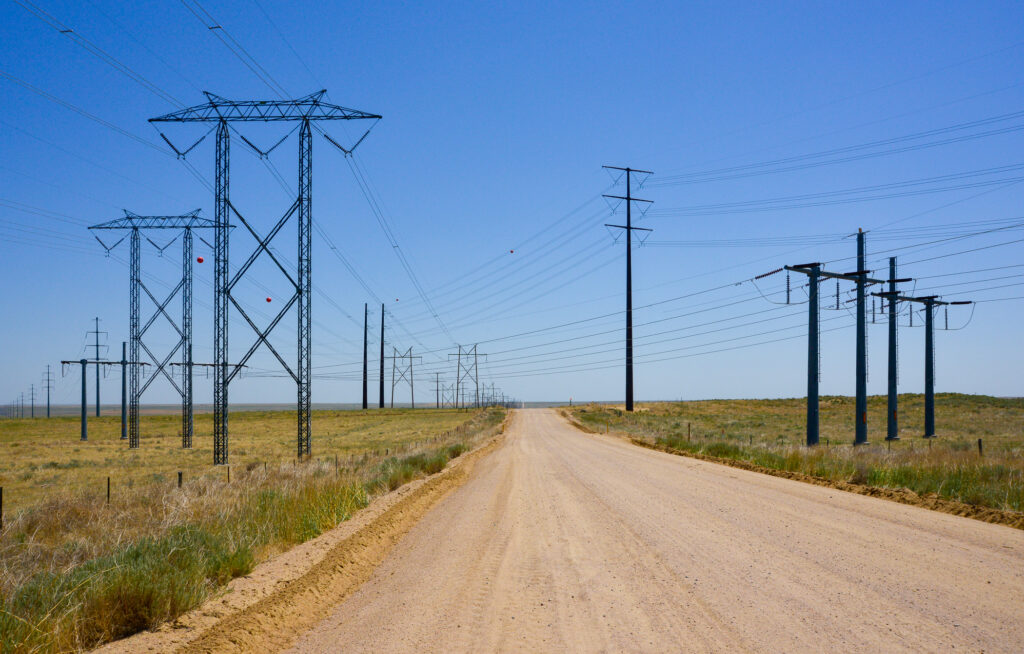
Those are still an estimated $123 million for gas and $225 million for electricity, all slapped onto consumers’ bills should the Public Utilities Commission sign off.
Consumer advocates, including AARP and the state’s own Office of the Utility Consumer Advocate, oppose the electric settlement, calling it the largest rate hike in state history.
No doubt. But these are only the latest increases as Xcel pursues its state-mandated Clean Energy Plan, which is estimated to cost $12 billion.
That’s at the low end, according to Amy Oliver Cooke, senior energy policy fellow at the Independence Institute and cofounder of Always On Energy Research.
“Consider your current electricity bill. Now double it, and then triple it,” Cooke told me on The OpEdge, The Gazette’s opinion podcast. “I actually think it’s going to be way more than just triple.”
She isn’t pulling that from thin air. PUC Chairman Eric Blank has warned that Xcel’s residential rates could double by 2036 and triple by 2044 if the utility’s spending isn’t tightly managed.
That may seem a long way off, but the road to “net-zero” is death by a thousand cuts.
Xcel’s $12 billion figure doesn’t include what Cooke calls the “Fenberg rider” — legislation allowing utilities to recover additional costs through separate surcharges “siloed” on your bill.
According to PUC staff, riders and adjustments have raised rates 22% over the last three years.
Cooke also pointed to an Xcel filing with the commission showing its reserve margin going negative this year. “It is unlikely to have enough power to keep the lights on in the summer of 2027,” she summarized.
But the bigger problem is reliability. Colorado’s regulatory focus is on electrification — electric vehicles, trucks, homes and appliances — not on hardening the grid against wildfire and wind.
With public safety power shutoffs now standard Xcel practice, failure to ensure a reliable grid means more scheduled blackouts, often blamed on the weather, while ratepayers foot higher bills for less reliable power.
Even as electricity demand grows, regulators keep mandating coal plant closures — granting extensions only by pure necessity — while Xcel pours billions into electrification mandates.
Grid hardening gets pushed aside because the financial incentives are out of whack.
“The more a utility builds, the more money it makes,” Cooke explained. Utilities earn roughly a 10% return on their rate base, which is currently $13-14 billion and projected to double by 2030.
“Do the math,” she said. “10% of $30 billion is a whole lot more than 10% of $13 to $14 billion.”
The Gazette has reported on what Always On Energy Research calls “the social cost of blackouts” to families, businesses and communities. Policymakers obsess over the “social cost of carbon.” They should also consider the consequences of blackouts.
Cooke’s cofounder at Always On, Mitch Rolling, called a small grocery market in Niwot and asked what blackouts cost the business. The estimate was roughly $12,000 — per hour — in lost refrigeration and spoiled food.
“We’re not just talking about people getting asthma, we’re talking about people dying when you lose power,” she said, pointing to 246 deaths in Texas during a 2021 winter storm. “The existential threat is not climate change. The existential threat we face right now is lack of power.”
The 19th century philosopher-economist Frédéric Bastiat cautioned that the good economist remains cognizant, “both of the effects which are seen and also of those which it is necessary to foresee.” The bad economist only looks at the visible effects, especially those they want to see.
If our leaders remotely embodied the “good economist,” they would vigorously push nuclear power. Instead, the staunchest environmental advocates put up walls to nuclear.
The legislature wisely opened the door to qualifying safe, reliable nuclear power as “clean” energy, but that isn’t enough. Doubly so when advanced technology is making prefabricated micronuclear plants easier than ever to deploy.
Let’s be real: This is about hubris. Gov. Jared Polis and his Merry Band of Net-Zero Heroes have designed an electrification agenda centered on reducing emissions. To them, everything must flow in pursuit of that agenda, reliability and affordability be damned.
And Xcel, of course, is happy to keep enriching itself on the backs of struggling ratepayers — families and businesses — all in the name of “Clean Heat.”
Jimmy Sengenberger is an investigative journalist, public speaker and longtime local talk-radio host. Reach Jimmy online at Jimmysengenberger.com or on X (formerly Twitter) @SengCenter.