







Yuja Wang wows Boulder audience with a conductor’s twist
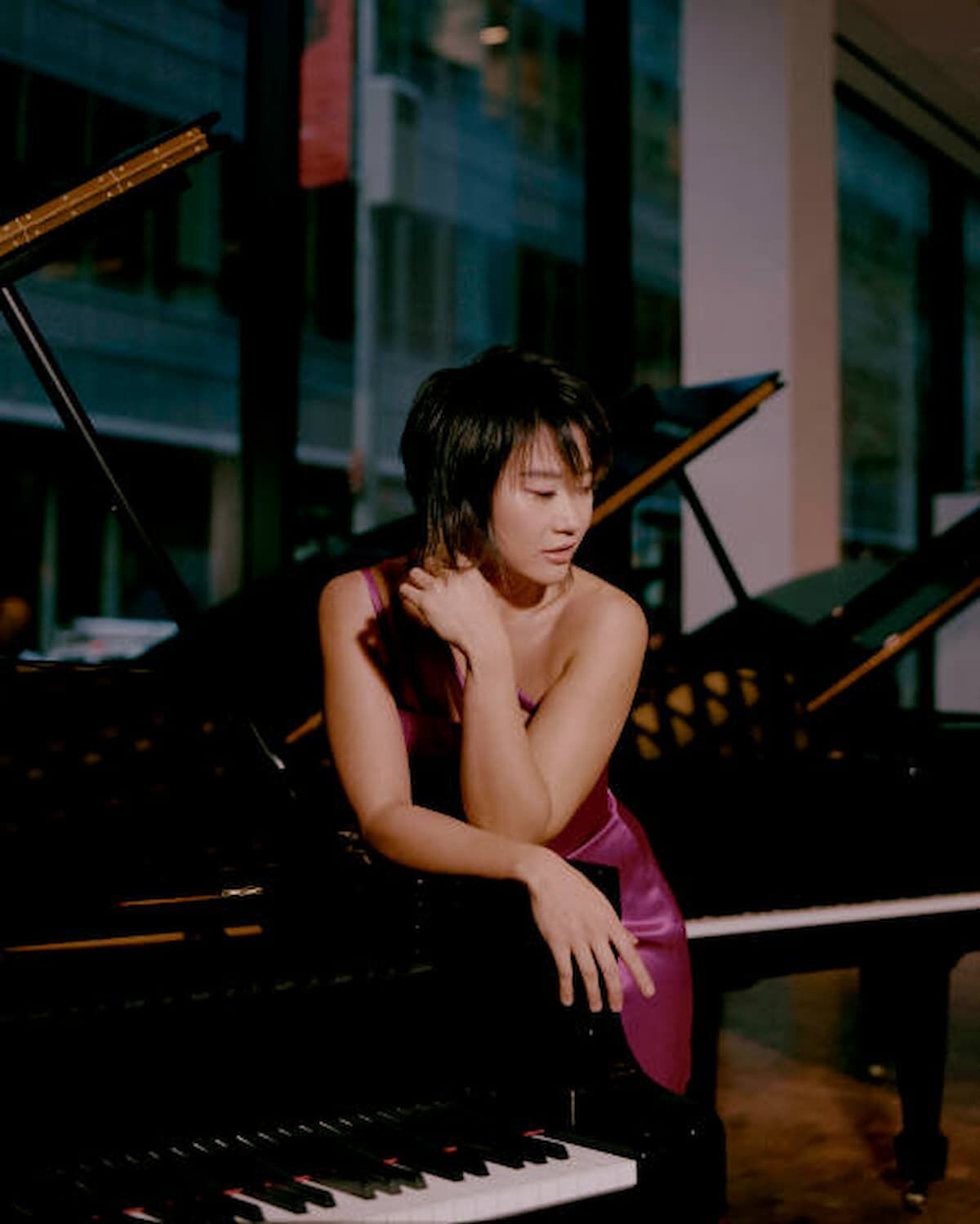
A packed house in hot-and-humid Chautauqua Auditorium watched Thursday night as Yuja Wang blew away some myths about her flamboyant persona. Something strange happened as the virtuoso pianist revealed a new, unexpected side of her musical talents.
She turned into a humble, almost shy student of conducting while making her debut on the podium, leading the Colorado Music Festival Orchestra in a bit of colorful fluff by French composer Camille Saint-Saëns.
This was not a headline-making event, mind you. Such was clearly the intention of music director Peter Oundjian, who led the rest of the concert and Wang herself. Both declined to be interviewed before the concert, which will be repeated at 6:30 p.m. Friday in Chautauqua.
This conducting debut by Wang (pronounced Wong) occurred after intermission, following her dazzling performance of Samuel Barber’s diabolically difficult Piano Concerto — followed by three, count ’em, three encores (Art Tatum, Shostakovich, Philip Glass). Safe to say that this thundering work, which displayed the pianist’s remarkable virtuosity in full Technicolor, proved a tough act to follow. And indeed it was. Even the sound of a steady rain falling around the venerable Chautauqua barn was no match for the thunder and lightning blasting from Wang’s fingers. Poor Saint-Saëns was doomed to finish second.
But here’s where we met another side of Wang, the media darling, the controversial fashion cover girl known for super-short dresses revealing long legs, bare shoulders, etc. We’d become familiar with her through endless stories of those tiny concert outfits that caused some critics to dismiss her and audience members to gossip about her clothes rather than marvel at her artistry.
This time was different. For the first half the evening, she wore a bright pink dress that was not all that short. Her shoulder and arms were bare, necessary for such a hot, stuffy evening, and, OK, she sported some smart heels. But here’s the rub: For the second half, which began with her conducting debut, Wang walked onstage wearing the same pink dress — wearing the same stiletto heels, we must report — but now donning a simple white T-shirt to cover her shoulders. So much for high fashion. The shirt bore a logo with a rainbow, a view of the mountains and the years marking the current 50th anniversary of the Colorado Music Festival.
It was a sweet, down-to-earth touch that maybe sent a message to everyone before Wang gave a downbeat: This was not a big deal, really. In fact, she didn’t even use a baton.
As an experienced concert viewer, I could see that a beginner was at work. Her head was down most of the time, focused on the score before her, intently turning the pages as the music unfolded. At first, the right arm did the work, keeping the beat, though the left soon joined in. Cues were delivered efficiently and on-time. Arms soon swept the air to inspire the strings. In its eight minutes, the familiar “Bacchanale” from the opera “Samson and Delilah” held together perfectly through its many moods and tempo changes. Appreciative applause followed, she applauded the orchestra, shook the concertmaster’s hand, gave a quick bow and was gone. The debut was over. No curtain call.
Fact is, conducting is not new for Wang. She has led a few orchestras from the keyboard when she doubled as soloist, no small task on its own. But to stand on a podium, with a full ensemble before you is a monstrous challenge. Not as easy as it looks — contrary to an old cartoon in The New Yorker, in which a maestro gazes at his music stand and sees a single instruction sheet that reads, “Wave the stick until the music stops. Then turn around and bow.” Making sure everything goes according to plan is one thing, creating a performance where the music comes alive and moves an audience is another. That takes years.
During a rainy intermission, forcing everyone to remain indoors, a trio of musicians gathered in front of the stage. They smiled as I asked how podium rehearsals with Wang had fared. There had been three sessions, 30 minutes each, they told me.
“She came prepared — she knew the music,” one noted, obviously impressed. “She was so enthusiastic,” observed another.
Did she receive pointers from Peter Oundjian, her mentor (who’d secretly given her lessons a few months earlier)?
“He gave her just a few suggestions,” another recalled. With that, they returned to the stage.
Maybe this paints a picture of a musician devoted to her art more than her looks — which might surprise a lot of her critics. Wang’s reputation seems to originate with a media hungry for sensation, uninterested in such dull subjects as virtuosity and musicianship. But anyone experiencing the pianist’s jaw-dropping performance of Barber’s 1962 Concerto (a work that many audience members probably hoped she’d skipped in favor of one with hummable tunes) must have realized the remarkable technique that has placed Wang in a class shared by few in today’s concert world.
Yes, she can play. But there’s something else that sets her apart. Something that tells a great deal about Wang as a unique artist. Forget the skimpy dresses. Look at the way she bows. She always enters and exits the same way: smiling at her adoring audience and bowing quickly and deeply from the waist. Down and up in an instant. Once — and that’s it. Then she sits down to play, or she heads for the wings. No showy soaking it in, no milking her fans for more moments of adulation. It’s her trademark. No one else does it like that.
But then, no one else is Yuja Wang.