







As Snyder Mesa fire raged in Colorado, mustangs rescuer faced a dilemma: Evacuate or shelter in place — with the animals
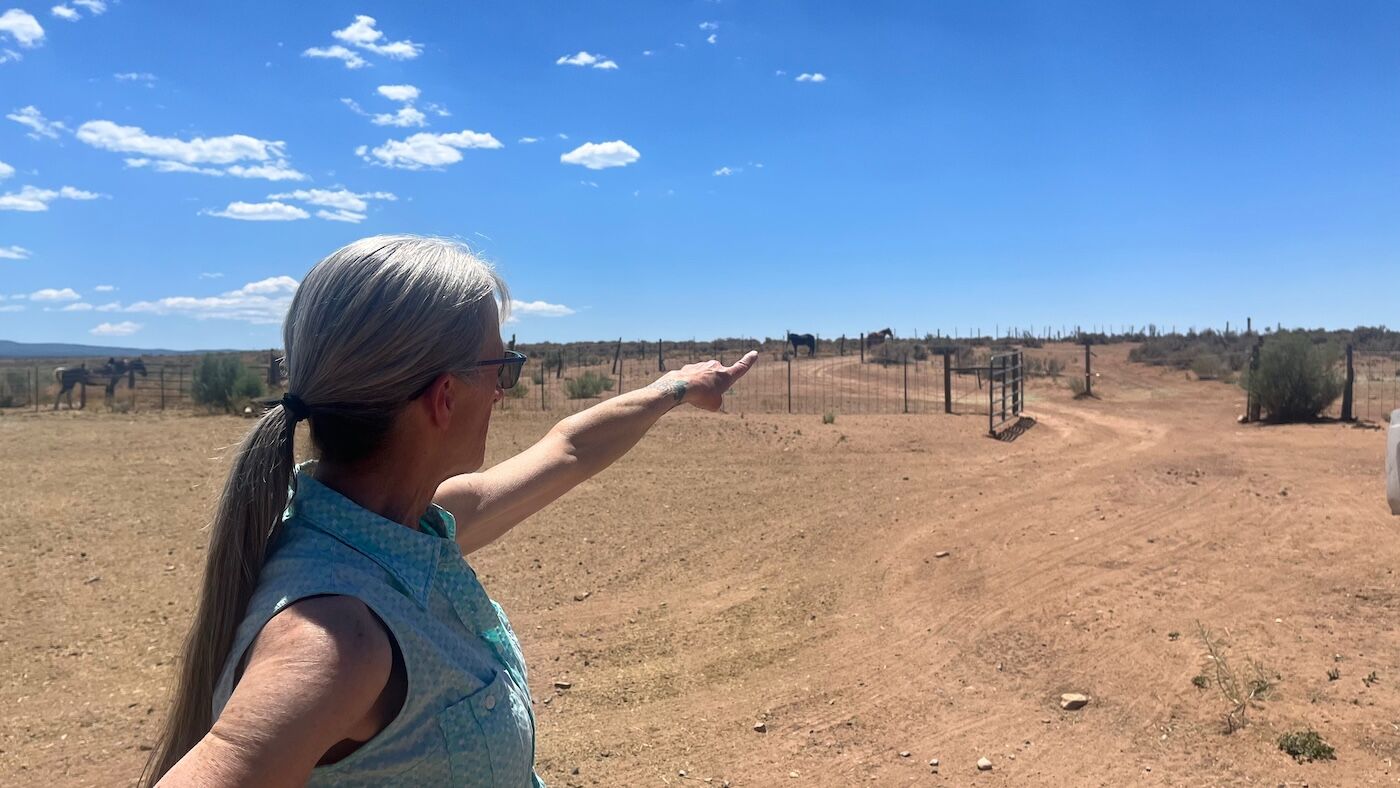
The wildfire alert that pinged her phone at 3 a.m. on June 27 didn’t surprise Tracy Scott. There had been a thunderstorm the night before. She decided to go back to sleep, as she and her husband had a meeting in Grand Junction early in the morning.
“I thought, ‘Who knows?’ It was probably a campfire,” recalled Scott, who runs a nonprofit that aims to educate the American public about the mustangs roaming the West. “We went to our meeting, ran a couple errands and by the time we were on our way home at 1 o’clock, the sky was full of smoke.”
By that afternoon, things had turned for the worse. What would later be known as the Snyder Mesa fire killed three firefighters that weekend, a fast and furious start to the wildfire season in the West.
On the drive home, Scott’s mind raced back to the rescued horses on her property — and how to get them to safety in case an evacuation order is issued.
Coincidentally, Scott had planned to do a drill of preparing the property and the horses for a fire evacuation that day. Things did not go to plan. One of the wildest horses, an animal handled very rarely, got spooked in the poly-rope track, which runs across the property, and broke through. It took a lot of extra time to finally move the horse to a dry lot bordering the road.
Scott and her husband had a decision to make — evacuate, in case an order was given, or shelter the horses in place.
And stay with the animals.
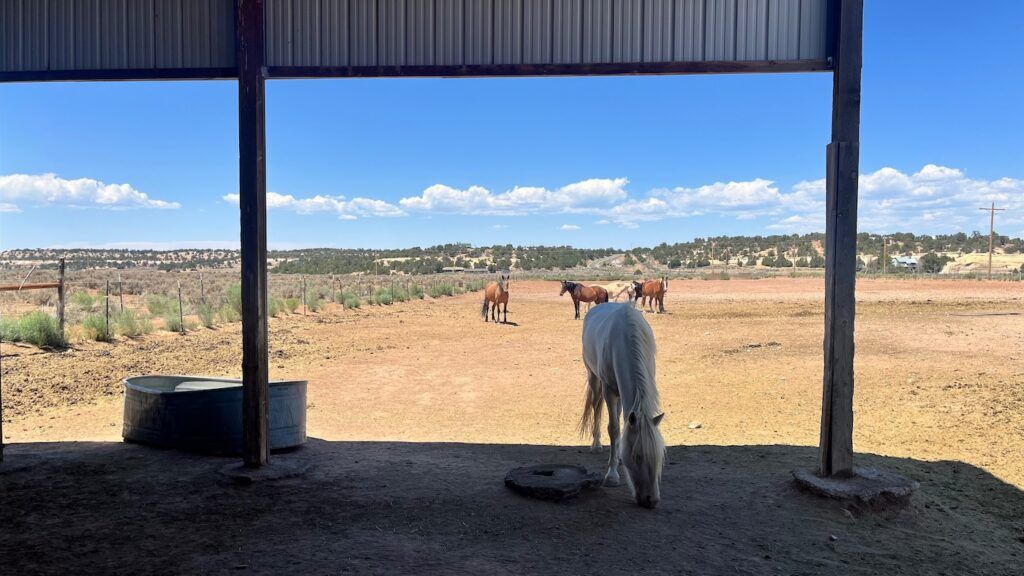
Weeks later, after the crisis had passed, she recalled getting a call from her brother, who lives in St. Louis, Missouri.
Sitting in an outbuilding, on her horse property on Glade Park, covered in posters and child drawings and happy graffiti on the walls, Scott closed her eyes and struggled to get the words out.
“I was talking to my brother and he said, ‘Tracy, I know how much you love those horses and I know how much you advocate for them and they’re your whole heart and soul, but if those flames get close, you leave,’” Scott recounted. “He said, ‘There are a lot of people who love you as much as you love those horses.’”
“Sobering,” she said. “And we’ve known for several years that this is something we are going to face every summer.”
Scott’s nonprofit, Steadfast Steeds, spotlights what happens to mustangs after they are rounded up from public lands.
“There are horses standing in holding facilities on dry lots without freedom, family or familiar way of life,” Scott said. “I didn’t even know it, and I was a horsewoman my entire life.”
She had become involved after she adopted her first mustang. The horses, she said, often end up in dismal holding facilities. Primarily an advocacy and awareness group, Steadfast Steeds also adopts mustangs. Her work focuses on helping owners and the horses succeed in a domestic setting.
That Saturday afternoon, she had been unable to take her eyes off the gathering black plume, as she and her husband drove up the Colorado National Monument’s winding road home.
“The first day was terrifying,” Scott said. “The second day I sat with that feeling and I was more able to function with intention and we had some friends come help. We had lots of lovely people ask if they could come get some of our horses. But we made the plan to have the horses shelter in place.”
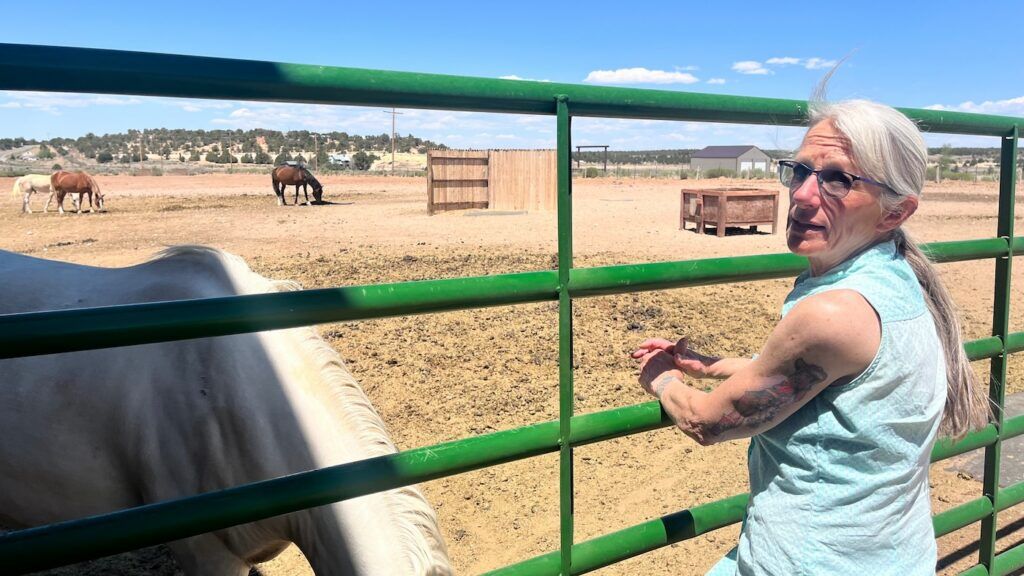
Scott, her husband and volunteers from Steppin’ It Up Grand Junction had just finished unloading 646 bales of hay to feed the horses through mid-September at a cost of over $7,000. Donations only partially covered the cost of the hay. Scott had to dip into reserves to pay more than half the amount.
Losing the hay to the Snyder fire would have been a huge financial blow.
And as terrified as Scott was for her and her husband’s safety that Saturday, when their truck skidded to a stop into the driveway, she could only think about the animals.
The property’s dry lot is surrounded by fire breaks and made with metal panel fencing, not barbed wire. Scott strung livestock tags with her phone number on the horses’ necks and in their manes so that if they bolted away, neighbors could call and alert them.
“I’ve seen them handily jump over six-foot panels,” Scott said.
Scott, along with friends and volunteers, spent the entire weekend and Monday moving the horses around on the property, constantly refilling water troughs and caring for two injured the week before.
“Shelter in place means, in short, that the horses will stay on property instead of evacuating 25 of them to locations all over the valley,” Scott wrote in a newsletter. “We imagine this will make folks uncomfortable.”
Scott said wild mustangs are traumatized when they are rounded up by helicopter on Bureau of Land Management or other public lands, led to huge trailers and driven hundreds of miles to processing centers.
She had assessed the logistics of getting them into trailers and rounding them back up later. The former could be accomplished with some effort. The latter? Maybe not.
“I wasn’t prepared to take everyone to town and then take them all back. With the unhandled horses, we can get them on a trailer if we must,” she said.
“(But) you don’t know if you can get them back in. With horses we only handle sometimes — they aren’t trailer trained. You have to traumatize a horse to get them in a trailer to go somewhere. That’s why I’m not going to force them to do that. It’s as traumatizing as leaving them here to face smoke,” she said.
Weeks after the fire started, Scott is still repairing the damaged track. She watches her phone for wildfire notifications. Her go-bag still sits by the door, ready to be thrown into the truck.
Though she told her brother she would leave, “sometimes, my intention is to stay here with the horses as the fire passes,” she said. “We’ve known for years this was coming. It feels awful to say that the wind was in our favor, when other people suffered so much, but it was.”
“This time.”