







Will Jared Polis’ independent streak define his legacy?

Sometimes aligned with his party and at other times apart from it, Colorado Gov. Jared Polis has spent much of his tenure charting his own course.
That independent streak carried through fights over labor policy, rural anger over wolf reintroduction and ultimately his decision to commute Tina Peters’ sentence, a move that reshaped his standing within Colorado’s Democratic establishment.
Polis, a former state lawmaker and congressman, won the governorship in 2018 by more than 10 points, becoming the nation’s first openly gay governor and Colorado’s first Jewish governor. He had spent $23 million of his own money to reach the Governor’s Mansion and added another $13 million four years later to keep his post — which meant he never needed his party’s donor base.
On election night, he pledged to “serve all Coloradans,” telling supporters, “We’re all in this together.”
That promise took on new meaning less than two years later, when the pandemic upended his first term.
Nearly eight years after that night at the Westin Hotel, assessments of how well he has lived up to it vary widely.
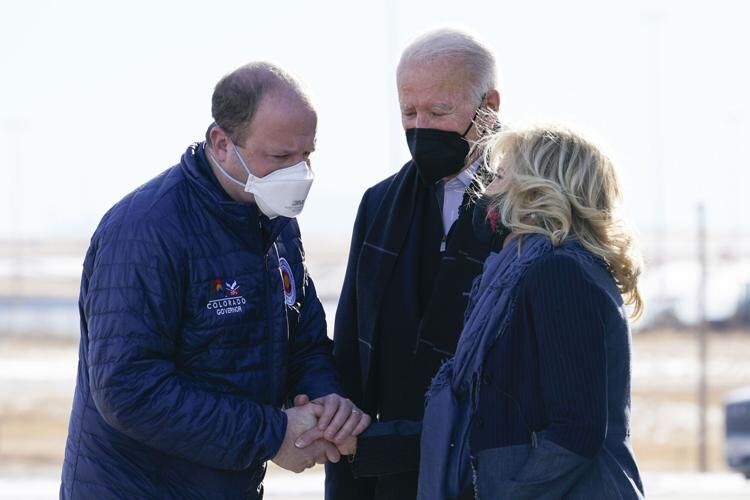
A ‘more reasonable’ pandemic path
When COVID-19 reached the United States in early 2020, governors across the country made rapid decisions, notably by shutting down parts of the economy and imposing all kinds of mandates on the public. Colorado was no exception. The crisis would ultimately become a defining test of Polis’ first four years.
Polis took a notably different path during the pandemic than many Democratic governors, according to Prof. Sara Hagedorn, who teaches political science at the University of Colorado Colorado Springs.
“I think he got a lot of credit for being more reasonable,” she said. “He just acted like a Westerner, letting people make their own choices, that kind of thing. I’m not saying everything he did during COVID was perfect, but in comparing him to other Democratic governors around the country, he definitely approached it more moderately.”
Matt Hitt, a political science professor at Colorado State University who specializes in judgment and decision making in American politics, said while many Democratic governors issued strict stay-at-home orders and vaccine mandates, Colorado took another approach.
Polis reopened parts of the economy earlier than most blue-state leaders, adopting a “safer at home” tactic in April 2020 that let some retailers resume operations with capacity limits. And although he consistently encouraged vaccination, Hitt also argued that the government should avoid imposing sweeping vaccine mandates or heavy-handed regulations.
Like other governors, Polis’ administration had suspended in-person learning at schools, shut down mass gatherings (at restaurants and theaters) and barred more than 10 people from congregating in public. The state also required people to weak masks in public.
Polis’ pro-business, pro-market posture compared to other Democratic governors earned him positive reviews from the business community, particularly from the Colorado Chamber of Commerce.
Loren Furman, the chamber’s president and CEO, said Polis has consistently taken a “very enthusiastic and supportive approach to the interests of business.” She pointed to his work on regulations and collaboration on governance bills, adding, “He was very active in helping us … and that to me is so special and so important when we have such a strong partner like that.”
Polis often pointed to Colorado’s business climate and broader economic worries when vetoing bills backed by the legislature’s progressive wing — a pattern that grew more pronounced in his second term and fueled intraparty tension, particularly with labor groups.
Others, however, said that, under Polis and the Democratic-led legislature, Colorado became the sixth-most regulated state in the country and while the governor at times expressed misgivings of the bills that landed on his desk, he still signed legislation that burdened businesses.
Among them was the state’s first-in-the-nation artificial intelligence regulations that passed in 2024, which had been cited as possibly having influenced the departure of Palantir’s headquarters to Florida. Assessments had cited that law — as well as others — as examples of the regulatory burden weighing down businesses in Colorado.
‘He doesn’t have anything to lose’
Polis won a second four-year term in 2022, defeating Republican Heidi Ganahl by nearly 20 points. His favorability hovered around 50% after the election, a level some observers attributed to his relatively successful handling of the pandemic.
As his profile rose, speculation grew that he might run for president. He appeared on several early shortlists of 2024 contenders before President Joe Biden announced he would seek reelection.
That moment marked a shift, according to Hagedorn, the political science professor. She said that once a presidential bid was off the table, Polis’ trajectory changed.
“Without (a presidential bid), he’s a true lame duck,” she said, arguing that the perception of diminished future ambitions affected how people viewed his effectiveness. “You’re still the chief executive of the state, and you still have those powers, but you’re not going to be doing something else after that. I think that’s where we truly see where his policy preferences have been all along is when he doesn’t have anything to lose.”
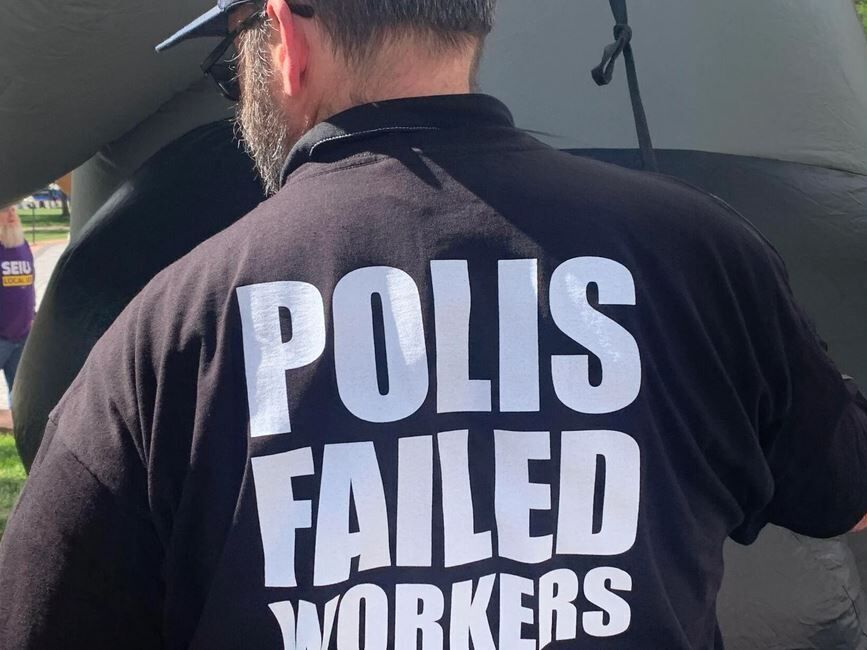
Democrats‘ ideological divide widens
Democrats have controlled the governorship and both chambers of the legislature since Polis took office in 2018, and by the 2026 session, Republicans held just 34 seats in the Colorado General Assembly.
As the Democratic majority expanded, its ideological range widened as well, Hitt said, creating more friction with the governor — particularly on labor, housing and technology policies.
“I think it’s completely fair to say that the median ideology of a Democrat in the General Assembly is going to be more liberal than Governor Polis,” he said. “The Democratic coalition is pretty large. It’s pretty confident in holding the trifecta … and as the majority unified coalition gets bigger and is not feeling as threatened by the opposition, that means you might see more ideological diversity and variance.”
Eric Sondermann, a political commentator who writes for Colorado Politics and The Denver Gazette, said Polis has grown more moderate in his second term — in part because the legislature’s Democratic margins have grown so large.
“I think as the Democrats have taken over the state legislature and their margins have grown and grown … (Polis has) stepped into the role of being the brake pedal for Democrats, since there was no brake pedal in the legislature,” Sondermann said.
That same pro-business streak that groups like the Colorado chamber praise has, at the same time, put Polis at odds with labor.
One flashpoint was the push to eliminate the second-election requirement in a 1943 law that requires two elections to establish a “union security” agreement, with the second needing 75% approval. Colorado is the only state with such a requirement. Union security means the ability by a labor group to impose recurring fees on nonunion members.
Supporters argued the law amounted to union-busting and imposed an unnecessary barrier for workers trying to organize. Critics said it would have upended a system that made Colorado attractive to companies but which still allows for unionization activities. In fact, business representatives said, the legislation had nothing to do with workers’ ability to unionize, since that is governed by federal laws.
In 2025, Polis signaled early that he would not sign the bill unless business and labor reached a compromise. Although Senate Bill 005 passed both chambers, Polis ultimately vetoed the 2025 measure after the two sides failed to agree.

Polis faced the same fight when the bill returned in the 2026 session. He repeated his warning that he would not sign the measure if the business community opposed it, and once more, the bill cleared both chambers and landed on his desk. He expectedly rejected it.
“In the wake of that veto and the substantial negotiations that preceded it, I would have hoped that both business and labor leaders could have worked to craft a long-term and durable agreement on this matter that would have served Colorado workers and businesses alike,” Polis wrote in his veto letter. “Unfortunately, because that did not happen, this issue will likely come up again next year and every subsequent year until it is addressed, which creates uncertainty for both workers and businesses.”
Gary Arnold of the United Association of Union Plumbers, Fitters, Welders and Service Techs said labor groups struggled throughout the negotiations with both the governor’s office and business leaders. The veto, he said, “really created some challenging and strained relationships throughout the labor community. Clearly, there were some challenges there and some pretty upset folks.”
Sponsors have vowed to keep bringing the legislation back until it becomes law. Sen. Julie Gonzales, D‑Denver, said she hopes the next governor will sign it next year.
Arnold said labor is looking for a governor who will engage directly with workers and tackle difficult conversations.
“And I’m certain that folks are looking to have some changes to the Labor Peace Act and how workers can unionize and organize in Colorado,” he said.

Wolves deepen rural rift
While Polis had often been mentioned as a potential presidential contender, many rural voters had remained skeptical of him and that gap widened after the 2020 ballot measure to reintroduce gray wolves was passed mostly by Front Range voters.
Polis did not officially take a position on the wolf-reintroduction measure during the campaign. He had joined the group that released the first wolves in Grand County in 2023. That release drew immediate backlash from ranchers and local officials, who said they were not notified about it.
His office said he has worked in good faith to execute the voters’ will.
As wolves began preying on livestock, frustration in rural communities deepened. A bipartisan group of Western Slope lawmakers introduced a bill to pause additional releases until the federal government issued a rule that would give Colorado Parks and Wildlife and landowners more flexibility to manage the wolf population.
Polis vetoed the measure, calling it unnecessary and arguing it undermined the will of voters who approved the wolves’ reintroduction.
To date, more than 100 livestock have been killed by wolves and roughly two dozen wolves have died from various causes. The cost of the wolf program has also exploded — way beyond the estimates when voters approved it.
A legacy-changing decision?
Polis had long frustrated progressive Democrats, but he generally kept a strong relationship with the party’s centrist wing — at least until the spring of 2026.
For months, speculation had swirled that he was considering commuting the sentence of Tina Peters, the former Mesa County clerk convicted of orchestrating a security breach in her election office in 2021.
Polis agreed Peters had committed a crime but argued her nine-year prison sentence was too severe for a first-time nonviolent offender. Meanwhile, President Donald Trump had also been pressing for her release.
In early March, Polis compared Peters’ case to that of former state Sen. Sonya Jaquez Lewis, who received probation and community service for felony convictions that included an attempt to influence a public official.
Polis noted that Peters had been sent to prison for the same charge.
“Justice in Colorado and America needs to be applied evenly,” he wrote. “This is the context I am using as I consider cases like this that have sentencing disparities.”
Two months later, Polis commuted Peters’ sentence from nine years to just over four, making her eligible for release within weeks. She left prison on June 1.
Democrats across Colorado and the country decried the decision, with Secretary of State Jena Griswold calling it “an affront to democracy.”
Democratic leadership in the state legislature issued a joint statement condemning the commutation, noting that Peters was prosecuted by a Republican district attorney in a conservative county and convicted by a jury of her peers.
“Her actions threatened our elections, and commuting her sentence sends exactly the wrong message at a time when the Trump administration is threatening vote-by-mail and working to undermine our democracy,” they said.
Hitt said the commutation of Peters’ sentence affected Polis’ perception within his own party perhaps more than anything else he’s done in his political career.
“For the state Democratic Party to censure a sitting Democratic governor is really quite extraordinary,” he said, referencing the Colorado Democratic Party’s decision to bar Polis from attending any party events in his official capacity.
Meanwhile, Sondermann described the commutation as Polis’ “ultimate act of liberation” as a lame-duck governor.
“I don’t think it was a political calculation — because there’s no calculation that would lead you to do that,” he said.
Instead, Sondermann argued, it reflected Polis’s belief that “there’s a miscarriage going on here and I alone can fix it.” In Sondermann’s view, Polis seemed convinced that “even the courts can’t be counted on to fix it and that he alone could step in — without ‘giving a damn’ about the political fallout.”

Only time will tell
Support for Polis had already begun to slip even before the Peters commutation.
A March 2026 Colorado Polling Institute survey found that 44% of voters viewed him “favorable” or “very favorable,” while 48% held an unfavorable view — a notable shift from the year prior, when 51% viewed him favorably and 40% unfavorably. He wasn’t alone. U.S. Sens. John Hickenlooper and Michael Bennet, also Democrats, also saw their favorability drop by at least five points over the same period.
While critics argue Polis will ultimately be defined by the Peters commutation and his party’s censure, Hagedorn, the professor, said his legacy should include his other actions.
“I think Governor Polis should be commended for the work during COVID,” she said. “I think he should be commended for stepping up when Republicans lost their power as a party and acted almost as an opposition to far-left policies.”
“I think that should be his legacy, but we don’t get to choose that, right?” she said.
She added that voters may not dwell on the Peters case long-term: “I think most voters are going to forget about (Peters) in the coming years.”
At a legislative recap, Polis said he did not regret commuting Peters’ sentence and believed the decision would be “remembered fondly.”
“People know I’m a man of action,” he said. “I’m a bold person, I’m going to do things that I think are right and that’s why people put me here.”
Marianne Goodland contributed to this story.
Editor’s note: An initial version of this article incorrectly said that the governor and husband Marlon Reis officially supported the 2020 wolf reintroduction ballot proposal. The story has been updated to reflect that the governor did not take a position during the campaign.