







Denver mayor promises universal childcare, housing expansion in city address
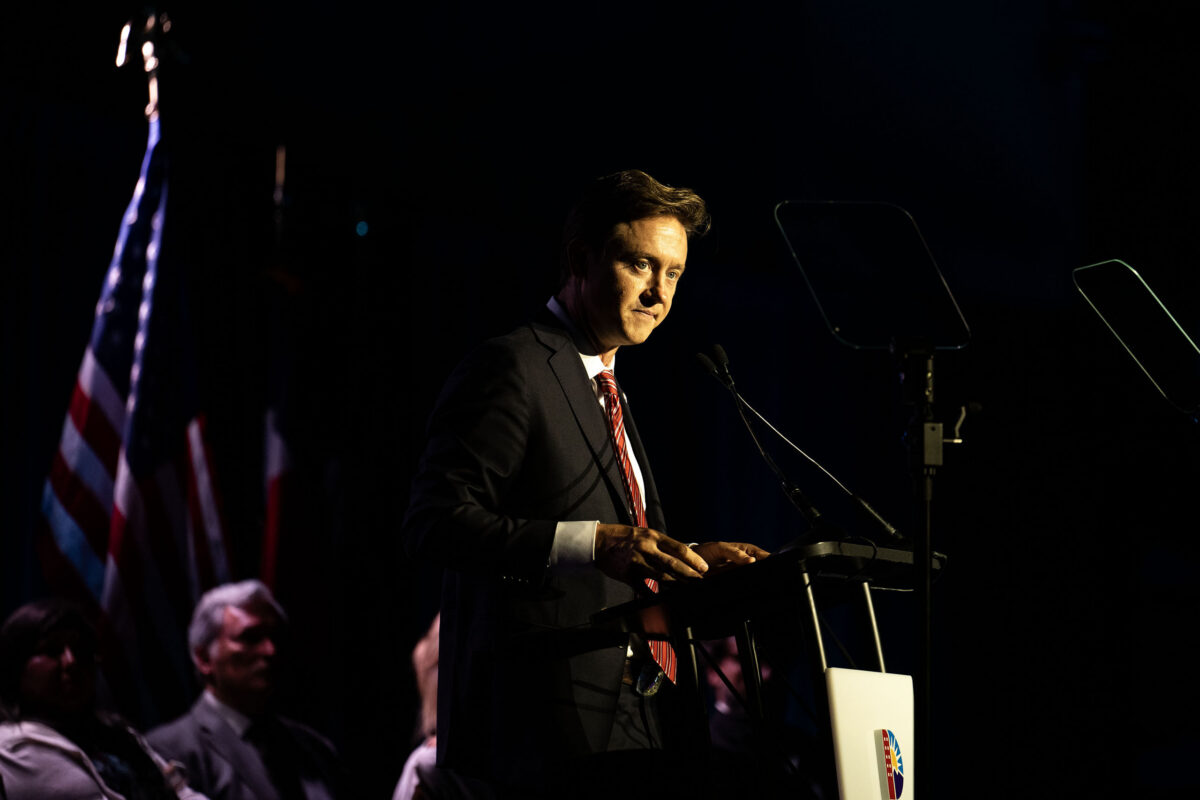
Nearly a year after Denver cut city jobs to close a $250 million budget gap, Mayor Mike Johnston used his third State of the City address to promise universal childcare and 20,000 homes as part of a new redevelopment vision connecting seven major sites by transit, bicycle and pedestrian routes.
Johnston took center stage on Tuesday at the National Western Center, replacing his 2025 city theme “Capital of the New West” with “the open frontier,” as he laid out an ambitious plan for Denver’s future.
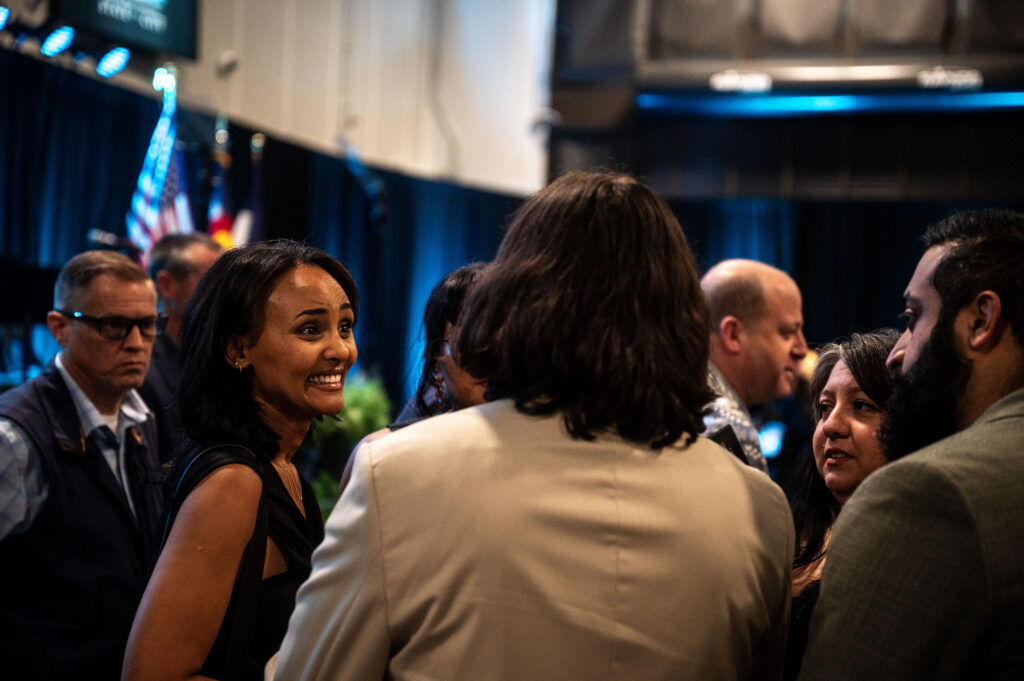
Among the guests attending Johnston’s address were Gov. Jared Polis, Attorney General and Democratic gubernatorial nominee Phil Weiser, former Denver mayors Michael Hancock and Federico Peña, and Melat Kiros, the Democratic socialist who won her party’s nomination for Colorado’s 1st Congressional District.
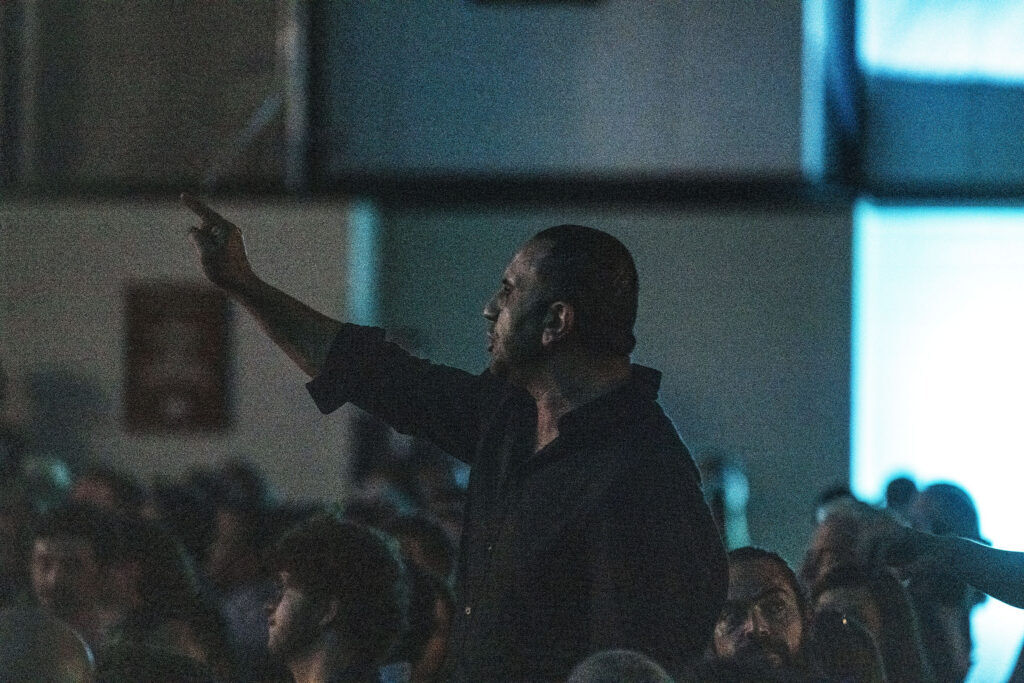
Hecklers interrupted Johnston more than once as he highlighted what he describes as some of the city’s accomplishments over his first three years in office, pointing to a 64% drop in unsheltered homelessness and nearly 6,000 income-restricted homes delivered for Denverites. The mayor had spent at least $150 million to reduce the number of visibly homeless people.
He also pointed to reductions in homicides and the return of downtown foot traffic to 90% of pre-pandemic levels.
“We’ve welcomed 108 new downtown businesses since January 2025, and more than 2,500 new homes are built, underway or in the pipeline,” Johnston said. “Pride and the Outside Days festival drew nearly 1.2 million people downtown. The incredible World Cup watch parties at Skyline Park gathered more than 60,000 people to watch 100 games together.”
The empty office real estate market remains one of downtown’s major vulnerabilities, experts noted.
Downtown Denver’s office vacancy rose to nearly 39% in the first quarter of 2026, according to commercial real estate firm CBRE.
The office market has shown signs of stabilization, though demand remains dry, CBRE’s report said. On the supply side, there hasn’t been a single new office building under construction in downtown since the opening of 1900 Lawrence during the first half 2024.
In perhaps his most political statement of the evening, Johnston emphasized that the city will continue to challenge the federal government in court, citing recent disputes with the Trump administration over federal funding and Denver’s longtime ban on “assault-style” weapons and “large-capacity” magazines.
“Everything we have built, we have also been willing to defend,” the mayor said. “Because there is one more rule of the frontier: we never go looking for a fight, but we never dodge one when trouble comes for the people we love and the values we live by.”
A plan for universal childcare
Johnston pledged to make Denver “the best city in America to raise a family,” announcing the launch of a new task force to produce a plan for universal childcare before the end of his second term.
While the announcement is a step further than Johnston has previously offered, it is still only a commitment to develop a plan and not a funded program at this time.
“Denver has 31,000 kids who are under four years old yet fewer than 5,000 available licensed childcare slots,” Johnston told the crowd. “Families are paying an average of $25,000 a year for one child. That’s an average of $50,000 for two kids. After rent is factored in, some families spend well above half their income before they pay for groceries, education, a family trip or a birthday party.”
Unchecked childcare costs, according to Johnston, have made some cities “impossible places to raise a family — a fate we won’t allow Denver to repeat.”
The task force will develop plans to cut through red tape for childcare providers and build a well-trained, well-paid workforce to make childcare affordable for “every Denver family.”
The city will begin the project with a six-month listening tour involving parents and providers.
Build 20,000 homes along the ‘Mile High Line‘
Although rent prices have softened recently, Johnston said the city will look more closely at creating homes working families could actually afford to buy rather than rent.
“We are going to build homes people can actually buy,” Johnston said. “For a generation, almost no one has built condos in Colorado: old laws made them too risky to insure and too costly to defend in court. We’re partnering with builders to deliver for-sale condos at prices a Denver family can afford.”
The city would leverage several factors, such as city-owned properties and the Downtown Development Authority, to reduce the cost of borrowing so projects can break ground more quickly, supporting tens of thousands of new jobs, according to the mayor.
Condominiums were widely offered in Colorado decades ago, but a slew of lawsuits over construction defects plagued builders in the 1990s and early 2000s, largely bringing projects to a halt. Two rounds of measures passed by the Colorado legislature sought to address the problem, but builders and Realtors said that liability costs remain prohibitive.
Others in the industry have pointed to housing mandates — notably Denver’s policy, launched in 2022, requiring new residential developments of 10 or more units to include a certain percentage of affordable units — as exacerbating the challenge.
Sitting atop housing mandates are energy requirements for large-scale buildings adopted by the state and Denver, both of which have required sweeping reductions in energy use and greenhouse gas emissions by larger commercial buildings, others have previously said, adding these changes would significantly add to costs, which will be passed down to consumers.
One of the evening’s biggest announcements was the “Mile High Line,” Johnston’s name for seven major redevelopment areas to be connected by existing rail lines and future bicycle and pedestrian routes and benefit.
He said he will commit the city to delivering 20,000 housing units along the former Park Hill golf course, the National Western Center, Downtown and 16th Street, Ball Arena and the River Mile, Burham Yard, the current Empower Field at Mile High site and Santa Fe Yards.
“Between National Western, Old Mile High and the resources of our DDA downtown, the city holds more than 150 acres and real investment power, all sitting on existing rail,” Johnston said. “For decades, transit has struggled here because we never built density around the stations. These sites let us build housing we can keep affordable, in exactly the places that make transit finally work.”
Johnston has confirmed he will seek a second term, but no formal announcement has been made to date.
Denver Gazette reporter Mark Samuelson contributed to this story.