







Shrinking school district shortchanges its best hope | Jimmy Sengenberger

Colorado’s public-school enrollment is shrinking. Few places feel it more than Woodland Park, nestled on Pikes Peak’s north slope.
Now, the one school stabilizing enrollment in Woodland Park School District is also the one bearing the burden of the district’s own financial turmoil.
Colorado funds schools using per-pupil revenue from local property taxes and state equalization dollars. Although lawmakers have steadily increased PPR, fewer students can mean less money.
Woodland Park has 1,850 students, down 10% from 2020-21. Merit Academy, the district’s only charter school, keeps bucking that trend — surging 40% in two years, from 436 students to 612. Merit now educates one-third of district students and is its top-performing school.
After closing an elementary school and merging its middle and high schools, the district leased the middle school campus to Merit. Last year, district-operated schools shed 102 students; Merit gained 108.
In March 2025, the Woodland Park City Council repealed a unique, voter-approved 1.09% sales tax benefiting the district’s schools — eliminating up to $3.2 million in annual revenue and overriding voters just four months after they rejected a repeal by a 58-42 margin.
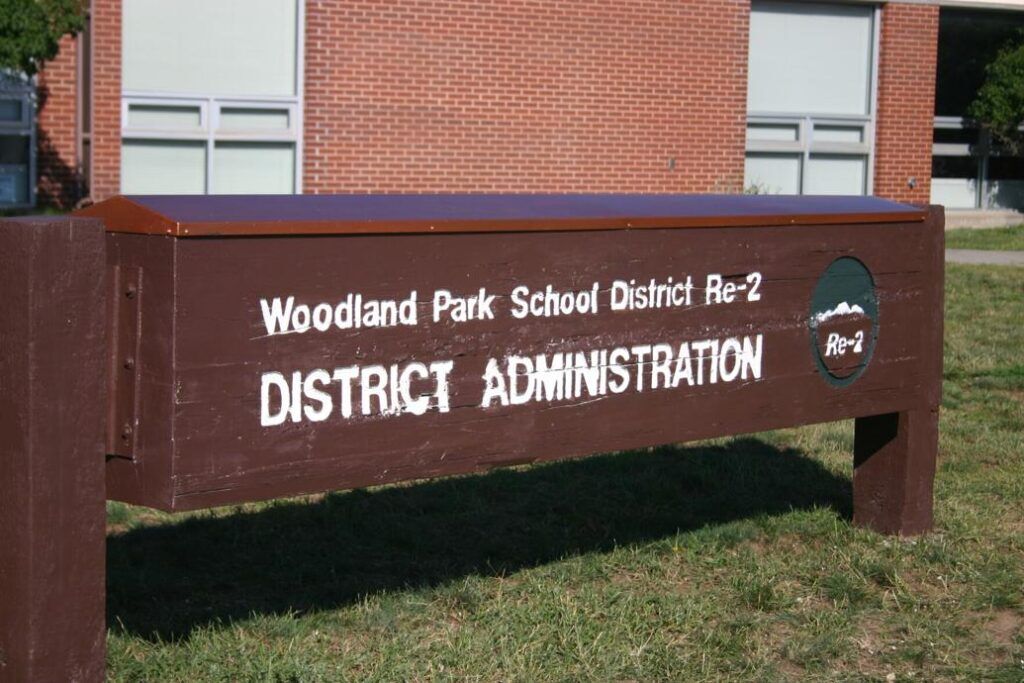
A year later, the district’s overdue 2025 fiscal audit carried a disclaimer — the most serious finding short of an adverse opinion — because auditors couldn’t verify its finances.
In a July 15 op-ed in The Pikes Peak Courier, a Gazette news affiliate, board President Keegan Barkley declared fiscal responsibility “one of the Board’s highest priorities.”
That’s an understatement. The district faces a fiscal crisis.
Barkley cited the audit, next year’s budget and a Fiscal Advisory Committee, contending the problems predated the current board. Her board’s responsibility, she wrote, is “to address those challenges honestly and make thoughtful decisions” for Woodland Park’s “long-term financial stability.”
Yet the record, including documents obtained via the Colorado Open Records Act, suggests a district less inclined toward solutions than shifting its burdens onto Merit and its students.
Like other districts, Woodland Park bridges uneven cash flow through accelerated state payments over nine months or interest-free loans through Education Tax Revenue Anticipation Notes (ETRANs). Charter schools like Merit lack those options.
For four years the district paid Merit equally each month, as its contract requires (“monthly installments on the 25th”).
Not anymore.
Instead, Merit may receive funding only as district revenue arrives — even though Woodland Park apparently counts Merit students in calculating its ETRANs loan — all while the school’s payroll and bills continue each month.
On June 10, Colorado Department of Education school finance program manager Glenn Gustafson warned Woodland Park CFO David Kuritar that paying Merit less than one-twelfth each month “is inequitable and unfair” — and WPSD “would easily lose this argument” before the state Board of Education.
Kuritar argued the district’s borrowing tools “exist to address District cash-flow needs” without “a legal obligation to deploy them on behalf of another entity.”
Gustafson answered that charters can’t borrow interest-free like districts can. That’s why nearly every authorizer pays in 1/12 installments. “Those are your students too,” he reminded Kuritar and they deserve to be treated fairly.”
Even the Charter School Institute — Colorado’s statewide charter authorizer — confirmed to Kuritar days later that it pays twelve equal monthly installments. “You’ve answered our question,” Kuritar wrote back and confirmed that CSI remits 1/12 monthly.
On June 18, Merit Academy Headmaster Gwynne Pekron and Board President Jason Ledlie sent a four-page letter explaining the charter contract “does not permit the District to shift the burden of its own cash-flow management onto (Merit).”
On June 24, Kuritar emailed both boards that the district’s “current financial position” had forced an end to its historical practice of equal monthly payments, claiming the education department “does not have any concerns.”
Even as Woodland Park pursues an ETRAN “to assist with (its) own cash flow needs,” Merit would receive advances only “after ensuring the District can fully meet its own obligations.” Merit gets what’s left over.
Within two hours, Gustafson corrected the record. Kuritar’s characterization of the department’s position, he wrote Pekron, “is absolutely not true.”
Either passing funds owed to Merit is a district obligation, or it isn’t.
Attorney-meeting notes from early June, later released publicly, outlined multiple potential pressure points involving Merit. Superintendent Ginger Slocum would notify Merit that monthly “smoothing” would end. If Merit refused to renegotiate its building lease, “attorney suggests starting eviction proceedings.”
The notes also proposed sending two board members “deemed to have the least baggage” to meet privately with two Merit board members. They met June 7 and again July 11. Merit came away convinced the district’s mind was made up.
“It is understood from that meeting that the district does not intend to change their position,” Merit Treasurer Mary Sekowski, who attended both meetings, told me. “The district has committed only to providing the flow-through funding to MA ‘as it is received ’by the state.”
Woodland Park President Barkley said in her op-ed the district plans a public work session with an “expert” explaining ETRANs, with Merit’s board invited “as we work together to better understand this important funding program.”
To what end? Merit isn’t asking for new money. It’s simply asking for the same monthly payment schedule the district has always followed.
If Woodland Park’s position holds, the implications extend far beyond Teller County and Merit Academy. It becomes a blueprint for financially strapped districts to shift their own cash-flow burdens onto the charter schools they authorize. Those students deserve fair treatment, too.
Jimmy Sengenberger is an investigative journalist, public speaker, and longtime local talk-radio host. Reach Jimmy online at Jimmysengenberger.com or on X (formerly Twitter) @SengCenter.