


Colorado’s most iconic waterfall scene is more than just a pretty view – it’s a geological wonder, too
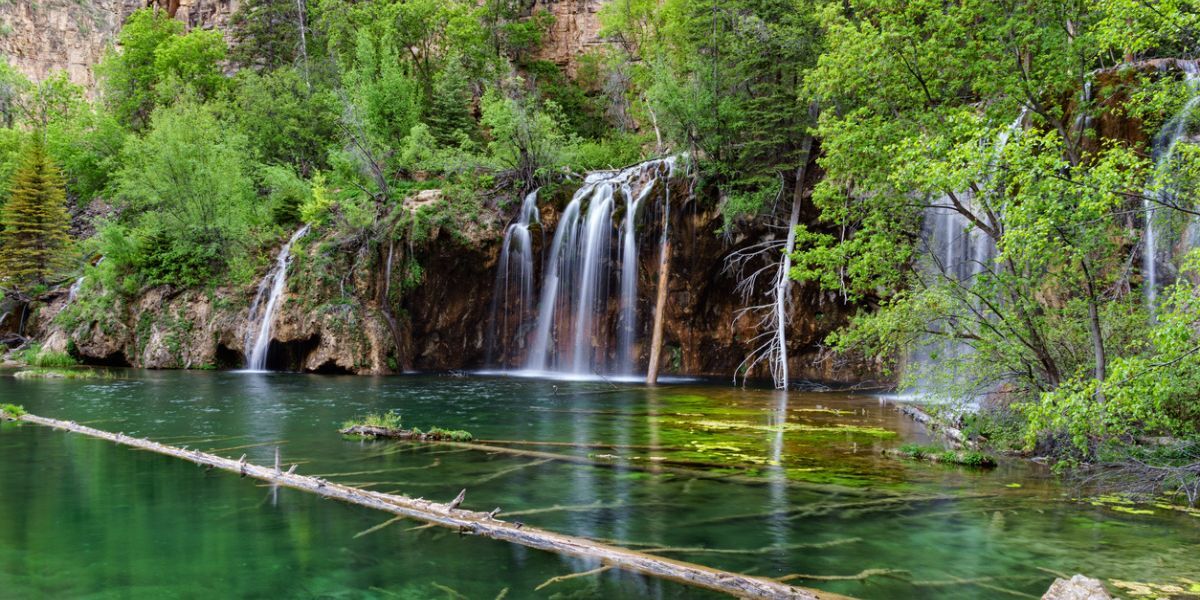
Hanging Lake is one of Colorado’s most stunning and awe-inspiring natural destinations. Although it’s widely known now, the discovery of this geological wonder is quite the tale.
According to Volunteers for Outdoor Colorado, the discovery of Hanging Lake is a bit of a mystery. Legend has it that a man was searching for gold in Glenwood Canyon and found a dead horse at the opening of a gulch (presumably how Dead Horse Gulch got its name). He followed the gulch and discovered the “turquoise, bowl-like basin ‘hanging’ on the cliffs below.”
Although that story can’t be confirmed, VOC says that historians do know that the lake and its surrounding area were a private homestead for Thomas F. Bailey in the early 1900s. Glenwood Springs bought the area for only $953 in 1912.
Under Glenwood Springs, the area became known as Hanging Lake Park and grew in popularity. Hanging Lake Resort opened in 1945, including a cafe, gas station, cabin rentals and horses and burros that took visitors to the lake. The resort and tourism thrived for 23 years until the resort closed in 1968 because of the construction of Interstate 70. The area returned to the U.S. Forest Service in 1972, but the highway had revealed the area to more tourists.
Decades later, Colorado’s population has increased substantially, with lots of people hiking up to the lake, made easier by the way the trailhead has its own exit along the interstate.
That said, what has drawn visitors to the lake for so many years isn’t just its beauty. The lake is actually a geological rarity. According to the U.S. Forest Service, Hanging Lake is located on a fault line. When part of the valley floor fell away, water filled the area and left a travertine deposition and the newly formed lake “hanging” in the canyon, giving it its name.
According to VOC, travertine is a form of limestone that is rich in calcium carbonate. This is what gives the lake its stunning turquoise color and what makes the area so delicate. Travertine layers can be easily damaged by human contact and the oils found on our skin, according to VOC.
Since the ecosystem of Hanging Lake is so delicate, visitors must now make reservations and acquire a permit to experience the area. There are also various restrictions in place. Visitors are not allowed to swim or make bodily contact with the water at Hanging Lake, no dogs or pets are permitted, there is no fishing, drones are prohibited and you must stay off the log, pack out trash and avoid cutting switchbacks.
Spouting Rock is located about 200 feet above Hanging Lake, with the water rushing through the cliff’s rock face – visitors should be sure not to miss it. Hanging Lake is fed by Bridal Veil Falls, which the U.S. Forest Service says also deposits minerals that contribute to the water’s vibrant color.
The hike to Hanging Lake is 1.2 miles long, and the U.S. Forest Service describes it as “steep, rocky, and moderately strenuous.” The trail climbs 1,200 feet, follows multiple switchbacks and crosses seven bridges ending on a boardwalk around the lake. The trail was recently revamped and improved following wildfires and mudslides in the surrounding area.
As an incredibly unique and beautiful natural destination in Colorado, Hanging Lake has a long history of attracting visitors. Plan a visit here.
STAY INFORMED: Get free Colorado news with our daily newsletter (Click here)
Get OutThere
Signup today for free and be the first to get notified on new updates.