







Senate committee advances Trump’s 10th Circuit nominee, as Domenico responds to questions about delays
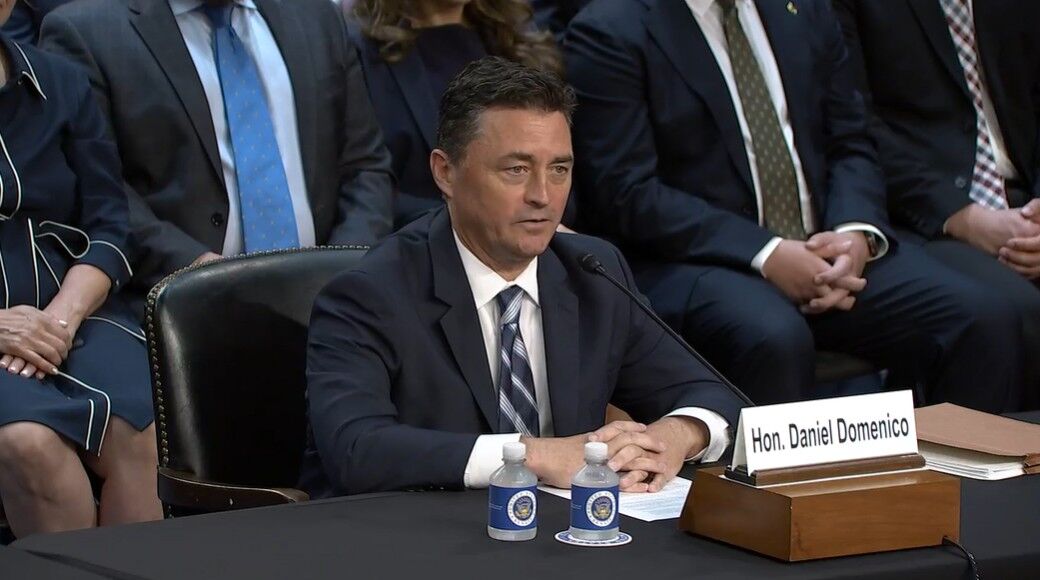
The U.S. Senate Judiciary Committee advanced President Donald Trump’s nominee to the Denver-based federal appeals court on Thursday by a party-line vote of 12-10.
U.S. District Court Judge Daniel D. Domenico, who was Trump’s first-term appointee to Colorado’s federal trial court, is now seeking a seat on the powerful U.S. Court of Appeals for the 10th Circuit, which sets binding interpretations of law for federal cases arising from Colorado and five neighboring states.
If confirmed by the full Senate, Domenico would succeed his former boss, Judge Timothy M. Tymkovich, who is taking a form of semi-retirement known as “senior status.” The 10th Circuit has 12 full-time judges, with seven appointed by Democratic presidents and five by GOP presidents. The addition of Domenico would not change that balance.
Domenico appeared before the judiciary committee last month, and has since responded to additional written questions from senators.
Two members of the committee cited Colorado Politics’ reporting on Domenico’s various delays in deciding motions for non-criminal cases.
Between 2022 and 2023, Domenico had an abnormally high number of undecided motions in civil cases that had been pending on his docket for six months or longer. At one point, the number ballooned to 185, far exceeding that of his peers on Colorado’s district court. He also became one of the most backlogged federal judges in the nation, out of more than 1,200 district and magistrate judges.
Although Domenico eliminated his backlog entirely in recent years, Sen. Dick Durbin, D-Ill., asked for the explanation behind the severe delays.
“The disruptions of the COVID-19 pandemic and its aftermath striking within a year of my taking the bench, along with multiple vacancies on our court, among other unique circumstances, led to the numbers,” Domenico wrote. “Those circumstances have all passed, as shown by the fact that I have eliminated the backlog and had no motions on the list for several years.”
Durbin also asked Domenico to explain why Tymkovich had stepped in to resolve two motions that had been sitting on Domenico’s docket for over three years and four years, respectively, without a decision.

“My recollection is that Judge Tymkovich suggested that his clerks might benefit from seeing a bit of what district courts encounter, and I responded that we had plenty of motions to share. He agreed to take a handful of them, as circuit judges are authorized to handle district court matters,” Domenico wrote. “I plan to do the same when possible if I am confirmed as a circuit judge.”
Responding to similar questioning from Sen. Cory Booker, D-N.J., Domenico said he was “not aware of any complaints” of judicial misconduct stemming from his delays, and there is “no reason to think the issues that led to the list’s growth in my earlier years as a judge” will recur.
Booker also directed Domenico to respond to Colorado Politics’ findings that Domenico took far longer than his colleagues to resolve “habeas corpus” petitions alleging unlawful immigration detention, and was less likely to grant relief.
“Do you acknowledge that, for the petitioners you granted release after delaying a ruling on their petition, they experienced additional needless hardship because they were in custody longer than was necessary?” Booker wrote.
“I recognize that every habeas petition places a person’s liberty at issue and that custody imposes real hardship on petitioners and their families. That is precisely why such matters warrant priority, and why I have endeavored to resolve them as promptly as the circumstances of each case allowed,” Domenico responded. He added that there are “scores of habeas petitions” at Colorado’s district court each year, including from people incarcerated in federal prisons.
“I take them all seriously. I do not give any particular class of habeas petitions greater or lesser priority,” Domenico wrote.
Several Democratic senators also continued to press Domenico to name the winner of the 2020 presidential election, after he refused to do so during his confirmation hearing.
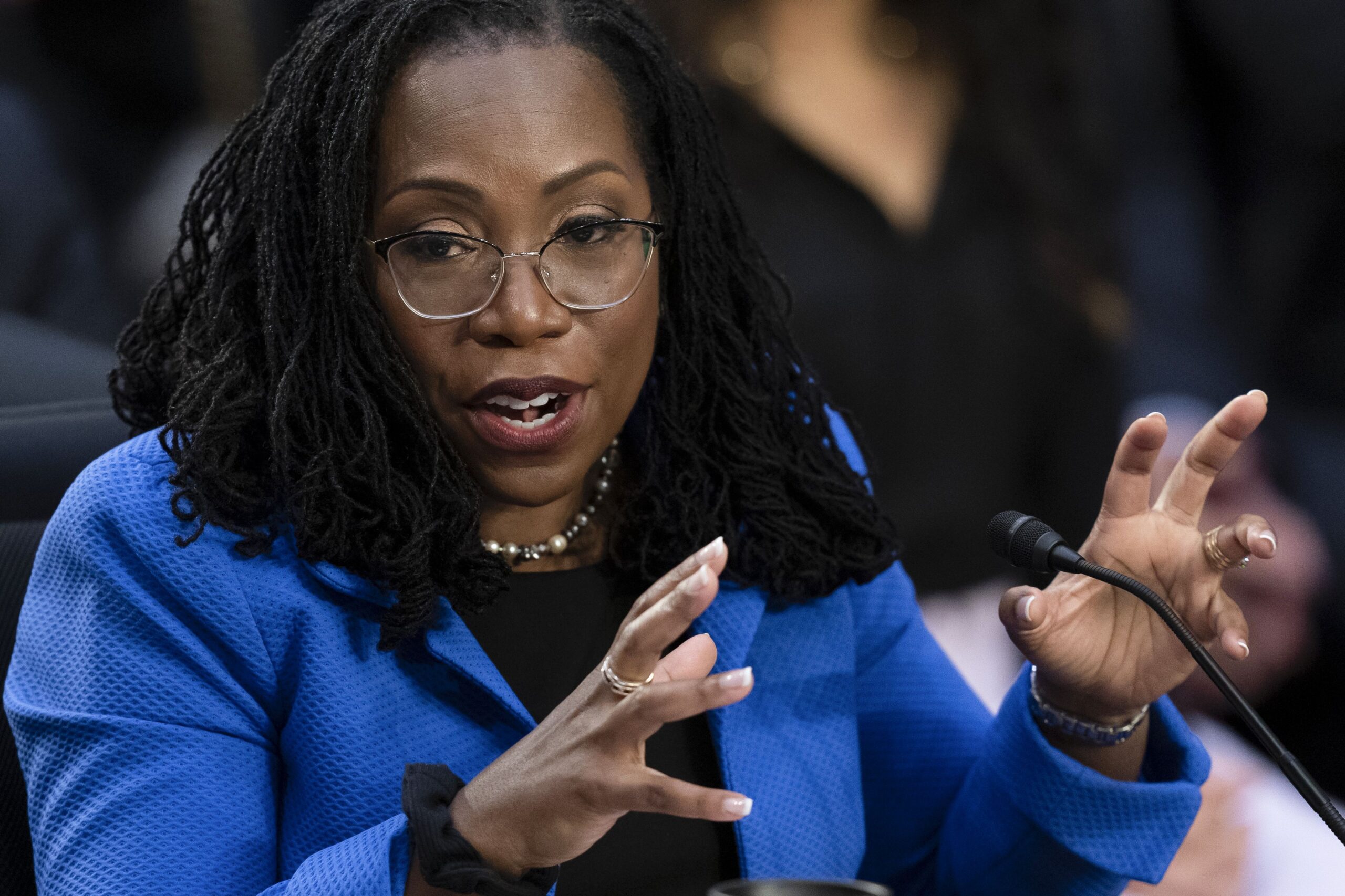
Former President Joe Biden “was certified as the winner of the 2020 presidential election and served as the 46th President of the United States,” Domenico wrote. “Beyond that, I agree with Justice Ketanji Brown Jackson, who, in her responses to this Committee’s questions for the record pertaining to the 2016 and 2020 elections, explained that under the Code of Conduct for United States Judges it is inappropriate for a sitting federal judge to publicly comment on such matters of political dispute.”
Jackson, during her 2022 confirmation to the U.S. Supreme Court, provided her answer in response to the question of whether she had “commented, publicly or otherwise, on the results of the 2020 election.”
Multiple Coloradans who wrote endorsement letters for Domenico, some of which attested to his nonpartisan ability to carry out his job, found Domenico’s answer sensible.
“Judge Domenico’s responses to the Senate Judiciary Committee were not only consistent with those of the many jurists who have faced the same questions before him — including Justice Ketanji Brown Jackson — the answers are consistent with a judge who resists the temptation to weigh in on insisted-upon characterizations of politically disputed issues,” said George Brauchler, the GOP district attorney for the 23rd Judicial District in suburban Denver, in a statement.
“Heck, it’s not like he refused to define what a woman is,” Brauchler added, referring to a question Jackson received about providing “a definition for the word ‘woman,'” and Jackson declining to define it “in this context.”
“I am reminded of Ketanji Brown Jackson’s answer to the question of ‘what is a “woman”?’ And she answered ‘I don’t know, I am not a biologist’,” wrote Republican former Gov. Bill Owens, who also submitted a joint endorsement letter with Democratic former Gov. Bill Ritter. “Nominees often evade, methinks.”
When asked how he would answer the question about who won the 2020 presidential election, Owens pointed to his Facebook post from November 2020, where he wrote that the “election is over” and Biden “has defeated” Trump.
Ritter did not respond to an email asking about his reaction to Domenico’s answer.
In response to other questions, Domenico wrote that his legal role models include Tymkovich; former state Attorney General John Suthers, for whom Domenico worked as solicitor general; and U.S. District Court Senior Judge John L. Kane, who has served on Colorado’s federal court since 1977.
He added that during his nomination process, “no one from the Department of Justice or the White House, including President Trump in our brief conversation, ever suggested loyalty to the president was a relevant consideration.”