







Downtown Denver’s office market is at an ‘inflection point’
It’s been nearly two years since the last new office building was built in downtown Denver.
There are currently no new buildings in the pipeline and, since then, several developers have begun the groundwork to transform a few of downtown’s old offices into housing. One university even bought an office tower to consider making it suitable for campus life.
As leasing picks up during a time of no new supply and a trimming of some fat, the vacancy rate in downtown is starting to improve.
Downtown Denver’s overall vacancy rate was 38.6% in the second quarter of 2026, down by 20 basis points from the previous quarter, according to a report last week from commercial real estate firm CBRE.
It was one of the most encouraging quarters for downtown since the pandemic spurred a wave of businesses downsizing their offices.
The center of the city saw positive net absorption of 66,000 square feet, meaning more companies were leasing than leaving.
Downtown Denver likely hit an “inflection point” late last year, said Chris Phenicie, senior vice president at CBRE.
“We didn’t know it at the time, but what we started to see was a pronounced trend that is held up with more tenants growing than downsizing, tenants committing to longer lease terms, more return-to-office mindsets,” he said.
‘America’s emptiest downtown’?
A recent Wall Street Journal headline calling downtown Denver “America’s Emptiest Downtown” has sparked outcries from local leaders and experts who argue downtown is more than the office real estate trends it appears to show.
The city center is drawing thousands of people to levels not seen since 2019 with major events attracting visitors such as World Cup watch parties and the Denver Pride Parade.
More than 62,000 people came out to watch the soccer games at Skyline Park, a spokesperson for the Downtown Denver Partnership told The Denver Gazette.
Four out of the first six months recorded their highest pandemic recovery rates of pedestrian traffic, with April at 96% of where it was in 2019 and January at 94%, according to more data from the Downtown Denver Partnership.
Even Denver’s office numbers are more nuanced than they seem, Phenicie said.
“We’re talking about pockets of problems. We’re not talking about this epidemic that covers the entire downtown,” he explained.
About 9% of downtown’s office space is up for conversion, he said.
If taken out of the equation, “you’re dealing with something that feels a lot more on par with the national average vacancy rates, which are in that kind of 18 to 20% range,” Phenicie explained.
“It just hasn’t shown up on paper yet,” he added.
Higher concentration of remote workers
In addition, he said the city is playing catch-up to other cities because it has a higher concentration of remote workers.
Out of 11 major metros in the U.S. — including Atlanta, Miami, Boston, San Francisco, Los Angeles, New York, Houston, Dallas, Chicago and Washington D.C. — Denver had the lowest return of office workers, according to data in June from Placer A.I.
Total visits to offices in Denver were down nearly 40% in June, far above the national average of 21%, according to the company’s report.
The only city with more office traffic than before the pandemic is Miami, which is up nearly 8%.
Downtown Denver’s office has been primarily split into two factions: Upper Downtown near Civic Center Park and Lower Downtown with Union Station at the heart of it.
LoDo has been the main hot spot for businesses looking to open an office downtown. Vacancy rates were at 19.5%, according to CBRE. The Central Business District is still struggling at 44%. But that’s been shifting too.
“We’ve basically started to see that spill over into some of the other areas that previously weren’t on the radar for a lot of groups, i.e., anything but LoDo,” Phenicie said.
Stages of recovery
Denver’s office recovery is likely to go through several stages of recovery if the economy holds up, he explained.
The first few phases have already begun: Office conversions are going to take several struggling properties off the market and the success in LoDo is starting to move further into the eastern part of downtown for the right buildings.
There’s a flight toward quality that has made LoDo and Cherry Creek more successful than Upper Downtown, which is filled with older skyscrapers built in the 1970s and 1980s. Phenicie said the buildings that have made investments to their offering are in better positions to be on the radar of the growing — but still comparatively smaller — demand for office space.
Those that haven’t recently invested in security, parking and other amenities will likely lag behind, he said and there are still many buildings struggling with debt and aren’t able to make the necessary investments to attract tenants.
“The people who have the ability to do transacting and have the right building are in the game today and they will recover significantly in the next 18 to 24 months,” Phenicie said.
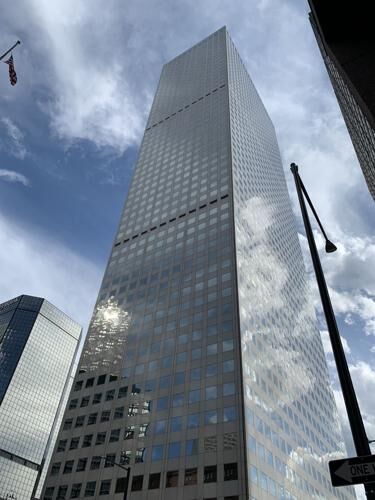
One example: Bank of America’s Colorado office is set to move from Republic Plaza, the tallest building in Denver built in 1984, to another location in Upper Downtown later this year.
The bank is set to open a newer and smaller office at Block 162, a newer tower at 675 15th St. next to the Denver Pavilions, in October.
The building has walkability to restaurants, new amenities and accessible parking ideal for clients, said Bank of America’s Colorado Market President Gabby Hodgson. They also minimized their space down to one floor so more teams could collaborate in the office, she added.
“It’s great to have amenities in the building. It gets people excited about being there and coming into the office and having great places to post events and host meals and those types of things with our customers,” Hodgson said.
Building improvements draw tenants
If debt markets continue to improve, Phenicie added another wave of buildings will be able to attract tenants once they make the necessary improvements.
“They need a certain degree of investment, but they can get the job done,” he said.
The final wave will be the buildings that are really struggling.
Office conversions are really expensive and difficult to complete, so developers are waiting to see how the first wave of new apartments will perform in Denver, meaning it could take a while to get more supply off the market than the ones currently in the pipeline, Phenicie said.
The last remaining struggling buildings are “a big question mark,” he said. “And they might be future candidates for conversion. They might just be the last laggards in the market.”
A new economic development leader in downtown is also starting to see more demand for office space spilling from LoDo to east of Arapahoe Street.
“We really think that’s a performance indicator for what’s coming for more uptown,” said David Welsh, executive vice president of economic development and real estate at the Downtown Denver Partnership.
The Downtown Denver Partnership hired Welsh from the Chamber of Southern Arizona in April to court businesses to come to downtown.
Singing Denver’s praises
One of his first initiatives was to start implementing a sales pitch day for Denver whenever the downtown organization visits other cities to learn about best practices. In their latest trip several weeks ago, he met with people in Berlin who were looking to grow in the U.S. or had connections with businesses in expansion mode. Next up, they’re planning to go to Montreal.
In recent years, the organization has had to wait to hear from the state economic department or local chambers to get wind of interested companies wanting office space.
Now, he wants to push the organization to be proactive instead of reactive, Welsh said.
Denver still has a lot of great fundamentals: The foot traffic is improving thanks to entertainment, events and a rise in residential and the labor force is one of the strongest in the nation.
And many workers are attracted to the Colorado lifestyle and its mountains.
There are opportunities to poach companies from other cities where office rents are more expensive, he said. There’s also a few leases expiring in Cherry Creek, and, with rents going up, Welsh said he’s gotten wind of several companies looking at downtown again.
And are there opportunities to pitch downtown as a place to help build the supply chain for Colorado’s booming quantum sector? Or would atypical downtown industries such as advanced manufacturing or urban farming also be willing to make the city center its home?
While companies may have interest in Denver, Welsh said many still need an extra push.
One of the key programs to watch is Open Denver, which the Denver Downtown Development Authority approved using up to $40 million to help attract companies to the city as part of Mayor Mike Johnston’s wider $100 million investment to spur job growth.
One of the first winners of this new program is Colorado’s Alterra Mountain Company, the ski resort company behind the Ikon Pass. On Wednesday, the DDDA authorized lending up to $7 million to the company if it chooses to move its headquarters to Upper Downtown.
Alterra’s headquarters is currently located in the River North Art District at 3501 Wazee St. Alterra did not respond for comment.
The money from the program can be used to help cover upgrade, relocation and build-out costs holding businesses back from signing a lease.
“We’ve got a lot of activity. We’re doing tours. We’ve got people coming into town from different states. We’ve got some international interest,” Welsh said. “We’re just trying to capitalize on it while this feeling’s out there and this tool that the mayor put in place is a nice little goose.”
But overall, he added Denver is in need of a mindshift.
The city was once the “envy of the Western United States,” he said. But businesses aren’t coming in droves like they used to.
“We just need to be much more proactive about it and not just take it for granted,” Welsh said. “Denver was in a position to take it for granted for a long time, and now they have to compete like lots of places do.”