







Where the blueness rested | Vince Bzdek
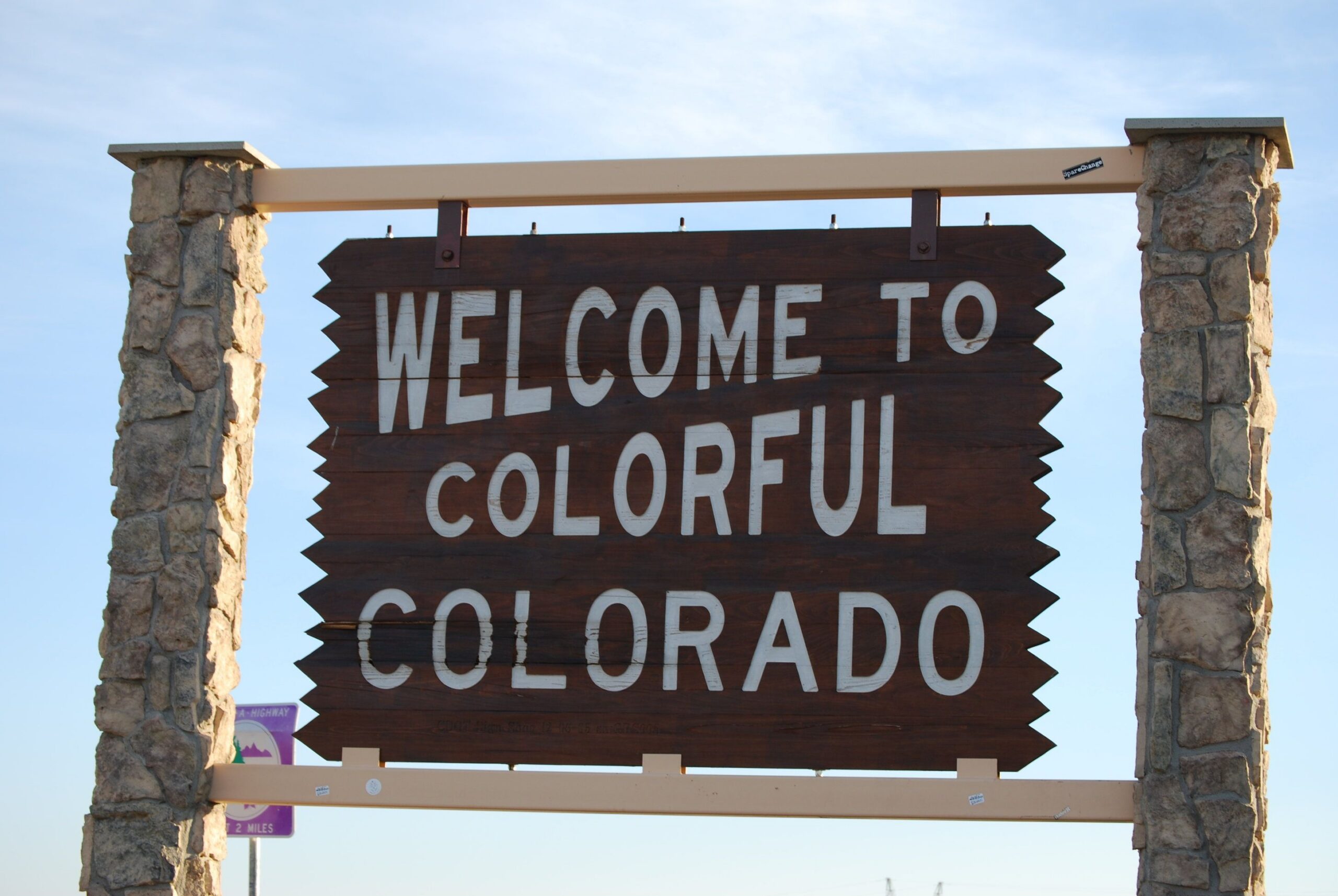
One family’s journey through Colorado’s history.
One hundred and fifty-four years ago, four years before a rectangle was drawn around the country’s highest cluster of mountains to create something called Colorado, a guy named Frank Miller descended on Black Hawk hoping to strike it rich.
Originally from Denmark by way of Wisconsin, he was part of a wave of European immigrants flooding west to the rallying cry of “Pikes Peak or Bust!” More than 100,000 of these Pikes Peakers seeded Colorado with its first real settlers during three waves of a silver and gold rush that transformed a rugged, unsettled frontier into a state.
Frank found some success buying stock in gold mines in the Black Hawk area, but like many of those wagon people, he found steadier income in servicing the miners, in his case by opening a saloon. His was one of 13 watering holes that eventually sprung up in Black Hawk, along with three breweries. These saloons gave Black Hawk its mythic Western identity more than anything, with their swinging doors, animal heads plentifully mounted on the walls, giant mirrors behind great oaken bars, brass spittoons everywhere and pressed tin ceilings that have been replicated faithfully in Black Hawk’s latter-day casinos. The myth of the Old West immortalized later in hundreds of Westerns was forged in part right in the hills outside of Denver.
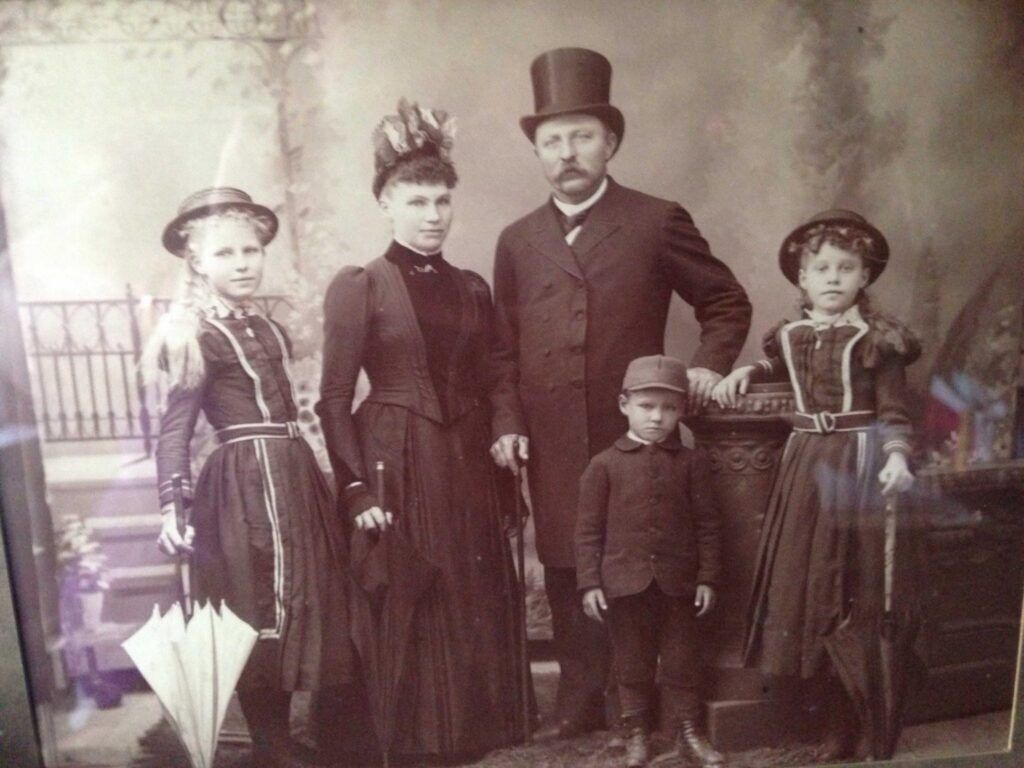
The year Colorado became a state, 1876, Frank married Christine Nilsdotter, an immigrant from Sweden, and they had two little girls, Lily and Rose. Lily became my great grandmother in time, launching a seven-generation Colorado family story that in many ways mirrors Colorado’s own trajectory: homestead-era settlement; a full embrace of the romance of the Wild West; the rapid spread of farmers and ranchers across the state; the building of the state’s significant military superstructure; the boom years of rapid growth led by Denver; and the increasing strains we now face from the high costs of Colorado’s popularity.
Fortunately for all of us descendants, Frank saw the writing on the wall in Black Hawk early — that the great mining boom that sparked the birth of this state would eventually go bust, spawning ghost towns in its wake — and decamped for Fort Collins in 1882, where he saw more permanent prospects for a thriving family and saloon.
Frank was an astute businessman and real estate investor who built the Miller Block building downtown on what is today Old Town Square. He became an alderman and a man of some means as Fort Collins boomed with the establishment of the Agricultural College of Colorado in 1870, later turned into Colorado State University, which my brother Justin attended. These land-grant colleges were set up by President Lincoln to teach homesteaders how to make the most of their land while giving their children a chance at the American Dream through education. CSU schools 35,000 students a year now, just as many as CU, yet still maintains its ag legacy with the agricultural extension housed there.
When Fort Collins went dry in 1896, Frank’s liquor license was the last to expire. Frank Miller literally helped close one era of the frontier West when he sold Fort Collins its last drop of alcohol before Prohibition.
Historian Maren Bzdek, Justin’s bride, puts it this way: “The Millers and the McCartys are representative of the first wave of settlers who were able to parlay their initial investments into economic success, but they were also subject to the overarching social, political and economic conditions that resulted in setbacks and reversal of fortune.”
Frank’s son, Frank Jr., certainly the most vivid character in our family history, was born in Fort Collins on May 11, 1886, when the town was still just a startup. As a young boy, he spent most of his spare time at target practice in his father’s shooting gallery in the basement of the Miller Block. (If you go out back of Bondi Beach Bar, you can still see bullet holes from the outdoor versions of his target practice), according to Pirates on the Prairie, a narrative history compiled by brother Justin, a 40-year resident of Fort Collins himself.
Frank was best known as a Western showman and expert marksman, Justin tells me. At one time he was claimed to be the champion crack shot of the world, and was featured on Ripley’s Believe It Or Not. One of his tricks was throw a can over his head and shoot it twelve times mid-air.
Frank Jr.’s motto could well have been the West’s motto as well: “Never let the truth get in the way of a good story.” Like Buffalo Bill’s, “Uncle Frank’s Wild West persona was as much Americana as farce, a reach for authenticity in a frontier based on false promises like the Homestead Act and the rain,” writes Justin in Pirates on the Planes.
“As a representative microcosm for Western sociology, the Wild West Show phenomenon, with Buffalo Bill at its epicenter nationally and Frank Miller at its epicenter in Northeast Colorado, plays an important part in defining the High Plains … Frank Miller and Buffalo Bill embody the put-ons as well as the realities inherent in the West and its vision.”
We still live cheek to jowl with that idealized past, but that doesn’t mean there aren’t real cowboys in Colorado still, too. City slickers along the Front Range sometimes forget that ranching and farming are still the No. 1 industry here, generating billions for the state’s economy in crops and livestock. The National Western Stock Show returns to Denver every January to remind us of our roots but also our still thriving rural present, too.
Frank was both a real rancher and a renowned huckster of the Western myth. He bought the Trails End ranch west of Fort Collins in 1920 and turned it into an anchor for his Wild West show for nearly two decades.
From 1920 to 1938, Frank attracted more than 100,000 visitors to his shows and rodeos, reportedly including Buffalo Bill and Will Rogers and other Hollywood actors.
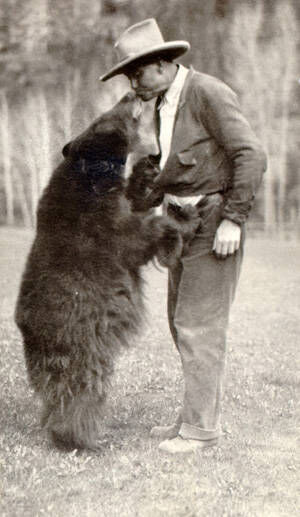
Frank eventually rounded up and tamed wild animals into a mountain “zoo,” including buffalo, deer, elk, bear, bobcats, coyotes and wolves, naming most of them. He even tamed fish. Frank’s entertainment at the ranch also included tightrope walking, hot air balloons, parachute jumps and band concerts by the Laramie and Cheyenne city bands.
Frank invested so much in his dream ranch he went broke, like so many Western speculators, and turned to oil painting in his later years for income and amusement. He painted the well-known panorama of Fort Collins in the 1880s that is featured at the Fort Collins Museum.
In 1946, Frank Jr.’s son, Teddy, was killed in a military accident overseas following World War II, the final blow for Frank. “Sorrow consumed him, as did alcohol, and people on the street were known to cross to the other side when he came by,” writes historian Meg Dunn. Frank Jr. died of either a broken heart or a heart attack in 1953.
Frank Sr.’s daughter Lily married my great-grandfather Bert McCarty, who was the founder of McCarty’s Barbershop in Fort Collins, located for 50 years on College Avenue next door to Al’s Newsstand. They were there when CSU deliberately quadrupled its student body in the 60s, swelling Fort Collins into the fourth largest city in the state.
Bert’s son Don, my grandfather, worked for the Fort Collins Express-Courier and the United Press for eight years before marrying my grandmother, also a journalist. They moved to Brush, Colorado, about 100 miles east of Fort Collins, where they purchased and merged two newspapers to form the Brush News Tribune, launching four generations of my family, including both my parents, into the dubious business of newspapering.
The cavalry arrives
My dad’s side of the family arrived in the state with World War II, when Camp Carson was quickly erected to train troops for overseas deployment. My grandfather Stephen Bzdek was a master sergeant in the Army and served with the military police in Alaska, Germany, Korea and Camp Carson.
Like so many other vets, he was so smitten with the fairy-tale city of Colorado Springs he settled there permanently in 1952.
He was there for the dawn of the Cold War when the establishment of an independent Air Force transformed the state’s landscape, first with Peterson Air Force Base, then Ent AFB, in the 1940s and later NORAD in the 1950s. He was there when Colorado Springs was selected in 1954 as the permanent home of the United States Air Force Academy, which now produces leaders for both the Air Force and the Space Force.
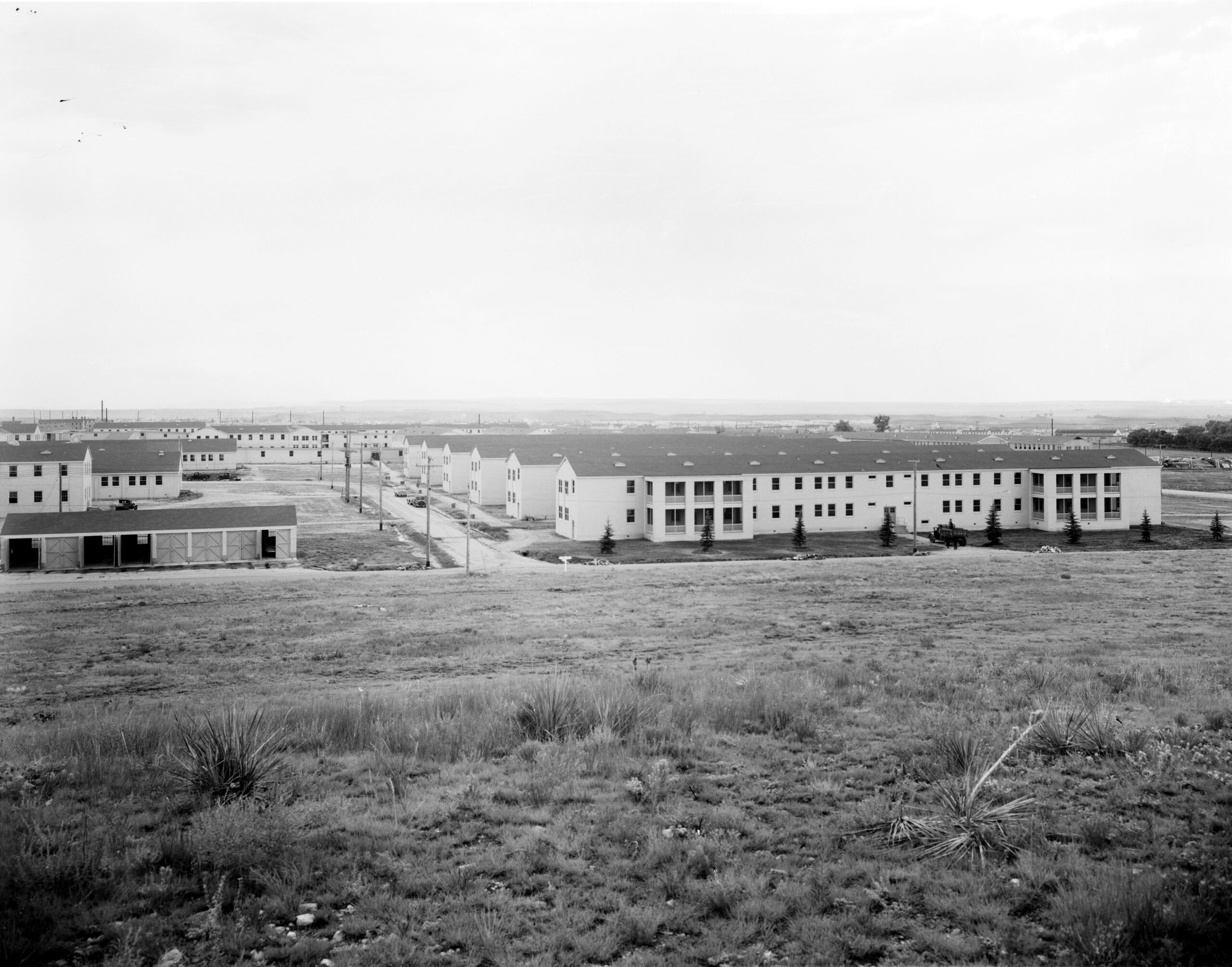
He was one of those proud, silent vets who never told us much of the war, but lived a life of principle and example. Those Greatest Generation doughboys returning from the war and studying on the GI bill also helped transform Colorado into a tourist mecca, including the vets of the 10th Mountain Division who created Aspen, Vail, Arapahoe Basin and Ski Cooper and triggered the massive development of the ski industry in the state.
DziaDzia, which is Polish for grandfather, eventually settled in Denver as that city began its runaway growth. My family matriculated in the Catholic neighborhood of Congress Park, where big houses stood like forts of children — the Sawyers with eight kids, the Ebys with seven, the Sarlos with 10, and ours with a measly six. In the 1950s, the city added some 75,000 residents and soon passed the half million mark. The explosion of suburbs like Aurora, Arvada and Boulder in the 1960s quickly pushed the population to more than a million and today metro Denver stands at over 3 million.
Denver’s runaway growth in the 1960s and 1970s was primarily driven by the booming oil and gas industry, a massive influx of federal government agencies, a rapidly expanding aerospace and defense sector and the early development of technology and telecommunications hubs. The building of the Denver Technological Center in the 1970s by legendary developer George Wallace catalyzed much of that boom. He located it away from downtown, south of the city, mainly to get out of downtown traffic.
When the oil boom went bust in the 1980s, Denver fell on hard times and you could buy a repossessed house from HUD for next to nothing. (My first house in Park Hill cost $140,000 in the late 80s.) But a wise group of business leaders decided to invest in the city center and Lower Downtown, or Lodo, to help jump-start a renaissance.
I remember a brewpub owner named John Hickenlooper serving my Denver Post reporter friends and me beers at Wynkoop Brewing, the first business of any stature to locate in LoDo, helping turn it into a destination neighborhood. The 16th Street Mall, Coors Field, a refurbished Union Station and a host of old brick buildings reimagined into lofts and eateries all played a part in giving Denver new life. I was there at the very first Rockies game back when the Rockies were actually good, with the Blake Street Bombers power-blasting home runs through the thin mountain air. There’s nothing quite like the feeling of pride and joy that happens when a city gets its very first Major League ball club. Denver and Colorado, we all believed, had arrived.
The Stickers
The years since then have been defined by still more growth, a political realignment from swing state to solidly blue and the increasing costs of housing and overcrowding and environmental challenges like wildfire, drought and water disputes.
New arrivals from the coasts and shifting Latino and younger voter turnout were major drivers of Colorado’s political switch. As a result, the state became a national bellwether by legalizing recreational marijuana in 2012 and embracing other progressive causes like paid family leave, gun control measures (following mass shootings — Aurora in 2012, Boulder in 2021, Club Q in Colorado Springs in 2022), and reproductive rights protections.
Meanwhile, our family has swollen to nearly 30 Colorado residents as its seventh generation — Violet, Ellie, Oliver, Juliet, Gaven, Eva and Avett — takes root and spreads out all along the Front Range and Eastern Plains. Many of us have lived here our entire lives, which is a rare thing in this state of transplants. I’m hearing reports lately that Colorado’s population is decreasing as some folks flee to other states because of high prices. But I don’t think my family is going anywhere. At this stage we know the grass isn’t any greener and the sky isn’t any bluer anywhere else in the world. We’re stickers now, as much a permanent part of Colorado after 154 years as those ancient hills over there.
There’s a plaque at the conjunction of the South Platte and Cherry Creek, right where Denver started those many years ago. It has a poem on it by Thomas Hornsby Ferril, which is a tribute to the stickers.
“I wasn’t here, yet I remember them,
That first night long ago, those wagon people
Who pushed aside enough of the cottonwoods
To build our city where the blueness rested.
They were with me, they told me afterward,
When I stood on a splintered wooden viaduct
Before it changed to steel and I to man.
They told me while I stared down at the water:
If you will stay we will not go away.”