







3 firefighters killed, 2 injured while tackling wildfires on the Colorado-Utah border

Grand Junction • Three firefighters died and two were injured while tackling fires on the Colorado-Utah border, the U.S. Wildland Fire Service reported Sunday.
At Grand Junction Regional Airport, the flag-draped bodies of the three firefighters were transferred from a helicopter to Mesa County Coroner’s Office trucks. A dozen firefighters who had helped recover the bodies watched in silence. Fire and rescue trucks and law enforcement vehicles accompanied the bodies to the coroner’s office at Community Hospital.
The U.S. Wildland Fire Service — created earlier this year to streamline firefighting and fire reduction across public lands — said the firefighters had been part of an interagency response to the Knowles and Gore fires on Saturday.
Early reports indicated that the firefighters were trapped in a remote area while battling the Knowles fire in Knowles Canyon. They were transported north to Rabbit Valley, where ambulances from the Lower Valley Fire District were dispatched in response to their initial requests for aid.
“This is terrible news and a reminder of what our first responders risk every time they go out to prevent devastation and protect Americans from natural disasters,” U.S. Secretary of the Interior Doug Burgum said in a social media post on Sunday.
Gov. Jared Polis said the two injured firefighters were evacuated via state helicopters. He said he was “devastated to hear of the loss of three heroic firefighters.”
In the last 25 years, 21 firefighters have lost their lives on the Western Slope. On July 6, 1994, 14 wildland firefighters died on Storm King Mountain while fighting the South Canyon fire near Glenwood Springs. The firefighters became trapped after the fire raced up a steep slope.
In 2013, 19 members of an elite Arizona firefighting crew died in 2013 after flames trapped them in a brush-choked canyon. The gusty, hot winds caused the fire to intensify to more than 2,000 degrees Fahrenheit and cut off the firefighters’ escape route, killing the men, authorities said.
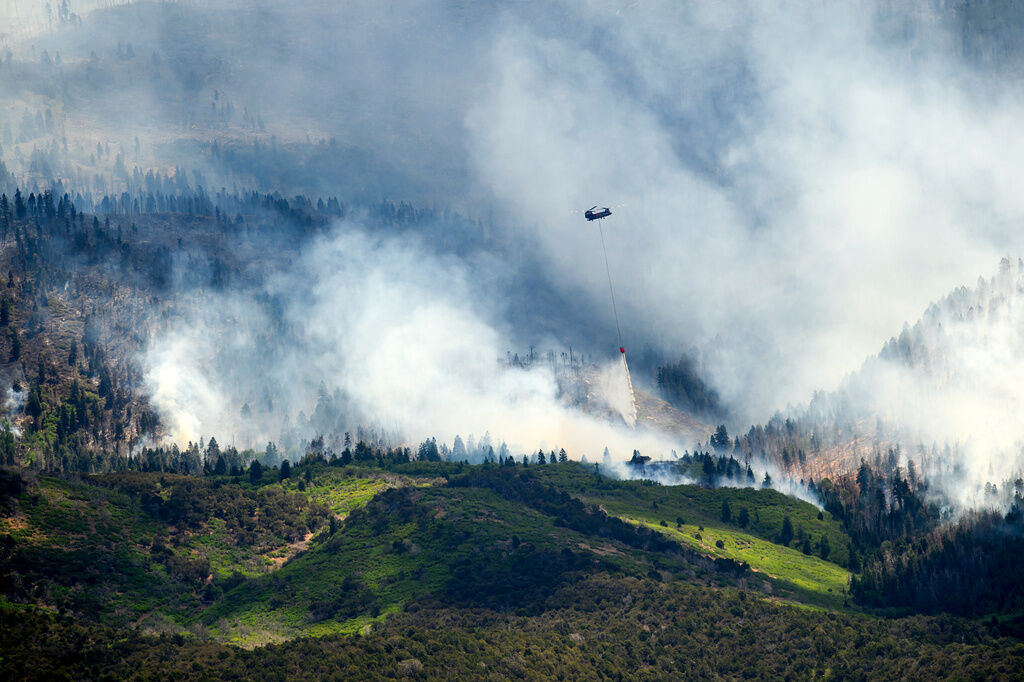
“The U.S. Wildland Fire Service stands united with the USDA Forest Service in grief and in our unwavering support for the loved ones left behind. Their bravery, dedication, and sacrifice will never be forgotten,” the agency said in a statement on Facebook.
“Our immediate focus is on supporting their families, friends, and fellow crewmates during this incredibly difficult time,” the agency also said.
Wildfire activity has intensified across the Western United States, as consecutive days of hot, dry and windy weather have fueled flames in Utah, Arizona and elsewhere. New fires have popped up across the region.
The largest blaze, the Cottonwood fire, was burning in rugged terrain in southwest Utah. It ballooned Saturday to more than 144 square miles after marching through canyons and mountainsides, destroying part of a ski resort and other summer cabins along the way.
Authorities in Beaver County, Utah, began working with fire teams on Saturday to assess the extent of the damage, but no estimates were immediately available.
‘Miraculous stops and saves‘
In a social media post, Utah Gov. Spencer Cox called it bleak. He thanked crews for what he called “several miraculous stops and saves.”
The cliffs and steep slopes have made the job even harder, said Alyssa Mason, a spokesperson assigned to the fire.
“It’s hard to get dozers and other heavy equipment into that. It’s hard to get engines into that,” she said. “It doesn’t make it impossible to firefight, but it does just kind of slow things down.”
Hundreds of firefighters have been arriving in the arid state to battle new starts, as well as those that have been growing because of what forecasters called critical fire weather — dangerously low humidity levels, warm temperatures and gusty winds.
The danger is even higher this year because of Utah’s record-low snowpack and its warmest winter on record. Much of the West is grappling with similar conditions, according to the National Interagency Fire Center.
From Alaska to Florida, crews worked Saturday to corral multiple fires, including three dozen that were classified as large and uncontained.
Nationally, nearly 3 million acres have burned since the start of the year. That is more than the 10 year average.
The conditions in Utah were critical enough for Cox to declare an emergency last week and clear the way for the state to ban fireworks ahead of the July Fourth holiday.
State officials said that over the past week, Utah has seen an increase in wildfire starts, with each fire showing unprecedented behavior. These starts have stretched the state’s wildland firefighting capabilities, State Forester Jamie Barnes said.
In Colorado, Polis also declared an emergency on Saturday and authorized the use of the National Guard to tackle the fires.
Forecasters with the National Weather Service over recent days have been issuing red-flag warnings for a wide swath of the West — from California to Arizona and New Mexico.
South of Grand Canyon National Park, authorities said the flames of a new wildfire were moving away from Grand Canyon Village and the nearby community of Tusayan on Saturday. But about 50 miles away, another fire prompted Coconino County officials to issue evacuation orders for those near Kendrick Mountain.
Parts of Northern Arizona were without power Saturday as the utility serving the area initiated a safety shut-off in hopes of lessening the wildfire risk.
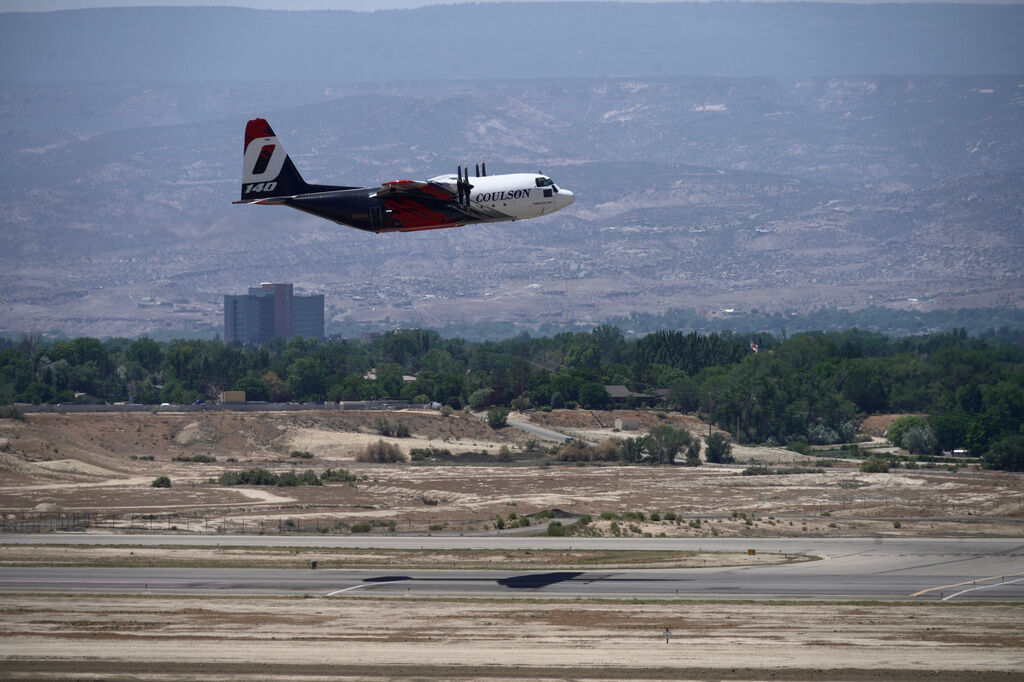
Power shutoffs have become more common in the West — Colorado experienced several episodes in the last several months — as wildfire risk has expanded. It is usually a last resort after utility forecasters weigh factors, such as sustained wind and gust speeds, available fuels and topography.
With extreme fire conditions persisting in Utah, Rocky Mountain Power also shut off power lines serving Beaver County and other areas.
Lightning strikes start fires
The Knowles and Gore fires started late in the evening of June 26 after lightning strikes and were originally reported having burned less than an acre each at noon on June 27. Also burning near the state line are the Jones and Synder Mesa fires, which tore through several thousand acres.
The skies had been clear in the morning of June 27, but, by noon, a plume of smoke could be seen rising from the west end of the Grand Valley. A red helicopter was seen multiple times traveling from the east to reach the fire. And by early afternoon, winds of up to 45 mph had blanketed the valley from Mack to Palisade in thick smoke.
And by Sunday afternoon, smoke also pooled again in the Grand Valley.
Meanwhile, Mesa County Sheriff’s deputies could be seen putting up signs at BLM trails and tracking down hikers and mountain bikers on Mack Ridge and the Kokopelli Trail system. One deputy said while the Colorado National Monument hadn’t been closed, there had been talk among the agencies that it might be a possibility.
The BLM announced early Sunday morning that the McInnis Canyons National Conservation Area and surrounding areas were temporarily closed due to the Snyder Mesa fire and would remain closed until the fire was declared contained.
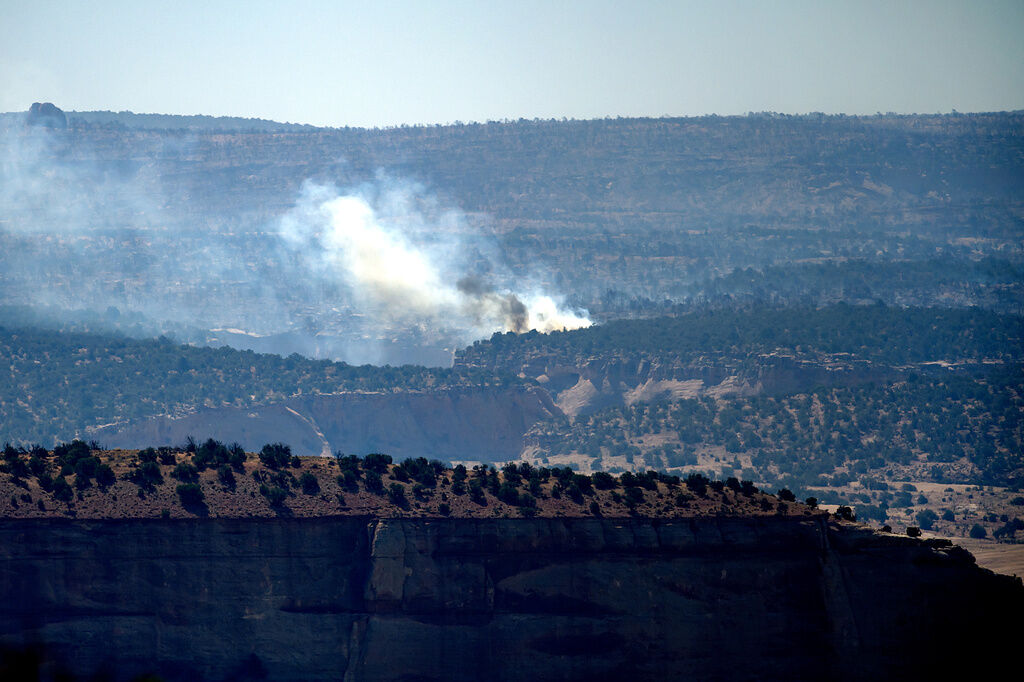
“This closure includes the entire McInnis Canyons NCA including all BLM lands north of DS Road and west of 16 1/2 Road,” said a BLM Colorado Fire Facebook post. “This emergency closure is for public and firefighter safety. Entry is prohibited and violators face federal penalties including fines and imprisonment. Please stay out of the closed area to avoid interfering with firefighting operations.”
Meanwhile, the American Red Cross of Colorado initially opened an evacuation center at the Old Faith Heights Church at 600 28 ¼ Road in Grand Junction, but with the growth of the fire, the organization had moved to Grand Junction High School at 1400 N. Fifth St. by Sunday afternoon.
“Volunteers are providing refuge, sharing information and helping with immediate needs. The center also provides food, water, medical care and mental health support,” the American Red Cross of Colorado said in a Facebook post.
The Rocky Mountain Complex Incident Management Team 1 took command of the Snyder fire, currently estimated at over 28,000 acres.
The team consists of 90-100 personnel. The Rocky Mountain CIMT 1 is one of 41 Complex Incident Management Teams across the U.S. and one of three serving the Rocky Mountain Geographic Area.
Authorities are urging residents located in an area affected by the Snyder Mesa Fire law enforcement to sign up for emergency notifications at https://member.everbridge.net/892807736721759/login
To donate to the Red Cross: https://www.redcross.org/donate/donation.html/
To donate to the Fallen Firefighters Association: https://www.firehero.org/