







50 years after Viking landed on Mars, Lockheed Martin plans for next steps to Red Planet
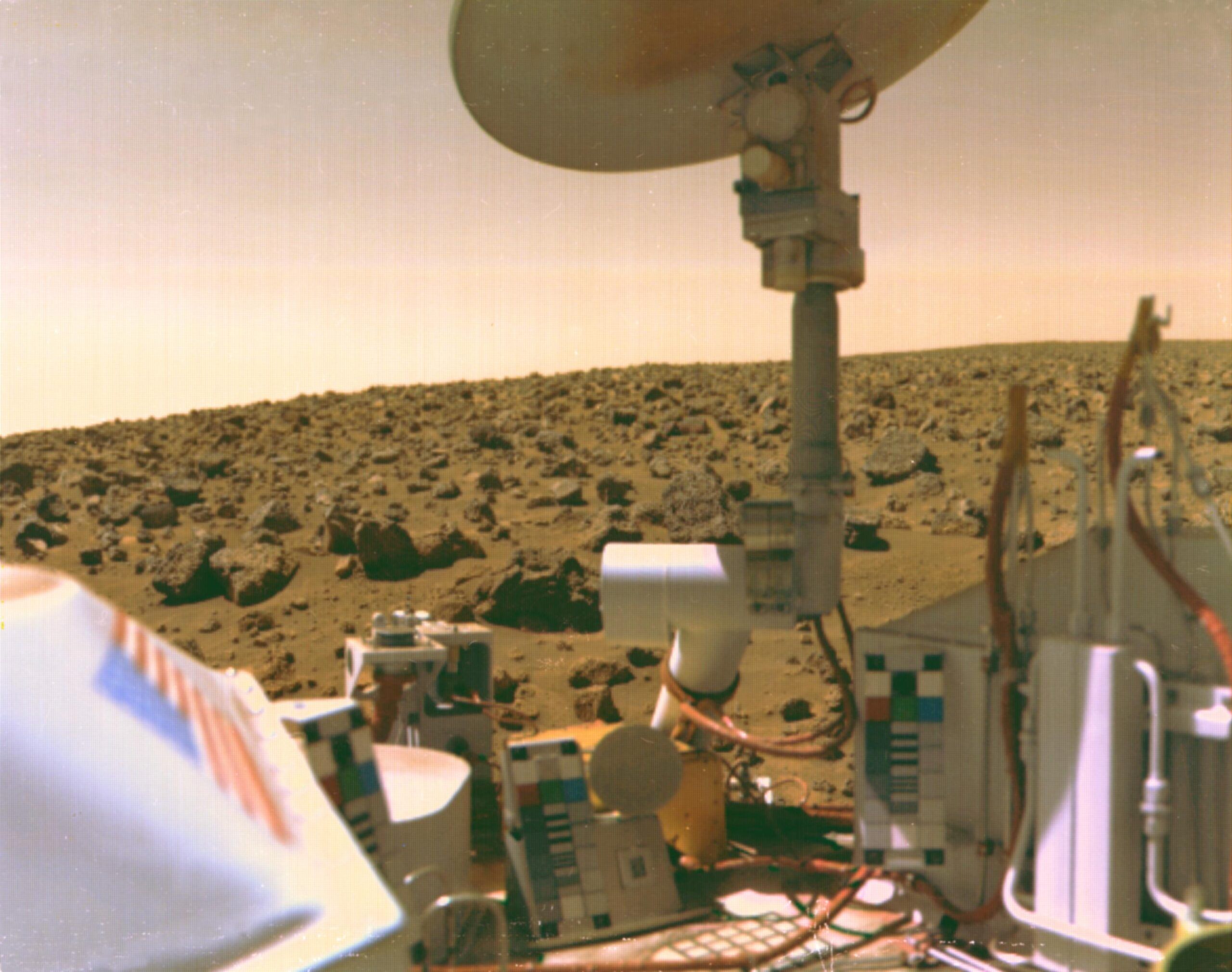
Fifty years ago Monday, NASA launched what became the first successful Mars lander, starting a race to land people on the Red Planet.
NASA hopes to have humans walking on the Martian surface soon, possibly as early as the 2030s. What started on July 20, 1976, with the first successful landing on another planet kick-started worldwide efforts to land humans on Mars.
The Viking missions, launched in 1975 and consisting of two landers, started a series of robotic NASA Mars missions. Many of the probes and landers were built by Littleton-based Lockheed Martin. The company’s website lists 15 Mars missions it has worked on.
Viking 1 landed on Mars on July 20, 1976. Today, several rovers still wander Mars’ desolate landscape.
“If you follow these rover tracks and you follow these footprints back, a whole lot of them end up down the road in Waterton Canyon,” said Jim Crocker, who was the vice president and general manager of Lockheed’s civil space division. He retired in 2016.
Lockheed Martin Space is headquartered in Littleton just north of Waterton Canyon, where the Platte River exits the Colorado foothills.
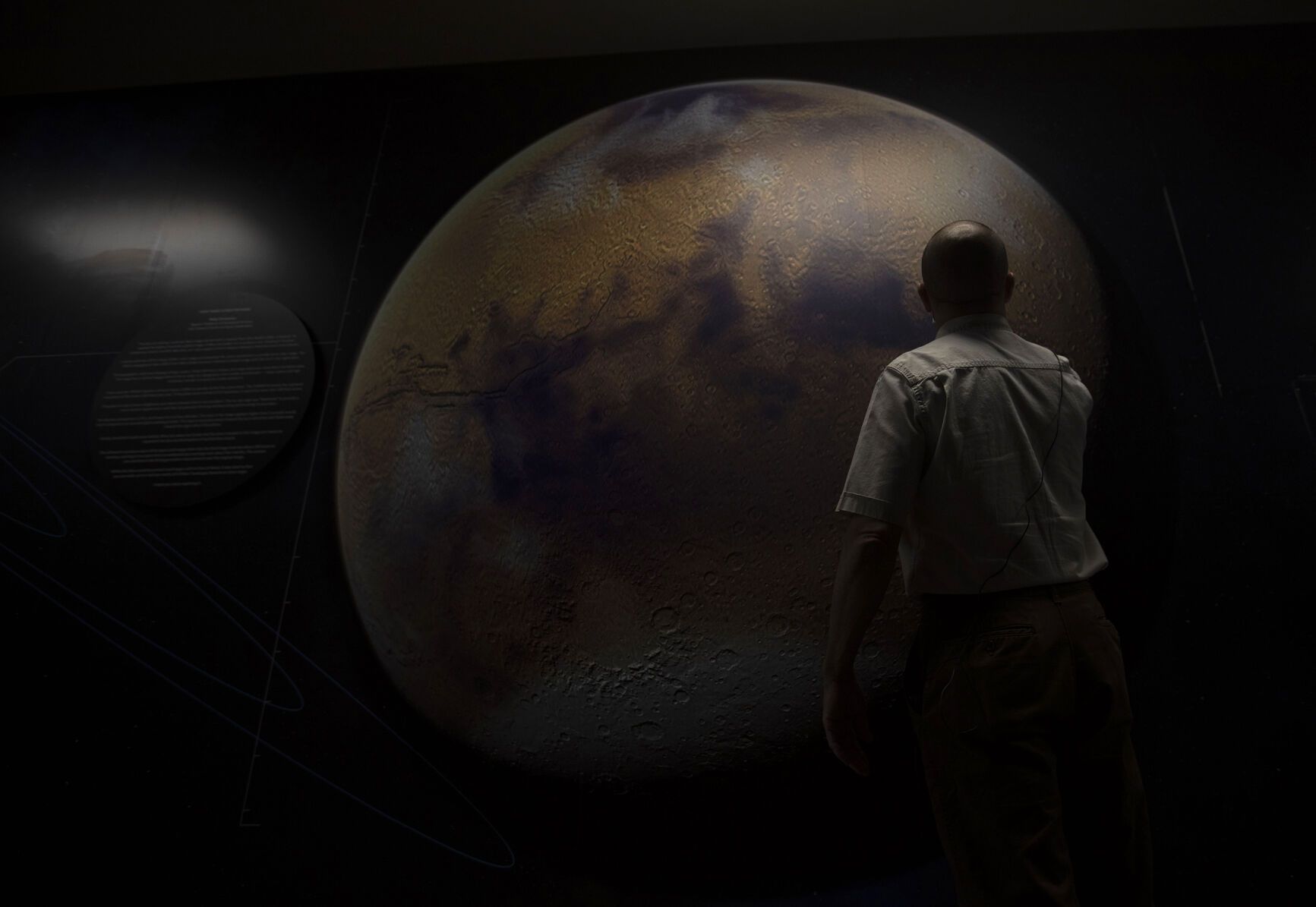
Lockheed builds spacecraft, rovers and satellites in Littleton. The applications range from civilian probes to military satellites. In Colorado Springs, the company has a space simulation lab, meant to train space operators — the men and women running satellites — in the U.S. military, while others work on software systems intended for military use.
After Viking, it was 17 years until NASA sent probes and landers back to Mars.
The Mars Observer Mission, launched in 1992, was not successful and NASA lost communication with the spacecraft after it began orbiting Mars. Other missions, like the Spirit and Opportunity rovers, were resounding successes.
Spirit and Opportunity operated for six and more than 14 years, respectively. They were only meant to last 90 days, according to NASA. Lockheed made the aeroshell, a shield the spacecraft needed to survive the journey from Earth to Mars and then entry into Mars’ atmosphere.
Getting to Mars is difficult and some NASA missions — like Observer in 1992 and Mars Surveyor in 1998 — failed. Others, like the Lockheed-built Mars Reconnaissance Orbiter (2005) and InSight (2012) were successful and, in the case of MRO, still operational, according to NASA.
Dave Gingerich, along with other current and former Lockheed employees, gathered at Wings over the Rockies Air and Space Museum in Denver on Monday to celebrate the 50th anniversary of the original Viking landers.
In 2001, NASA launched the Lockheed built 2001 Mars Odyssey. When it landed on the planet, it all but confirmed the existence of water, said Gingerich said. Odyssey is still operational.
“That informed then a next mission to go out there and try and, touch the water,” he said. “But that would have to wait for two rovers named Spirit and Opportunity.”
After the rovers, the next mission didn’t get to Mars until 2008 — it launched the previous year and was called Phoenix, again built by Lockheed Martin — and made good on touching the water.
“Phoenix was a great successful mission, and its landing site (was) based on Odyssey’s discovery of H2O in the Northern Hemisphere of Mars,” he said. ” (Phoenix) had a little scoop, and were able to just scoop away a couple of centimeters of regolith,” rocky material that covers bedrock.
“And there’s stuff that looks white, sort of clear. Could it be ice?” he said. “They found out later, yes.”
This discovery was critical for the future of space exploration because humans need water to survive. Water on Mars could allow future astronauts to create rocket fuel on the planet’s surface, according to NASA.
Currently, Lockheed is one of many prime contractors on the Artemis Program, aimed at returning humanity to the Moon. The Orion space capsule, built by Lockheed Martin, is the capsule NASA uses to get astronauts to and from the moon, but it can go farther.
Lockheed calls it the only “deep space exploration” vessel and intends for it to take astronauts to Mars when a crewed landing becomes viable. Since 2017, the company has envisioned Orion as the command module for its Mars Base Camp spacecraft, a large interplanetary vessel designed for the seven- to 10-month journey to Mars.
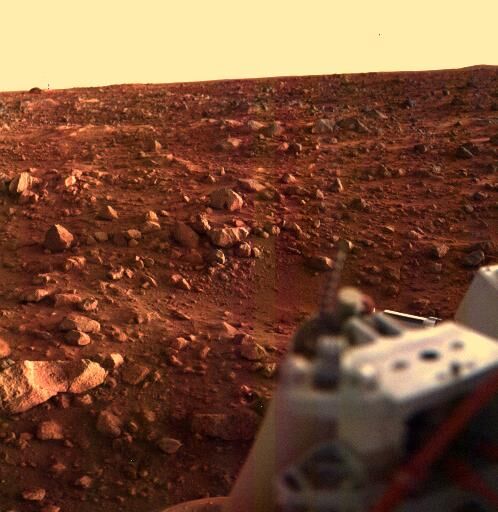
Getting to Mars requires Artemis mission success, including the establishment of a permanent human base on the Moon.
“Under Artemis, NASA will send astronauts on increasingly difficult missions to explore more of the Moon for scientific discovery, economic benefits and to build on our foundation for the first crewed missions to Mars,” NASA said on its website.