







Sidewalk fee is inherently inequitable
There is no dispute that Denver deserves sidewalks that are accessible to all. But an attractive slogan can’t disguise the multiple systemic inequities embedded in Initiative 307, the annual sidewalk fee.
Struggling families are being bombarded with Denver’s new trash fee, higher water bills and electricity rates structured to cost the most when families need kilowatt hours the most. Now, the inherent unfairness in the fine print of 307 will add to the displacement of households, while its completely unrealistic construction schedule and underfunded bottom line will fail to provide all the sidewalks in nine years.
I join with former Mayor Wellington Webb and thousands of Denver residents who will be voting no on 307. Here are just a few of the reasons to reject this poorly written plan.
While its backers call it a “user fee,” it has absolutely no connection to how much you use sidewalks. In fact, it is a provider fee. Unlike our stormwater fee, which charges you based on how much rain and snowmelt comes off your property for the city to convey to the South Platte, 307’s fees are based only on how much concrete sidewalk you must provide to the public when they walk past your house. It’s the literal converse of a user fee.
307’s discount program is the definition of inequity. It offers 20 percent off the fee to affluent households in select neighborhoods designated by the city as gentrifying, while charging full price to low-income households in areas that haven’t yet attracted the speculators and scrapers who’ve gentrified those other neighborhoods.
Property owners who may recently have installed new sidewalks, or replaced or repaired old ones, receive no credit for what they’ve spent, while their walks may never need replacing. There are sidewalks in my southwest Denver district that were poured in the late 1940s and early 1950s that remain in perfect condition. These owners will be paying for other people’s sidewalks while never receiving a benefit for their own.
Worse, while backers of 307 keep repeating that the “typical” fee will be $107 a year, the truth is much uglier. Many homeowners will have to pay $300, $500, $800 and upward of $1,000 each year because of their location. This leads to a huge inequity, especially when their sidewalks already are in great shape. I have sampled multi-million dollar townhomes in Cherry Creek and other affluent neighborhoods where the fees would be as low as $39 a year. At the same time, I have a couple in their mid-80s as constituents whose annual fee would be $832. The retiree husband stopped me in the Bear Valley King Soopers and pleaded with me to do something about it. Proponents of 307 call people like him “outliers,” as though that reduces them to irrelevancy. But there are thousands of them.
I have townhome communities in my district that will have problems working through the inequities. One of them has some owners whose units back up to a public street while the common property abuts another street. The first owners will have to pay their own fees while also shouldering a share of the HOA’s required payment for the common property. All that in addition to their already existing cost of maintaining the private sidewalks inside the community. Another townhome community will have to figure out how to apportion nearly $13,000 a year among its owners because it backs up to an arterial street on which the fee is higher.
Finally, the estimated $850 million cost and nine-year time frame are complete fantasy. Proponents say their plan can accomplish in nine years what they estimate it would take the city 400 years to do. That alone should give you pause, four centuries of effort compressed into less than a decade. It would make the planners of DIA look like geniuses when they said the new airport would cost $1.7 billion and take four years. The fact is that the plan is not well vetted. It’s a guess. In contrast, the city’s Department of Transportation and Infrastructure calculated that it would take at least 27 years and fall short by up to $7.3 billion.
If 307 is defeated, I will work with sidewalk advocates to assemble a more realistic plan to do what we all agree needs to be done, but which doesn’t force even more working families out of what some are calling the Mile High Income City. We don’t make people pay for street paving based on how much street is in front of their house; we use the user-fee gas tax.
We need a sidewalk program that doesn’t clobber some while rewarding others.
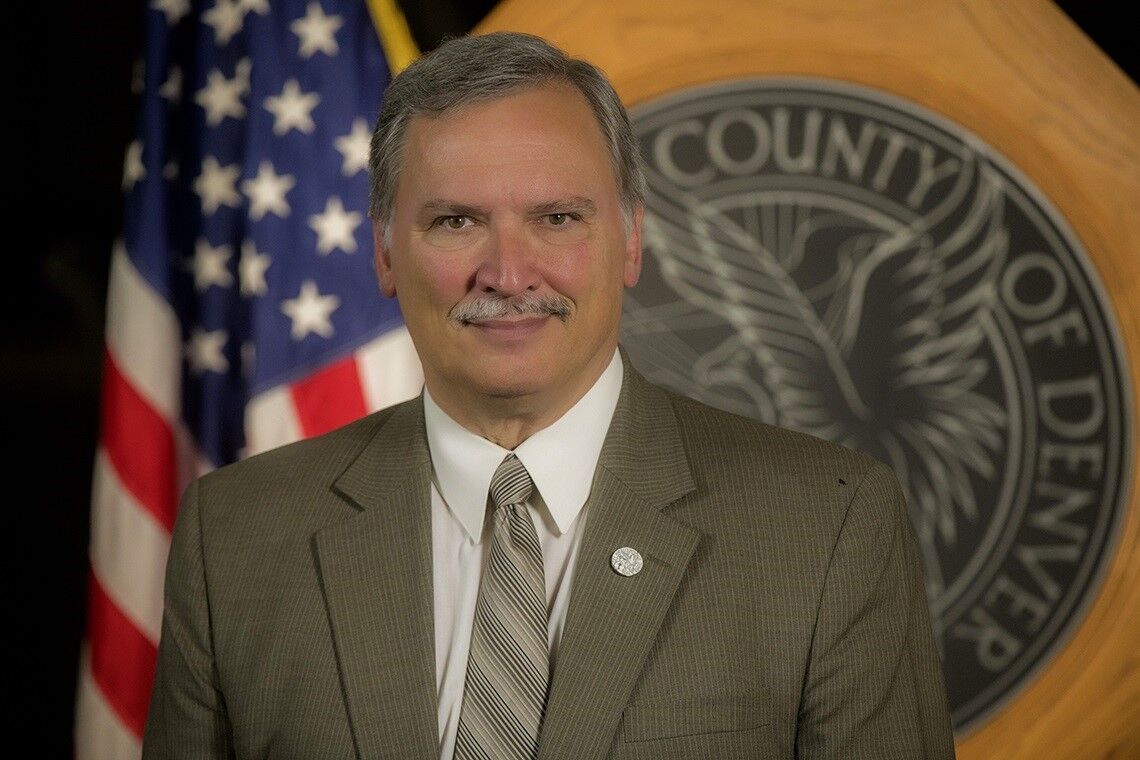
Kevin Flynn is the Denver City Council member for District 2 in southwest Denver.