







How to See the “Unique” Super Blue Blood Moon in Certain Parts of Colorado
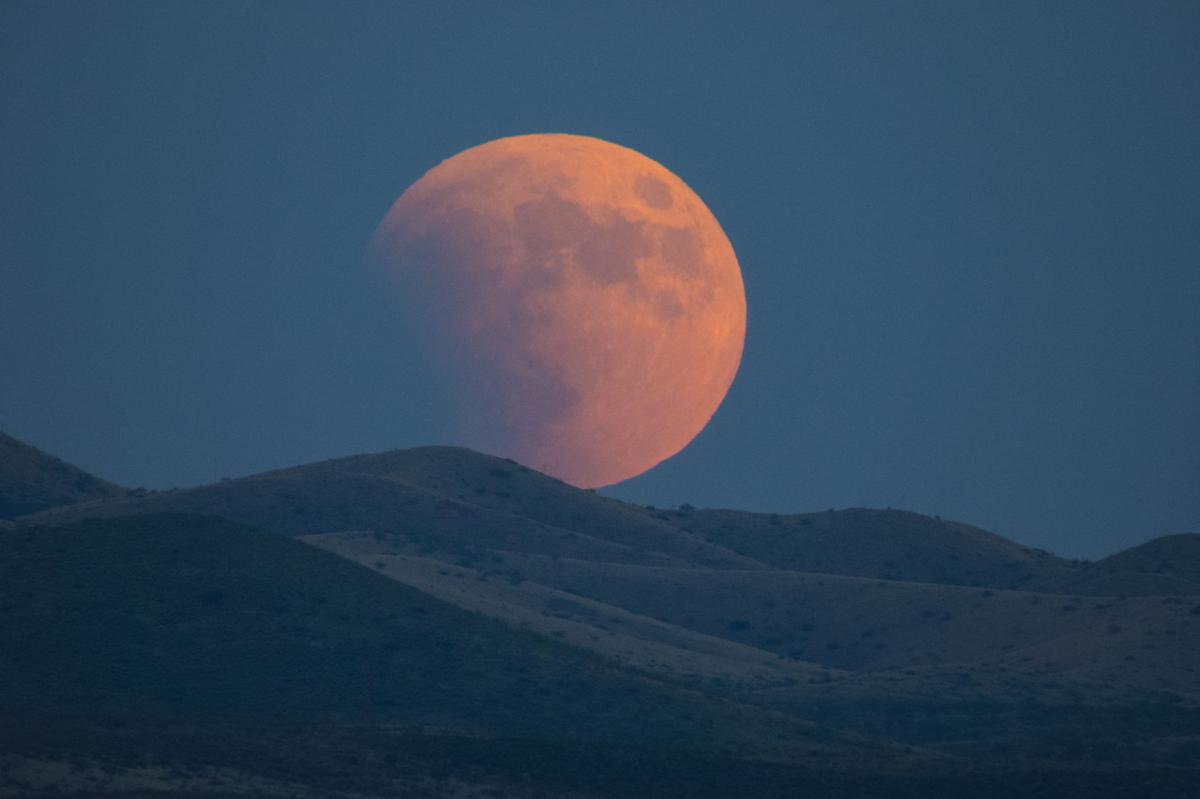
CochiseVista
Head outside early Wednesday for a rare lunar treat: a simultaneous supermoon, blue moon and total lunar eclipse.
The moon will be completely bathed in Earth’s shadow during the peak of the eclipse, called a “blood moon” because of the reddish tint it takes on.
And it will come unusually close to Earth, making it appear brighter and bigger, a phenomenon known as a supermoon.
Plus it will be a blue moon – the second full moon in one month. Many are calling it the “super blue blood moon.”
Total lunar eclipses and super moons aren’t uncommon, and blue moons happen every two to three years, the Southern Colorado Astronomical Society says.
But all three at once? “Now we are talking about a truly unique event,” the society said in a news release.
The society will begin to gather with telescopes at 3:30 a.m. Wednesday in the upper parking lot of the Nature and Raptor Center of Pueblo, 5200 Nature Center Road. Hot drinks and heaters will be available at the free event.
“I’m looking forward to it except for the fact that we have to set up at 3 o’clock in the morning, and I really don’t want to be up at 3 o’clock in the morning,” said Jeremy Bray, society president. “I always look forward to eclipses, even if they’re not some big thing like this where it’s also a blue moon and a supermoon and everything. I always find them enjoyable to sit out there and watch.” The eclipse will be visible best in the West and Canada before the moon sets early Wednesday.
It will begin in the Rocky Mountain region as the umbra touches the moon’s edge at 4:48 a.m., NASA says. The peak of the blood moon eclipse is at about 6:30 a.m., and the moon will set shortly after 7 a.m.
“People should be able to see most of it,” Bray said. “The moon will set behind the mountains before totality ends, so we won’t be able to see the whole thing, but we’ll be able to at least see … totality for a little bit. The closer you are to the mountains, the higher the mountains go up in the sky, and the less you’ll get to see.”
In Colorado Springs, the sky will be partly cloudy Tuesday night into early Wednesday, the National Weather Service in Pueblo predicted.
“I’m calling it the Super Bowl of moons,” lunar scientist Noah Petro said Monday from NASA’s Goddard Space Flight Center in Greenbelt, Md.
The moon actually will be closest to Earth on Tuesday – just over 223,000 miles. That’s about 1,500 miles farther than the supermoon Jan. 1. Midway through Wednesday’s eclipse, the moon will be even farther – 223,820 miles – but still within unofficial supermoon guidelines. While a supermoon is considered less serious and scientific than an eclipse, it encourages people to look at the moon, Petro said.
“I’m a lunar scientist. I love the moon. I want to advocate for the moon,” he said. Throw in a blue moon, and “that’s too good of an opportunity to pass.”
The Associated Press contributed to this report.