







How To Choose New Snowboard Boots
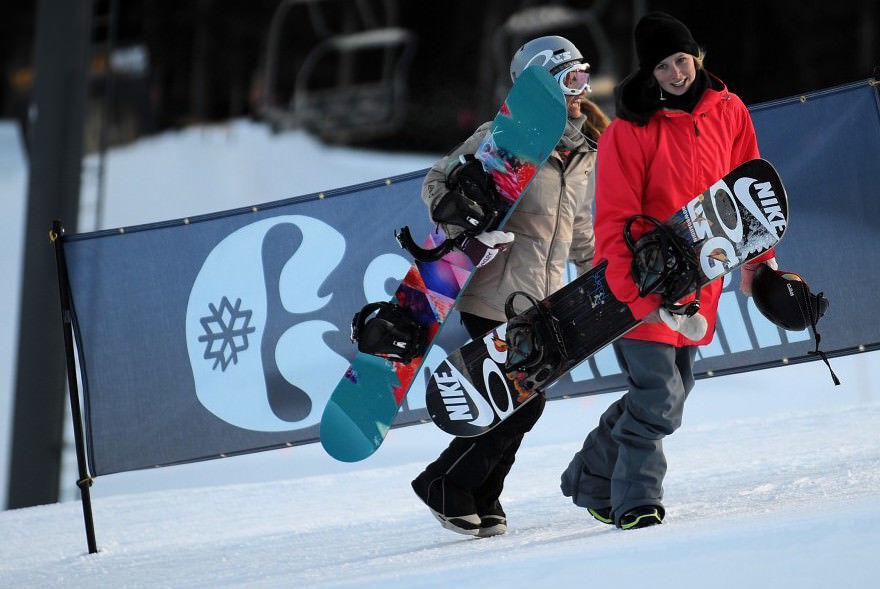
Snowboard boots should be your first acquisition when assembling a board-boots-binding setup. You want boots to fit comfortably so you can move on to bindings and create a great match. Boots, more than a board, are where to splurge a little if you can afford to do so.
The snowboard boots you select should be well matched to your usual riding style and the snow conditions you most frequently encounter.
Boot variables:
Getting Started
How do you narrow your snowboard boot options? Start by answering the questions below. The better you can define yourself as a rider will likely lead to more satisfaction from the boots you choose.
1. What Is Your Usual Riding Style?
All-mountain? Powder? Freestyle? An all-mountain or freeride boarder with a taste for speed, for example, will likely favor more responsive boots, which tend to be stiffer models. Park riders and recreational snowboarders generally prefer something softer and easier to maneuver.
2. What Is Your Experience Level? What Are Your Ambitions?
Novices and recreational riders, focused primarily on fun and sociability, have lots of options to consider. Being less-demanding riders, they have more freedom to take or leave subtle technical refinements in boots. Nearly any quality boot can ensure casual riders of a good time on the mountain.
Meanwhile, experienced or eager-to-improve snowboarders (those who have a competitive streak or are driven to excel) are riders who will, and often should, sweat the small details that distinguish boots from one another. For you, a small design edge may deliver a noticeable payoff on the slopes.
3. How Do You Balance Your Budget and Aspirations?
This can be tricky. Will the most expensive boots give you gold-medal skills? Probably not, but having the nicest gear can at least help your mental game and give you a subliminal confidence boost.
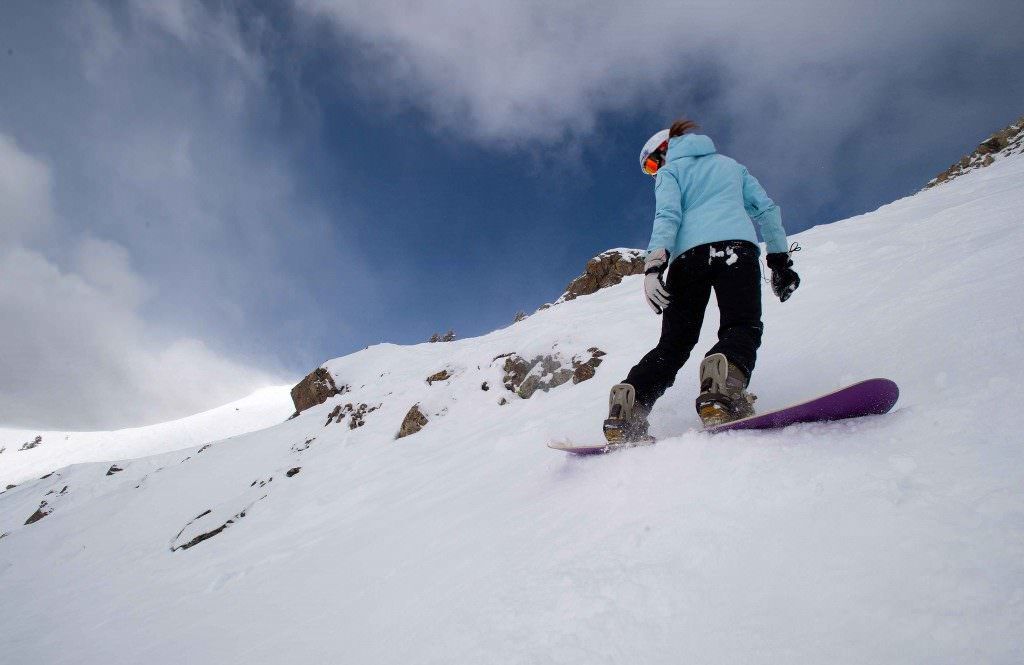
Sarah Gibeau of Colorado Springs rides the Schauffler chute in Montezuma Bowl at Arapahoe Basin. Photo Credit: Christian Murdock

Sarah Gibeau of Colorado Springs rides the Schauffler chute in Montezuma Bowl at Arapahoe Basin. Photo Credit: Christian Murdock
Riding Style and Boot Flex
Your goal: Seek out boots designed to perform where and how you usually ride.
A snowboard’s price is primarily determined by the quality of its materials and the sophistication of its engineering. The prestige value of some brand names also probably adds a few dollars to the price tag.
Unlike boards, snowboard boots don’t line up quite as neatly in defined end-use categories (powder or freestyle, for instance). Instead, boots are often presented in a spectrum of flexibility, ranging from soft to stiff. Personal preferences on comfort and fit are considerations, too.
Here are general flex recommendations to get you started:
What category of rider are you?
All-mountain: Refers to any terrain suited to a snowboard—groomers, untracked powder and even some park-and-pipe. The majority of riders are all-mountain riders, and the majority of all-mountain riders will gravitate toward more flexible boots. Novices should almost always choose softer boots. For fast riding, however, choose stiffer boots.
Freeride: Encompasses off-piste (untracked backcountry) terrain and some groomed runs, but not terrain parks. Freeride is sometimes also referred to as “big mountain” riding. Freeriders place a premium on speed and precision, so stiffer boots are preferred. This rigidity helps generate edge power for scribing lines across icy (firm) snow.
Freestyle/park: Fun-focused terrain (half-pipe, rails, jumps, spins, jibbing and tricks). Maneuverability, feel and quick responses are vital to the park experience, so softer, more flexible boots are the usual choice.
Within the above categories, you’ll find styles specific to women and kids. What makes these styles distinct? Women’s: These styles are customized to address women’s specific anatomical needs, such as narrow heels. The majority of women’s choices fall on the soft to medium side of the spectrum.
Kids’: Some kids’ boots offer footbeds with peel-away layers to accommodate growing feet. Avoid getting dramatically oversized boots hoping that your young boarder will grow into them. Equip a child with boots sized correctly for the season ahead.
How Can You Determine Flex?
Boot flexibility is largely a subjective evaluation by each brand. Not all “soft” boots, for instance, exhibit the same degree of softness. Other soft boots could potentially be classified as “firm” (just not “stiff”). Alternatively, Burton uses a 1-10 rating scale to express boot flex.
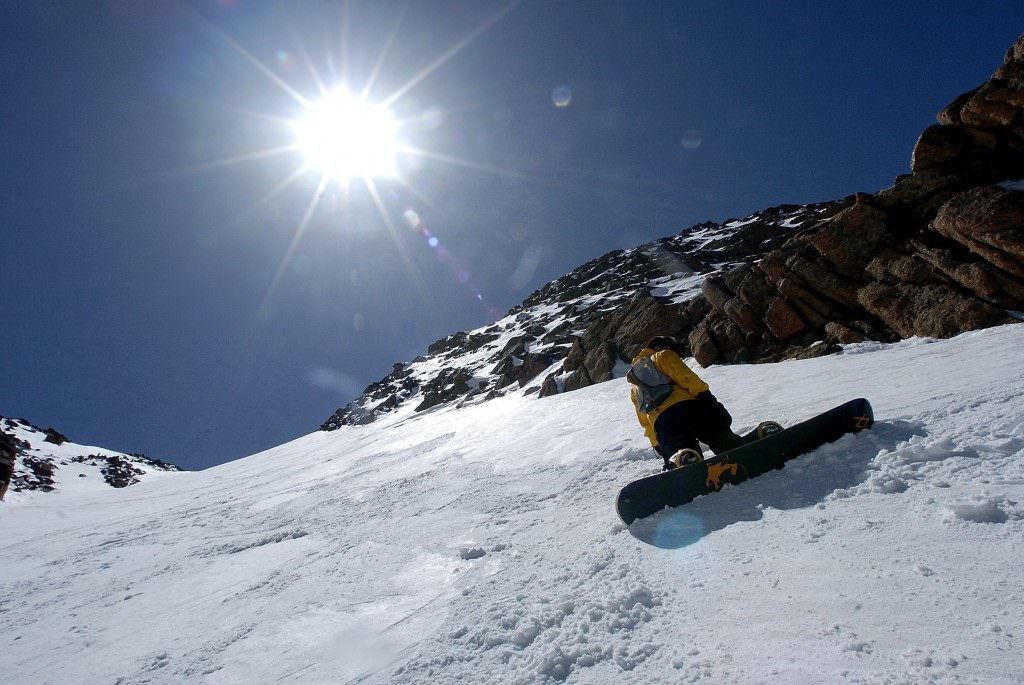
Dave Philipps tackles the Little Italy chute above Glen Cove on Pikes Peak. Photo Credit: Christian Murdock

Dave Philipps tackles the Little Italy chute above Glen Cove on Pikes Peak. Photo Credit: Christian Murdock
Budget
A good pair of snowboard boots likely will cost you at least $130. If you can afford to spend a little extra on any snowboarding component, spend it on boots. “Be sure you love your boots; sore feet can ruin great days,” says Pat Kennedy, a snowsports specialist at the REI store in Bellingham, Wash. “Save money on the board and put a little extra into boots and bindings. Whatever your skill level, you can notice a difference in quality in boots and bindings.”
Snowboard Boot Lacing Systems
Snowboard boot lacing is important. Boots should be laced tightly yet feel comfortable and be free of blister-causing pressure points. Ankles and heels ought to remain securely in place, with minimal heel-lift—no foot shimmying at all (front to back, side to side), if possible.
Most snowboard boots offer 1 of 3 lacing systems—traditional, quick-pull or Boa. Each system is fast, handy and secure, and no single system decisively outperforms the others (though the Boa system has some ardent fans). The system you choose is mostly a matter of personal preference and budget.
Traditional Laces
These are tried-and-true and, for the most part, foolproof. On some boots it’s possible to replace stock laces with specialty or designer laces. Pros: Tightness of the fit can be customized by hand. Inexpensive. Replacement laces are easy to locate. Cons: Difficult to tie while wearing gloves or when bare hands are cold. Vulnerable to unintended loosening.
Quick-pull Laces
This single-pull, corset-like lacing system is fast and accommodates zonal tightening. That means you can fine-tune the tightness of forefoot lacing independently from the ankle and lower leg.
Quick-pull lacing Pros: Fast and convenient. Can be tightened while wearing gloves. Lace-pulls usually tuck away neatly. Several systems offer independent high-low (ankle-foot) laces for a customizable fit. Cons: May initially appear complex. A few riders find they cannot exert enough pull to tighten laces as snugly as they would like. Points (usually eyelets) where laces attach to boots can sometimes create pressure points. Somewhat vulnerable to unintended loosening. If lace wears out or breaks, it could prematurely end a day of riding.
Boa System
Said to be named after the snake known for the squeeze it puts on prey, the Boa system consists of small-diameter cables (usually small strands of stainless steel) attached to 1 or 2 knurled wheels or dials that adjust the snugness of the fit. If 2 dials are used, 1 is on the top of the boot tongue and another is near the ankle. Licensed by several boot makers, it permits a very precise fit around the foot and lower leg.
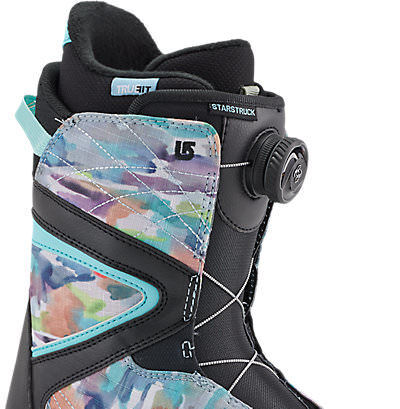
Burton Starstruck with Boa closure
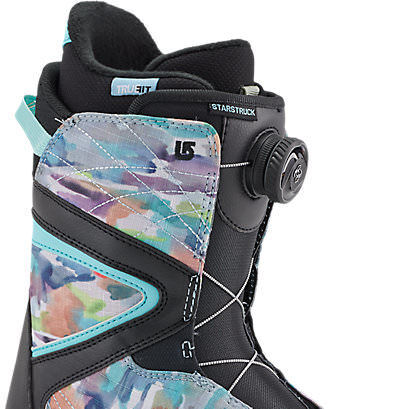
Burton Starstruck with Boa closure
Boa lacing
Pros: Fast, easy and convenient. Usually requires just 1 hand. Simple to modify during a pause in activity. Can be adjusted while wearing gloves. Offers a precise, fine-tuned fit. Excels at shedding grit and slop. Cons: 1-dial system applies uniform snugness throughout foot, so upper and lower foot regions cannot be independently customized. Points where strands attach to boots can sometimes create pressure points. If a strand breaks, it could prematurely end a day of riding. Adds to boots’ overall cost.
Snowboard Boot Liners and Materials
Boot Liners “Liner” refers to the entire inner boot of a snowboard boot. A commonly used material in snowboard boot liners is ethylene vinyl acetate (EVA). It is a lightweight, moldable polymer that most people associate with foam rubber. As it does in running shoes, EVA provides cushioning, stability and insulation for a snowboarder’s feet.
Removable liners can be extracted from a boot following a day of riding. This allows them to air out and dry faster than nonremovable liners.
Liners fall into 3 basic categories:
Non-moldable (stock): Less pliable than other options, stock liners provide generic padding and stability for your feet. Over time the sustained pressure of your body weight will likely cause the liner’s forefoot section to conform to that section of your foot’s shape. They are a serviceable product that becomes more comfortable with repeated usage. Thermoformable: These pricier liners include sophisticated materials designed to break-in and conform to your foot’s shape using just the heat generated by your foot. Custom-moldable: These premium liners are molded by artificial heat sources such as an air dryer or special boot fitting ovens. Over time, body heat will work, too. Properly molded liners provide a true custom fit. Molding is best done in the store where they have special ovens designed to heat each liner to the proper temperature. Some liners can be molded at home; be sure to follow manufacturer’s directions carefully.
Footbeds
Superfeet Custom footbeds or insoles, such as those from the popular Superfeet brand, are well suited for use with snowboard boots. These are offered in several sizes (based on your foot’s volume needs), so it’s best to be fitted for footbeds when you’re in the store
Boot Materials
Uppers: Nearly every soft boot is constructed out of synthetic leather, which is durable, flexible and fashion-friendly. Stiffer boots add thermoplastic urethane or similar material as reinforcement. It’s not a factor that warrants much attention from shoppers.
Outsoles: All boarding boots have some variety of walking sole. If you routinely venture into the backcountry where climbing and walking back to lifts is a regular occurrence, look for boots with traction-enhancing lugged soles.
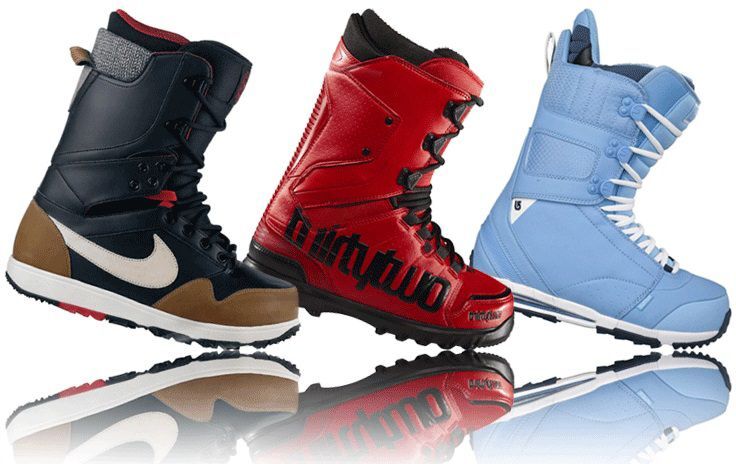
Lace-up snowboard boots. Courtesy of evo

Lace-up snowboard boots. Courtesy of evo
Snowboard Boot Comfort and Fit
Snowboard boot sizing matches standard footwear sizing. Be aware, however, that a size 9 in one brand may feel different than another brand’s size 9. If possible, shop for boots later in the day, since feet naturally swell to a larger size during afternoon and evening hours.
Boot Fit Guidelines
Boots should fit snugly but not to the point of circulation-constricting tightness. Over time, liners soften up a bit and gain a touch of what is known as “volume” inside the boot. Don’t be tempted to buy a boot that feel loose or sloppy out of the box. It’s not necessarily bad for toes to just barely graze to the boot’s toecap, though a hint of wiggle room in that area enhances circulation and fights off frosty toes.
Ensure that the fit in the rear of the boot is snug. This is where your bones lever the board onto its edge. Heel-lift is the enemy of performance-minded snowboarders; when you lean forward you want your board, not your heels, to rise. Thus fit is where you can justify extending your budget. If a pricier boot feels better in the store, it will likely feel better on the slopes. Seriously consider spending extra bucks on the best-fitting boots and shave pennies elsewhere.
Snowboard Socks
If shopping for boots in a store, wear snowboard socks during the try-on phase. Very thick socks have fallen out of vogue in snowboarding since liners and insulation in modern boots do a good job of buffering feet from the cold. These days it’s better to wear a thin, smooth-faced, snowboard-specific sock. This allows moisture to pass through easily while producing less friction and fewer hot spots. Bundling your feet under multiple layers of bulky socks is a recipe for a sloppy stance—avoid it.
Before the First Ride
Try to avoid buying new boots the day before a trip. Before you commit to a day of boarding, allow your feet to become acquainted with new boots. Wear them around the house, experiment with the lacing system and try out some snowboard socks.