





Documents contradict Republican Gabe Evans’ stories about his grandfather ‘legally’ immigrating to US

(AP Photo/David Zalubowski, file)
U.S. Rep. Gabe Evans has routinely characterized his Mexican immigrant grandfather’s path to American citizenship as a model for fixing the country’s immigration system, including last week when the Colorado Republican touted a sweeping immigration reform bill he cosponsored.
At a news conference declaring victory last November in one of the closest congressional races in the country, Evans repeatedly referred to his “abuelito Chavez” — the candidate’s maternal grandfather, Cuauhtemoc Chavez, who died in 2014 — when asked to elaborate on the immigration policies he would support in the upcoming Trump administration.
“Through our campaign, we spoke to Republicans, we spoke to Democrats, we spoke to unaffiliated, we’ve spoke to third parties,” Evans told reporters and volunteers at his Thornton campaign office. “And we found that common ground on the issues that defined this race — making sure that we have a secure border, making sure that we’re doing work to fix our broken immigration system for those who legally want to come to this country, as my grandfather did, and be a contributing part of the American dream.”
At the same event, Evans invoked his grandfather’s adopted country’s immigrant tradition.
“We are the great melting pot,” he said. “We know what it says on the Statue of Liberty: Give me your tired, your poor, your huddled masses yearning to breathe free. That is the American dream. And so I think all that people ask is that if you’re going to come to the United States, you do it the right way. You come here legally.”
Evans’ grandfather has gotten shout-outs in speeches, debate exchanges, fundraising emails and press releases from the 38-year-old former Arvada police officer, who served one term in the state legislature before his election to Congress in 2024.
Evans unseated Democrat Yadira Caraveo in the toss-up 8th Congressional District, which covers suburbs north of Denver to Greeley and was drawn to be Colorado’s “Hispanic influence” district, with at least 30% of its population identifying as Hispanic.
Answering a question about deportation policy during the congressional race’s first primary debate last year, Evans told a crowd in Fort Lupton that his grandfather “did it the right way and did it the legal way.”
New reporting on Tuesday by Colorado Newsline, however, found that there’s more to the story Evans has been telling.
According to archived Immigration and Naturalization Service documents obtained by Newsline, Evans’ grandfather entered the country illegally at age 5 with his mother and siblings in 1929 and lived without documentation in El Paso, Texas, for the next 12 years. When the “alien registration form” was prepared, the 16-year-old had been arrested on an “immigration violation” and became subject to “deportation proceedings,” according to the documents. In addition, documents said Chavez and at least two of his sisters had crossed the border “to live, illegal entry.” The form devoted to Evans’ grandfather included a reference to an undated arrest for “attempted burglary.”
Evans’ grandfather became a citizen in 1946 after serving in the military during World War II and earning two Purple Hearts during his service. Colorado Public Radio reported Tuesday that Chavez could have benefitted from a 1944 law that dropped proof of lawful entry as a requirement for citizenship.
Evans’ office didn’t make the congressman available for an interview Wednesday, but CPR’s Caitlyn Kim caught up with Evans in Washington soon after the Newsline story posted online.
“I think I’ve always talked about doing it the ‘right way,’ which is in reference to the fact that [my grandfather] joined the military and served his country,” said Evans, who served 12 years in the Army and National Guard.
Noting that his grandfather attained citizenship “80 years ago,” Evans cited his decade of experience as a police officer, adding that he believes “every single case is different in its own unique individual and the facts of that case.” Authorities who granted his grandfather citizenship, Evans said, “looked at the totality of the circumstances. He joined the military, he served honorably, he gained his citizenship.”
A spokeswoman for Evans told Colorado Politics that it shouldn’t be a surprise that Evans’ ancestor entered the country illegally, considering the timeline and circumstances, but stressed that Chavez earned his citizenship as an adult — in other words, the right way, as Evans describes it.
That’s as opposed to the wrong way, Evans aide Delanie Bomar said Wednesday, comparing the path of her boss’s forebear to immigrants who crossed the border during the Biden administration.


Income tax overhaul in Colorado clears first hurdle, as revised estimate puts tax hike at $4 billion
Marianne Goodland
marianne-goodland@denvergazette.com
Updated 3 days ago
A state panel on Wednesday gave the go-ahead to a ballot measure that seeks to change Colorado’s flat rate of 4.41% to a graduated income tax, beginning in 2027, and raise billions dollars in new revenue. Now the proponents of...

Marianne Goodland
Reporter
Colorado title board to review graduated income tax proposal for 2026 election
Marianne Goodland
marianne-goodland@denvergazette.com
Updated 4 days ago
The Secretary of State’s title board on Wednesday will review another attempt at a graduated income tax ballot measure for the 2026 general election. In October, the title board had rejected two proposals submitted by the Bell Policy Center because...
Marianne Goodland
Reporter

Campaign finance complaints add up for Bennet campaign
Marianne Goodland
marianne-goodland@denvergazette.com
Updated 1 week ago
Three state campaign finance complaints have been filed against U.S. Sen. Michael Bennet, D-Denver, tied to his campaign for governor in 2026. A fourth is likely, sources have told Colorado Politics. The first two were filed on Sept. 24 and...
Marianne Goodland
Reporter

Jason Crow rips Pentagon probe into Mark Kelly over video urging troops to refuse ‘illegal orders’
Ernest Luning
ernest-luning@denvergazette.com
Updated 2 weeks ago
Democratic U.S. Rep. Jason Crow on Monday accused President Donald Trump of trying to incite violence and intimidate critics after the Pentagon announced an investigation into Arizona Sen. Mark Kelly’s participation in a video produced with Crow and other Democratic...
Ernest Luning
Reporter
Using AI analysis, campaign finance complaints lodged against Jena Griswold, Phil Weiser
Marianne Goodland
marianne-goodland@denvergazette.com
Updated 2 weeks ago
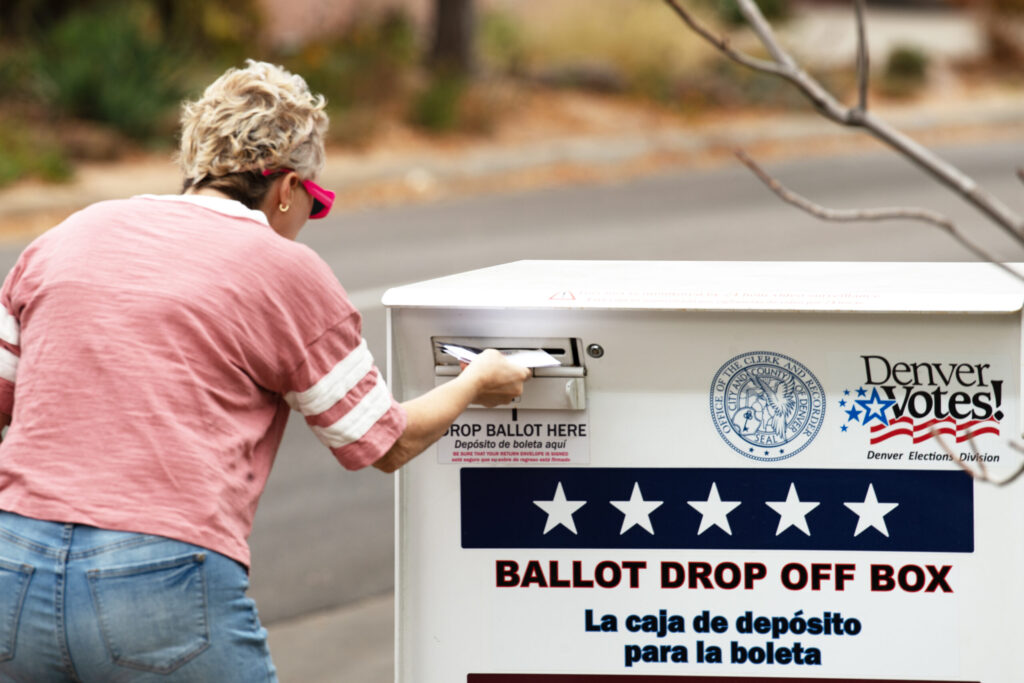
Using artificial intelligence as analytical tool, a resident of Longmont has filed complaints against two prominent Colorado Democrats, alleging multiple campaign finance violations. The complaints are among a growing number of campaign finance allegations against individuals running for some of...
Marianne Goodland
Reporter

Trump economic policies cost Colorado households more than $1,000 on average, national Democrats say
Ernest Luning
ernest-luning@denvergazette.com
Updated 4 days ago
Colorado families had to shell out over $1,000 more on average to afford the same items in the first eight months of the Trump administration, according to an analysis of inflation data released Monday by the Democratic National Committee. The...
Ernest Luning
Reporter
Communities across Colorado voted on ballot issues | Cronin and Loevy
Tom Cronin Bob Loevy
tom-cronin-bob-loevy@gazette.com
Updated 2 weeks ago
By Tom Cronin and Bob Loevy The results of the November 2025 odd-year elections are well known. Democrats easily won the Virginia and New Jersey governor elections and, in a number of other state elections, bested the Republicans. In Colorado, the big 2025 election news...

Tom Cronin Bob Loevy
Reporter
Rep. Marjorie Taylor Greene of Georgia says she is resigning from Congress
Michelle L. Price
michelle.l..price@associatedpress.com
Updated 2 weeks ago
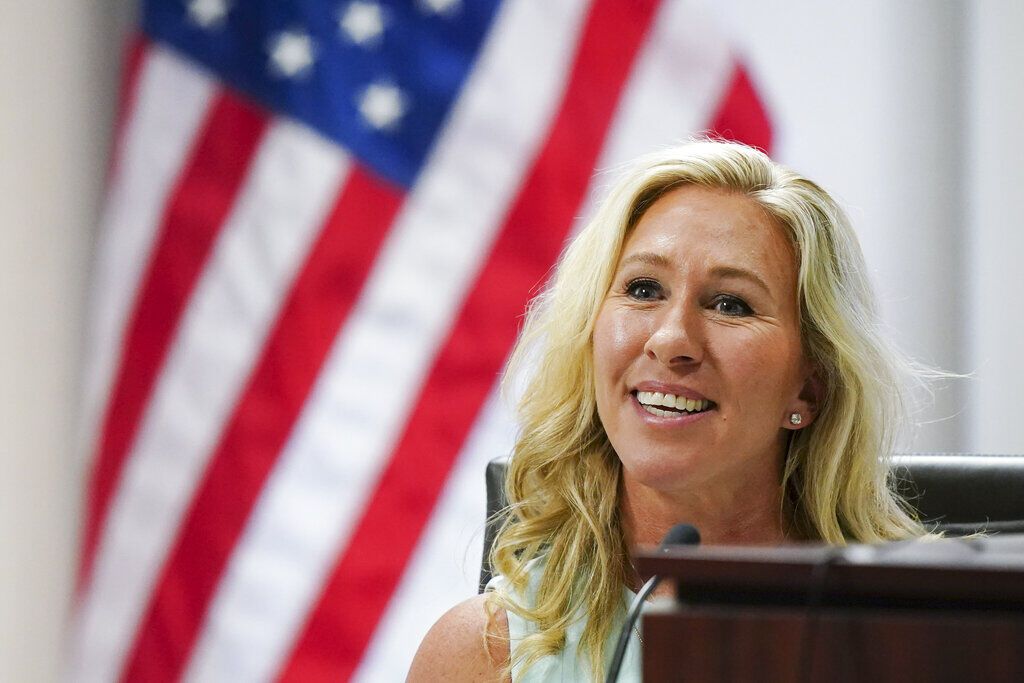
WASHINGTON — Rep. Marjorie Taylor Greene of Georgia, a supporter of President Donald Trump who has become a critic, said Friday she is resigning from Congress in January. Greene, in a more than 10-minute video posted online, explained her decision,...

Michelle L. Price
Reporter

Colorado ballot measure for tougher fentanyl penalties moves forward
Marissa Ventrelli
marissa-ventrelli@denvergazette.com
Updated 2 weeks ago
A proposed measure that would increase penalties for fentanyl manufacturing, distribution and possession has collected enough signatures to qualify for the 2026 ballot, following several failed attempts by the state legislature to pass similar legislation. Backed by Advance Colorado, the...

Marissa Ventrelli
Reporter

Colorado Republicans call meeting to rein in chair Brita Horn, but state GOP says plans are ‘illegal’
Ernest Luning
ernest-luning@denvergazette.com
Updated 3 weeks ago
They’re at it again. For the second time in as many years, a group of Colorado Republicans are planning to convene a meeting of the party’s state central committee despite the state GOP insisting that the proposed meeting would be...
Ernest Luning
Reporter
PREV
PREVIOUS

Colorado's transportation funding gap prompts push for new revenue sources through ballot measures
Facebook Twitter WhatsApp SMS Email Print Copy article link Save Facebook Twitter WhatsApp SMS Email Print Copy article link Save A pair of measures proposing a new way to provide additional funding for Colorado’s roads, bridges and highways could be headed to the ballot next November. The initiatives, backed by retired contractor Donald Hanneman and […]

Donald Trump endorses Republican Lauren Boebert's 2026 reelection bid in Colorado's deep red 4th CD
Facebook Twitter WhatsApp SMS Email Print Copy article link Save Calling her a “MAGA Warrior,” President Donald Trump this week endorsed U.S. Rep. Lauren Boebert’s reelection bid in Colorado’s 4th Congressional District, the state’s most heavily Republican seat. The staunch Trump ally is seeking a fourth term in Congress next year. A former restaurant owner […]