





Amend or repeal? Proposals surface to effectively undo AI regulation law in Colorado

associated press file
While finding a way to plug an almost $800 million budget hole tops the business for lawmakers at next week’s special session, time is also closing fast for a fix to a 2024 law on artificial intelligence.
Gov. Jared Polis signed the new law outlining regulations on AI, though not without misgivings.
At least four bills are being planned for the special session. Colorado Politics has obtained drafts of three of the four. The fourth is believed to be coming from Senate Majority Leader Robert Rodriguez, D-Denver, the original sponsor of Senate Bill 205, the AI regulation measure.
What’s notable about the first three: None propose only a delay of the original implementation date of Feb. 1, 2026.
SB 205 sought to establish guardrails around the use of AI, largely in employment, health care, education and government practices, where, backers said, the risk of bias or discrimination exists. It’s believed to be the first law in the nation regulating AI as a consumer protection measure.
While the governor signed Senate Bill 24-205, he pushed for adjustments to address lingering worries. In his May 17, 2024, signing statement, Polis asked lawmakers to keep working on it before its 2026 implementation date.
“I am concerned about the impact this law may have on an industry fueling critical technological advancements,” Polis said. State-level government regulation, he added, can “tamper with innovation and deter competition.”
A month later, the governor, Attorney General Phil Weiser and Rodriguez penned a joint letter to “innovators, consumers and all those interested in the AI space,” in which they pledged to provide clarity around the law and minimize the “unintended consequences” associated with the bill’s implementation. That includes convening a legislatively created task force to propose recommendations on changes requested after the bill became law.
The letter said “home-grown businesses” had highlighted a risk tied to an “overly broad definition of AI,” along with disclosure requirements that could impose high costs and result in barriers to growth and product development, job losses and limitations on raising capital.
Later concerns surfaced around the cost, an issue raised by a coalition of schools, colleges and technology and medical organizations.
In a recent letter to the governor, the coalition said the law creates “unexpected and costly problems for organizations simply using everyday AI-enabled software, from K-12 schools and universities to hospitals, banks and local governments.”
A draft of a bill from Rep. William Lindstedt, D-Broomfield, primarily deals with developers, something that has been sought by “deployers” — anyone who uses AI for the functions listed above, including small businesses.
Lindstedt’s bill is largely a repeal of SB 205, replacing it with a requirement that developers adhere to the Colorado Consumer Protection Act and the Colorado Anti-Discrimination Act. Enforcement would be handled by the attorney general.
As to deployers, they would be required to notify consumers they’re interacting with AI, but that omits a list of other requirements for deployers highlighted in SB 205 that businesses said would be burdensome.
The draft being proposed by Rep. Ron Weinberg, R-Loveland, tightens some of the requirements in SB 205 and extends the implementation date to Aug. 1, 2027.
The draft narrows the definition of “consequential decision” to only include decisions related to employment, civil liberties or public safety. That would remove decisions tied to education enrollment, financial or lending services, essential government services, health care services, insurance or legal services.
The draft bill also exempts businesses with fewer than 250 employees, businesses with less than $5 million in annual revenue and local governments with fewer than 100,000 residents. That would eliminate all but the state’s top 11 counties.
The draft proposed by Sen. Mark Baisley, R-Woodland Park, appears to repeal SB 205 in its entirety and replace it with a statement that discrimination by digital, automated, algorithmic, AI, machine learning or other technological processes is prohibited.
Which one will pass?
Possibly, none of them.
Rodriguez told Axios Denver on Wednesday that he doesn’t want to debate AI in the special session, calling it “distracting” and “messy.”
As majority leader, Rodriguez can wield power, sending the AI bills to unfriendly committees, for example.
While Colorado’s AI bill was the first in the nation to tackle regulation of AI as a consumer protection measure, several other states, including California, Texas, Utah and Tennessee, have also passed laws regulating AI.


No. 6 Denver hockey sweeps No. 19 Miami (Ohio), retains NCHC lead
Tyler King
tyler-king@denvergazette.com
Updated 40 minutes ago
David Carle’s team knows how to bounce back. After suffering an overtime loss in a thrilling game against Minnesota last Saturday at Ball Arena, No. 6 Denver (11-5-1, 7-1-0 NCHC) rebounded with a weekend sweep over No. 19 Miami (Ohio)...

Tyler King
Reporter

Loaded Cherry Creek surges past Ralson Valley for 5th title in 6 years
Brent Briggeman
brent-briggeman@denvergazette.com
Updated 49 minutes ago
FORT COLLINS – The cherry was neatly placed on top. Again. Capping a week when many on Cherry Creek’s loaded roster signed with colleges and a season of dominant perfection, the Bruins handled Ralston Valley 56-28 in the 5A state...

Brent Briggeman
Reporter

Family traditions highlight annual Parade of Lights in downtown Denver
Noah Festenstein
noah-festenstein@denvergazette.com
Updated 1 hour ago
Thousands of spectators cheered as giant balloon characters and floats decorated with holiday lights paraded through downtown Denver on Saturday night. For many, though, it wasn’t just about watching the 51st annual 9NEWS Parade of Lights. Rather, it’s about celebrating...

Noah Festenstein
Reporter

Palmer Ridge loses to Dakota Ridge in title game, first loss of the season
Marcus Hill
marcus.hill@gazette.com
Updated 20 minutes ago
FORT COLLINS – Palmer Ridge hoped the tears left behind at Canvas Stadium would be those of joy. They were not. As the final horn sounded, Dakota Ridge, 4A’s No. 1 seed, bolted to the sideline to celebrate with teammates,...

Marcus Hill
Reporter
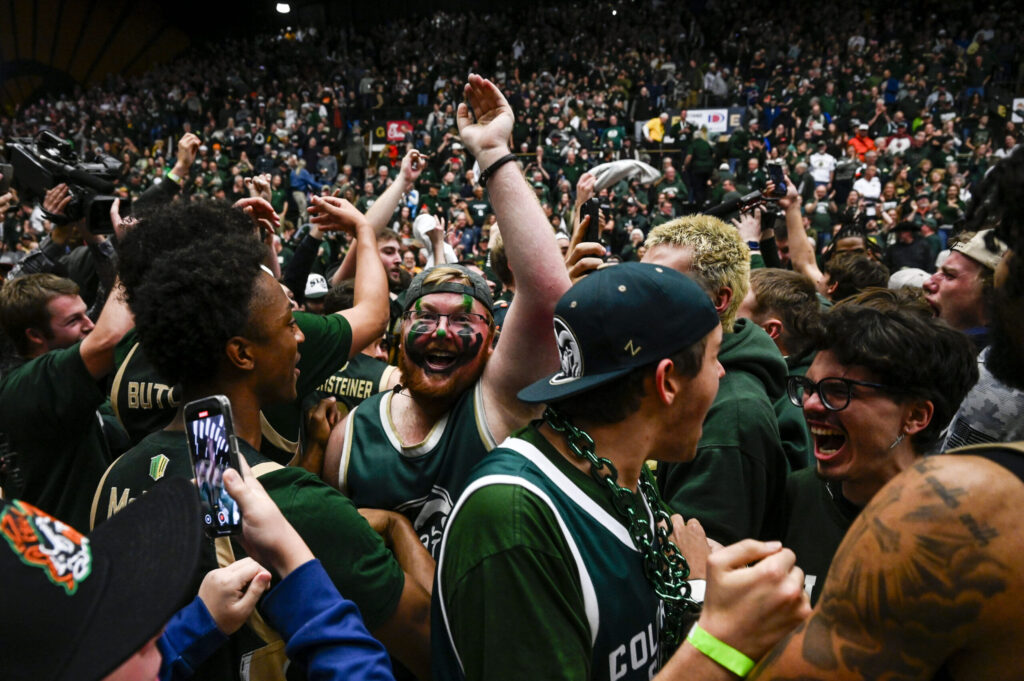
Hot-shooting Colorado State holds on for thrilling win over rival Colorado
Tyler King
tyler-king@denvergazette.com
Updated 4 hours ago
FORT COLLINS — Score one for the Colorado State math department and professor Ali Farokhmanesh. Just about every statistic suggested Colorado should have won Saturday afternoon. The previously unbeaten Buffaloes (8-1) were the more physical team, dominating in the paint....
Tyler King
Reporter

Dakota Ridge’s hot start puts Palmer Ridge in quick 3-touchdown hole during 4A title game
Brent Briggeman
brent-briggeman@denvergazette.com
Updated 4 hours ago
FORT COLLINS – The opening minutes inside a pressure cooker can spit out some extreme results. Dakota Ridge and Palmer Ridge found themselves on opposite ends of that spectrum in Saturday’s 4A football championship game, which the top-seeded Eagles won,...
Brent Briggeman
Reporter
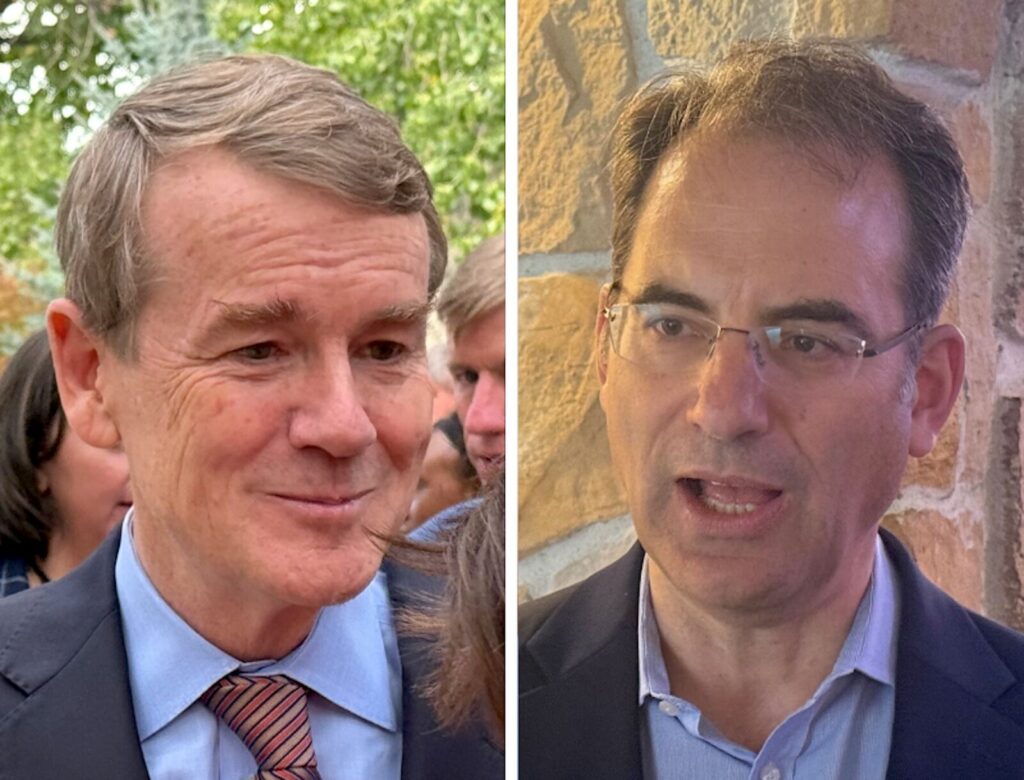
Clash of the titans: Democratic race for governor pits two candidates similar in focus, but very different in style | Vince Bzdek
Vince Bzdek
vince-bzdek@denvergazette.com
Updated 4 hours ago
By Vince Bzdek The race for governor is shaping up to be a clash of Democratic titans, U.S. Sen. Michael Bennet and Attorney General Phil Weiser. They are two of Colorado’s highest profile politicians with deep track records who...

Vince Bzdek
Reporter

Mark Kiszla: How to fix the nonsensical mess that is the college football playoffs
Mark Kiszla
mark-kiszla@denvergazette.com
Updated 52 minutes ago
On the dumbest day of the entire college football season, the legendary Nick Saban and Georgia coach Kirby Smart said something really intelligent. “It’s all B.S.,” Smart told Saban, during a spicy interview that aired Saturday on ESPN. I couldn’t agree...

Mark Kiszla
Reporter

Denver area events for Dec. 7
Carlotta Olson
carlotta-olson@denvergazette.com
Updated 5 hours ago
If you have an event taking place in the Denver area, email information to carlotta.olson@gazette.com at least two weeks in advance. All events are listed in the calendar on space availability. Sunday Latkes and Lights Hanukkah Celebration — 10 a.m.-1 p.m., JCC...

Carlotta Olson
Reporter
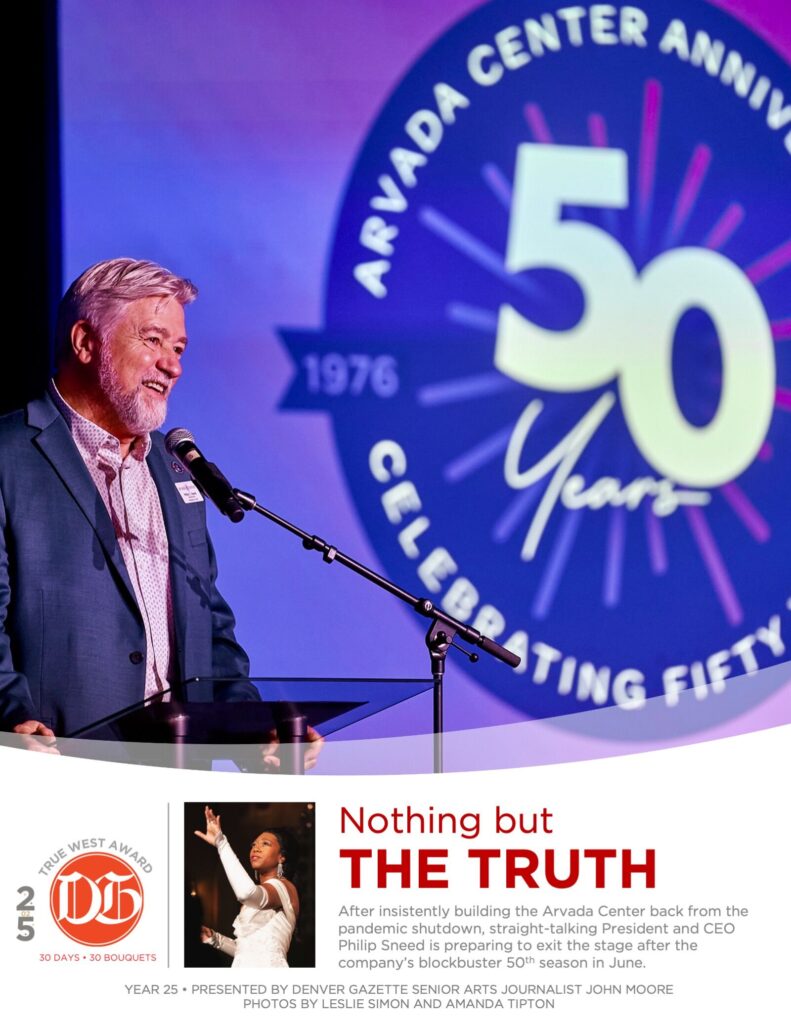
Philip Sneed takes the high road out after Arvada Center’s 50th season ends
John Moore
john.moore@denvergazette.com
Updated 5 hours ago
2025 DENVER GAZETTE TRUE WEST AWARDS: DAY 7 After leading the company back from the existential crisis of the shutdown, retiring president and CEO is enjoying a record-breaking year. Philip Sneed sure knows how to make an exit. After insistently...

John Moore
Reporter