








Gender ideology’s attack on Colorado’s free speech

In my youth, the greatest culture war issues were abortion and same-sex marriage. While these are two very distinct issues, the left made great progress on both by convincing many Americans, especially in my Millennial generation, that theirs was the “live-and-let-live” position.
Today, questions about gender identity and ideology are often thrown in with these other “culture war” issues. This is not appropriate. On gender issues, the left is not fighting to have the culturally dominant narrative or set of values. They aren’t even pretending to fight for freedom. They’re demanding fealty. The left’s mantra has shifted from “live and let live” to “speak as we say — or else.”

The Sept. 1 arrest of Irish comedian Graham Linehan at Heathrow airport in London for offensive speech is the latest example. But this isn’t just a problem in Europe. Linehan could have been in trouble with the law in Colorado had he expressed his views on gender here.
Earlier this summer, Colorado Gov. Jared Polis signed HB 1312, a new state law that prohibits forms of discrimination against transgender-identifying individuals, including protections for their chosen name and pronouns. Now, in Colorado in certain settings, it’s against the law to use the biologically correct pronouns for trans-identifying people if that doesn’t match how they “choose to be addressed.”
Furthermore, the new law includes a set of vague prohibitions against statements that make trans-identifying people feel “unwelcome, objectionable, unacceptable or undesirable.”
Linehan was arrested for posts on X that mocked and derided trans-identifying people. One post jokingly encouraged women to “punch him in the balls” if they encountered a male in a woman-only space. Another said, “I hate them,” and referred to pro-trans advocates as “misogynists and homophones.”
Surely, the ideas expressed in these posts would make trans-identifying people feel unwelcome. And the reference to a trans-identifying male as “him” would be considered “misgendering.” Therefore, Linehan’s perspective, even if expressed in a less crude or gentler way, would be in violation of Colorado’s HB 1312 (if uttered by a worker in a place of public accommodation).
But importantly, Linehan’s comments would not be in violation of the First Amendment in the United States, which protects even hateful speech. This sets up a constitutional issue for Colorado’s law.
Not surprisingly, the brand-new law is already facing two major legal challenges from several individuals, businesses and organizations. These challengers reasonably argue that they should not be compelled to speak in a way that doesn’t align with their views (or reality), and that law itself discriminates based on viewpoint, targeting only people with a traditional view of gender.
Compelled speech is propaganda with better branding. Forcing people and businesses to use certain language just to make one group feel comfortable is not a laudable public policy goal. Nor is it politically palatable. The policing of speech will create more ill will than inclusion. Handcuffing comedians is not a good look for the political left. Neither is losing in court, but that’s all but inevitable in these two Colorado cases.
The progressive left offers a politically competitive contrast with conservatives on culture war issues like abortion and same-sex marriage because they’ve made these into questions about freedom. Should women be “free to choose?” Should gay people be “free to marry?”
Fortunately, the left is losing on the gender issue precisely because they’ve abandoned the effort to win culturally and politically. It once won cultural battles by persuasion. Now it seeks to win by prosecution. The left has adopted the cudgel of draconian speech codes, and therefore put themselves squarely in the anti-freedom camp. There’s simply no way to argue that a restriction on speech is a truly liberal position.
To arrest, fine or otherwise penalize people for expressing themselves is the abandonment of liberty itself. Free societies cannot endure when speech is policed by the state. If we wish to preserve freedom, we must reject these draconian codes outright and defend, without apology, the right to speak candidly and even offensively. Anything less is surrender.
Hadley Heath Manning is executive vice president at the Steamboat Institute.

Pfizer foresees challenging 2026 on fading COVID sales, margin pressure
Reuters
reuters@denvergazette.com
Updated 29 seconds ago
Pfizer’s profits will fall short of Wall Street estimates next year, as it faces weaker sales of COVID products and squeezed margins stemming from its deal with the U.S. government to lower prescription drug costs. The drugmaker does not expect...

Reuters
Reporter

Kraft Heinz taps former Kellogg chief as CEO to steer split
Reuters
reuters@denvergazette.com
Updated 2 minutes ago
Kraft Heinz on Tuesday named former Kellogg chief Steve Cahillane as its CEO, tasking the industry veteran with leading the packaged food giant through a planned split into two stand-alone companies. The company in September decided to break up, with...
Reuters
Reporter

California Pizza Kitchen reaches buyout deal, names new leadership
Reuters
reuters@denvergazette.com
Updated 4 minutes ago
An investor group led by Consortium Brand Partners is buying California Pizza Kitchen and has tapped the CEO of Convive Brands to run its restaurants, the company told Reuters on Tuesday, five years after the chain’s pandemic-driven bankruptcy. Jon Weber,...
Reuters
Reporter

Hyundai, Kia to retrofit 4 million U.S. vehicles to address theft concerns
Reuters
reuters@denvergazette.com
Updated 5 minutes ago
WASHINGTON – Korean automakers Hyundai and Kia agreed on Tuesday to retrofit more than 4 million U.S. vehicles to address theft concerns and install prevention equipment on all new vehicles to resolve an investigation by a bipartisan coalition of 35...
Reuters
Reporter

China lowers threatened tariff on imports of pork from the EU
The Associated Press
the-associated-press@denvergazette.com
Updated 7 minutes ago
China will impose tariffs of up to 19.8% on pork imports from the European Union, a drastic drop from preliminary tariffs of up to 62.4%, its Commerce Ministry said Tuesday. The ministry’s announcement followed an investigation the Chinese side launched...

The Associated Press
Reporter

FBI had doubts about probable cause for Mar-a-Lago raid, emails show
Kaelan Deese, Washington Examiner
kaelan.deese.washington.examiner@gazetteedit.wpenginepowered.com
Updated 10 minutes ago
The FBI under the Biden administration questioned whether it had established probable cause to search President Donald Trump’s Mar-a-Lago residence in 2022, but moved forward with the raid anyway after pressure from senior Justice Department officials, according to newly declassified...

Kaelan Deese, Washington Examiner
Reporter

U.S. retail sales unexpectedly unchanged in October
Reuters
reuters@denvergazette.com
Updated 12 minutes ago
WASHINGTON – U.S. retail sales were unexpectedly flat in October, though consumer spending appears to have remained on a solid footing at the start of the fourth quarter despite the rising cost of living that is forcing some households to...
Reuters
Reporter
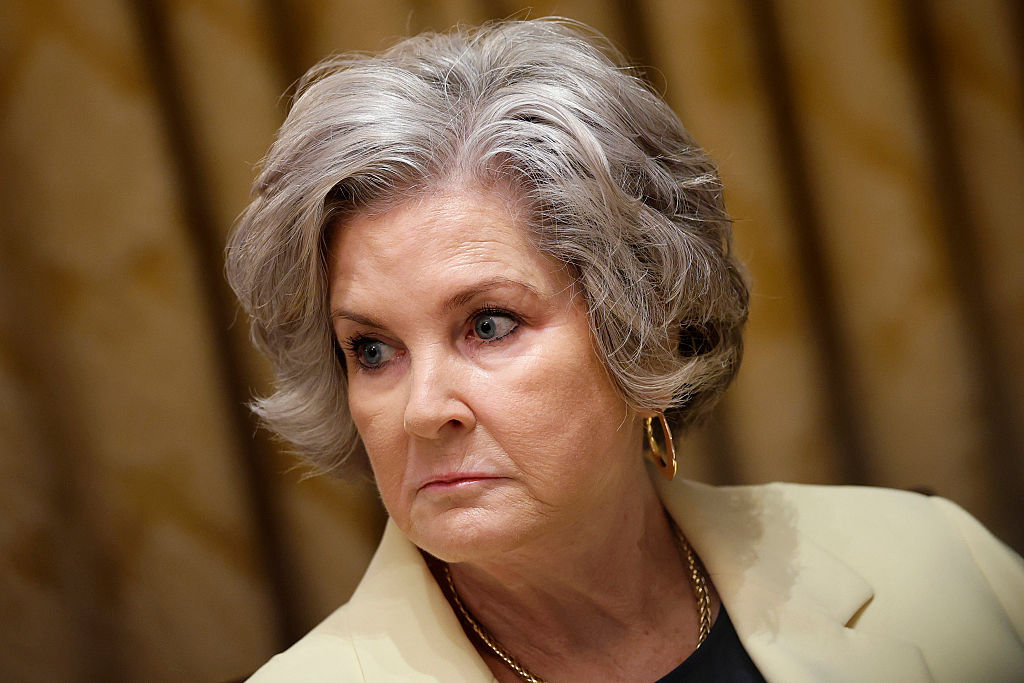
Susie Wiles slams Vanity Fair ‘hit piece,’ which included her unflattering comments about Trump and his team
Christian Datoc, Washington Examiner
christian.datoc.washington.examiner@gazetteedit.wpenginepowered.com
Updated 14 minutes ago
Susie Wiles, described by President Donald Trump as the most powerful woman in the world, has hit back at a series of Vanity Fair articles in which she made several unflattering comments about members of the administration, including her boss....

Christian Datoc, Washington Examiner
Reporter

Mike Johnson says there won’t be a vote on Obamacare subsidies
Rachel Schilke, Washington Examiner
rachel.schilke.washington.examiner@gazetteedit.wpenginepowered.com
Updated 17 minutes ago
House Speaker Mike Johnson (R-LA) said Tuesday that there will not be a vote in the House on extending the Obamacare subsidies, which expire at the end of the year. Johnson said during the weekly GOP press conference that many...

Rachel Schilke, Washington Examiner
Reporter

House drives toward Obamacare cliff with neither party eager to find bipartisan ground on subsidies
David Sivak and Rachel Schilke, Washington Examiner
david.sivak.and.rachel.schilke.washington.examiner@gazetteedit.wpenginepowered.com
Updated 19 minutes ago
House Democratic and Republican leaders are inching closer to the expiration of Obamacare subsidies at the end of the year, and both parties have decided that doing nothing is better than reaching a bipartisan deal. The House is set to...

PREV
PREVIOUS

Colorado justices tell Arapahoe County judge to reconsider disqualification of law firm from case
The Colorado Supreme Court on Monday directed an Arapahoe County judge to reconsider his prior decision to remove a law firm from a civil lawsuit due to a conflict of interest. In an unsigned Sept. 8 order, the justices laid out specific issues the judge needed to examine before concluding that the work an attorney […]

Free Red Rocks shuttle rolls in 2026, but concerts won't be serviced just yet
Next summer, outdoors enthusiasts and weekend warriors looking to get away from the city will finally be able to take public transportation to Red Rocks. But most concertgoers won’t be able to use it yet. After years of development and collaboration between several regional agencies and governments, a pilot shuttle service between the Regional Transportation […]