







Loveland city officials explore strategies to address homelessness
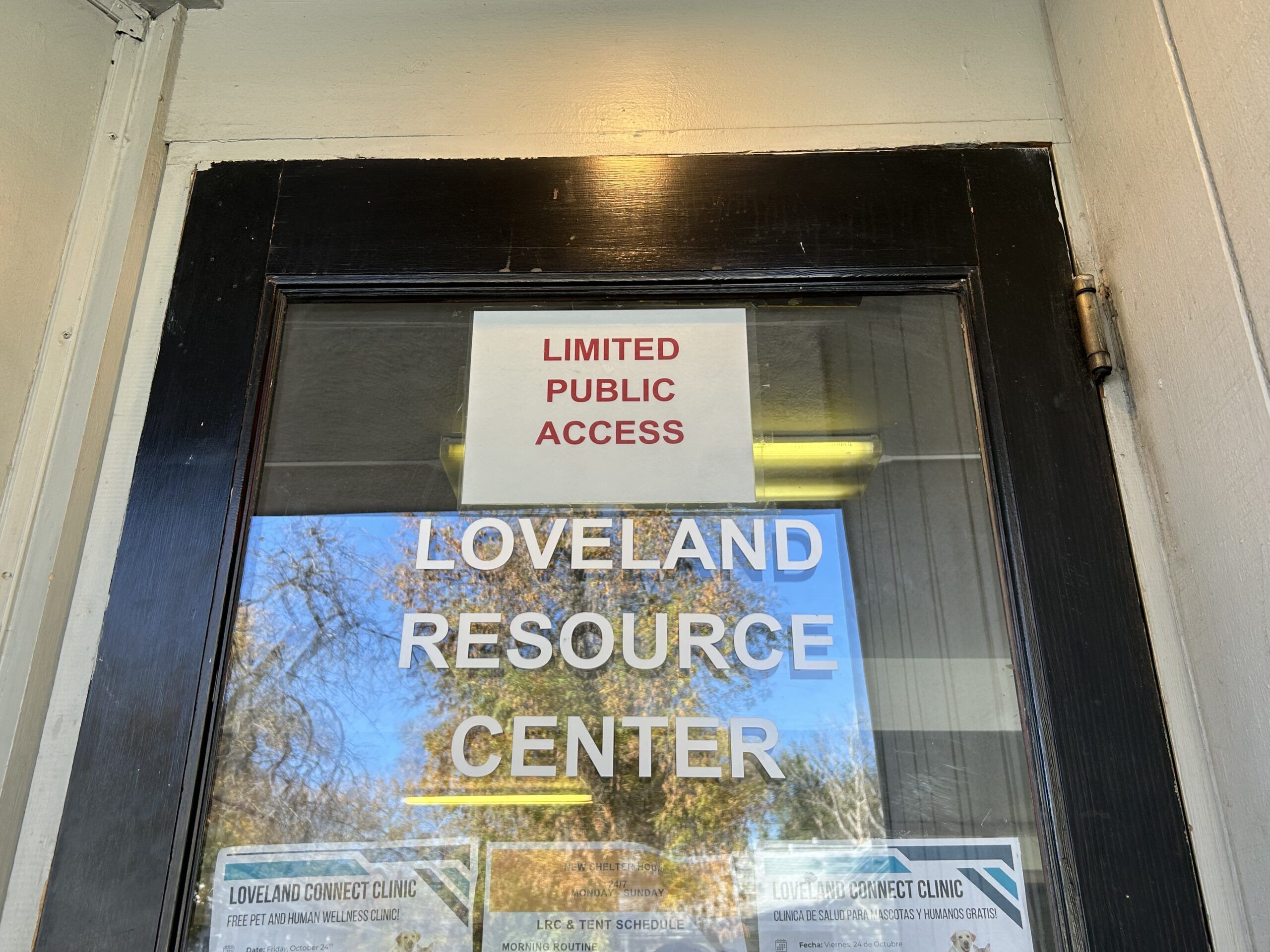
Loveland officials are exploring strategies to address homelessness and temporarily operating a day resource center 24/7, following the mayor’s decision to allow homeless individuals to stay overnight in a government facility.
The Loveland City Council will schedule a date to host a meeting about these potential short-term and long-term approaches. That date has yet to be set.
“We do not have a time outlined for when the conversation on sustainable, long-term solutions will be brought back to City Council,” said Nicole Yost, a spokesperson for the city. “In the meantime, we are continuing our community conversations with the public through October and continuing conversations with community partners at this time.”
Currently, the City Council is collaborating with nonprofits, faith-based groups, businesses, and residents to brainstorm ideas to help homeless individuals, including looking into possibly establishing a permanent shelter.
“The goal is to build a shared understanding that can guide a practical path forward for our community,” Yost said.
For now, the city has temporarily opened the Loveland Resource Center along South Lincoln Avenue for overnight shelter, with priority given to women and individuals with physical disabilities. The city is allowing those who are unable to shelter inside to camp in their own tents behind the facility. The temporary permit issued Oct. 6 will be extended to allow the center to be used for overnight shelter until March 15, 2026.
The South Railroad Facility, which previously served as a temporary overnight shelter for people ages 18 and older, shut down on Sept. 30. The shelter was financed by a one-time fund, which had been spent, and its temporary permit expired at the end of September and could not be extended.
Mayor Jacki Marsh allowed about 15 people to come inside City Hall on Oct. 5, citing the inclement weather. Marsh noted about 50-60 people were staying outside of City Hall leading up to that evening and that not everyone received tents and sleeping bags donated by the community.
“And many of the donated tents and sleeping bags were not winter grade,” Marsh said. “Many were summer grade with ventilation for cooling versus for warmth or staying dry. Several of the tents failed during the night and the people inside those tents and their belongings got soaked.
“Why did I let people into City Hall? Pretty simple, really. It was to prevent injury and possible death due to low temperatures during a prolonged rain storm,” the mayor said.
Although some applauded Marsh’s decision, others disagreed with her actions.
“While well-meaning and rooted in compassion for community members experiencing homelessness, the mayor’s unilateral actions to turn City Hall into a homeless shelter is unprecedented and reflects a total lack of respect for reasonable boundaries defined in the city code and city charter,” said Councilmember Steve Olson.
“No member of council has the authority to invite anyone into a city building, particularly after hours,” he added. “We cannot pick and choose which laws are to be obeyed and ignore laws we don’t like. A city, a nation, cannot function without the rule of law.”
The House of Neighborly Services previously operated the Loveland Resource Center and received $75,000 from the city for this. The center was solely intended for daytime use for homeless individuals and not meant to operate as a night time shelter, according to Olson.
Olson noted the city has spent more than $6.7 million to run the South Railroad Facility shelter and Loveland Resource Center in less than three years. He added these funds initially came from American Rescue Plan Act money, which has been exhausted, even as citizens eliminated the food sales tax, trimming the city budget by about $10 million.
“The city does not have the resources to operate a shelter nor does the city have the passion or expertise,” Olson said. “When the city got in the housing of the homeless business in 2023, the organizations that had been providing support to the homeless pulled back. We are in the process of getting them back to the table to develop a comprehensive strategy that is focused on transforming lives and helping the homeless return to being self-sufficient.”
The number of homeless or unsheltered people in Loveland has grown from 84 in 2017 to 169 in 2022, according to a city report. Meanwhile, a 2025 point-in-time count by the Northern Colorado Continuum of Care reported 180 people homeless people in Loveland. The same count documented a total of 581 homeless people in Larimer County and 379 in Weld County.
A Loveland strategic plan from the University of Denver recommended several goals to tackle homelessness, including improving collection and use of data, reducing impact of street homelessness, enhancing service supports for employment and income, developing additional housing resources, expanding community education efforts and strengthening homelessness prevention efforts and housing retention.
A few local daytime services and resources are offered by SummitStone Health Partners, North Colorado Health Alliance, Volunteers of America, U.S. Department of Veterans Affairs, Hunger Free, Deserving Dental, Haircuts by Ginny, and Larimer County Community Justice Alternatives. The Loveland Street Outreach Team also helps connect individuals to services. The team can be reached at 970-494-9956 or [email protected].
Additionally, the Fort Collins Rescue Mission began construction on a new homeless resolution center with a shelter along Mason Street in September. The building will have the capacity to house 250 people overnight and provide case management services. It is set to open in fall 2026.
Currently, the Fort Collins Rescue Mission has temporarily moved shelter services to the Mason Street Shelter, its winter overflow shelter that holds 70 beds, after a kitchen fire broke out in August at its Jefferson Street location.
In retrospect, Marsh said, what occurred on Oct. 5 was “almost inevitable” since the city closed the South Railroad Facility with plans to only operate a day shelter during regular business hours on the weekdays.
“Severe weather was supposed to be met with motel vouchers and with the day shelter staying open to house people overnight,” Marsh said. “Yet, a week after closing the South Railroad Facility, we had a major prolonged rain storm on a weekend, not a week day, and no one was prepared to protect the vulnerable.”