





Adventure grows from a historic, scenic path of tunnels in southern Colorado

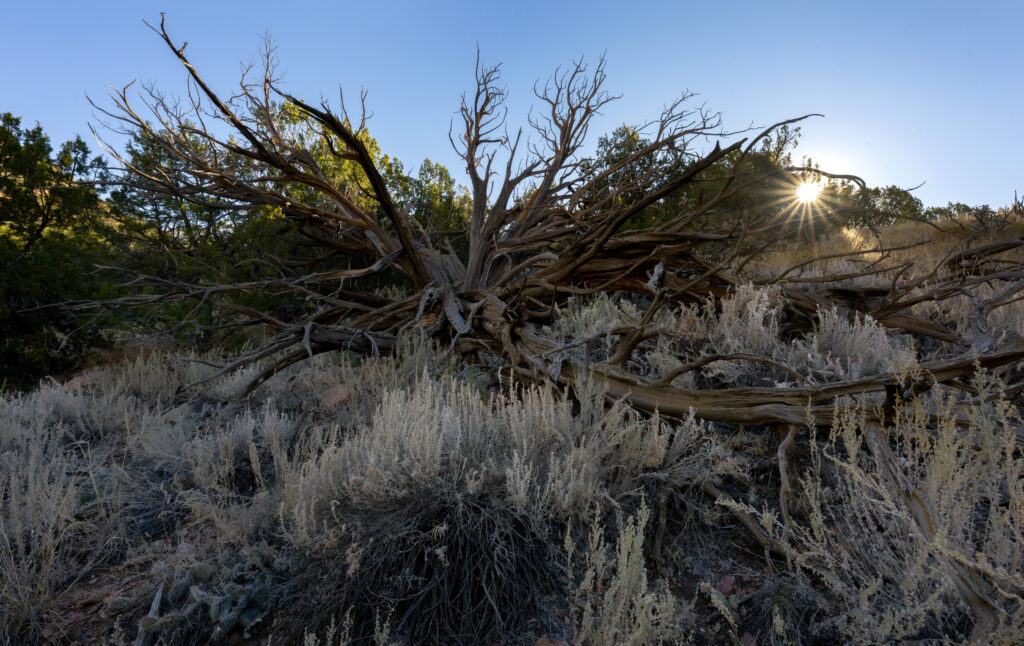
CAÑON CITY • About 25 years ago, high in the backcountry outside this southern Colorado town, Rex Brady was bushwhacking along steep slopes in search of something.
“Just trying to find a route,” recalls Cañon City’s parks and open space director.
A route to connect two historic venues.
Up above was the rugged 5,000-plus acres the local government had owned since a federal transfer in 1907: Royal Gorge Park, as the land would be known a couple of decades before the construction of a world-famous bridge. Down below, close to town, was an earlier attraction that had become silent and overgrown: Tunnel Drive.
What if there was a trail that could connect top to bottom? This was the question of Brady and other city employees as they wandered among that jumbled rock and thick pinyon and juniper — “without much success,” he says thinking back.
But “all good things come to those who wait,” read a 2022 post by Fremont Adventure Recreation, the local nonprofit that celebrated success one day that year.
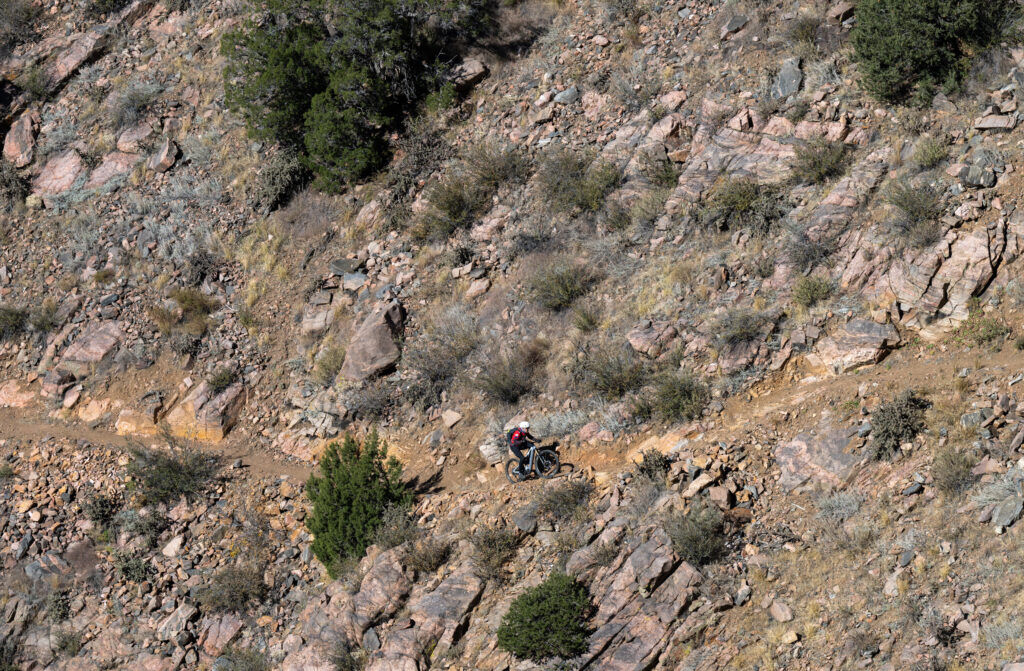
Imagine Brady’s joy that bluebird day, when local hikers and mountain bikers gathered to celebrate the opening of Royal Cascade Trail. And imagine Brady’s prolonged joy today, as more and more people are discovering this long-awaited gem of Cañon City’s ever-growing trail system.
More and more are also discovering one of those historic venues that has been here all along.
Tunnel Drive had been “that nice place to go for a walk,” says Brian LeDoux, a Fremont Adventure Recreation board member and Cañon City native. “Now with that connection, you definitely do get people that are utilizing it more, utilizing Royal Cascade and Royal Gorge Park.”
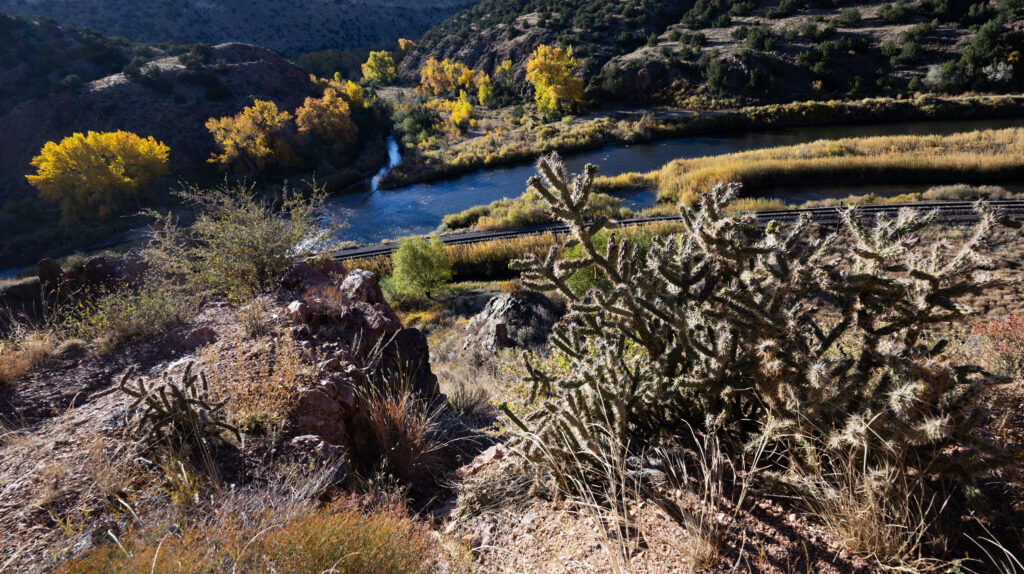
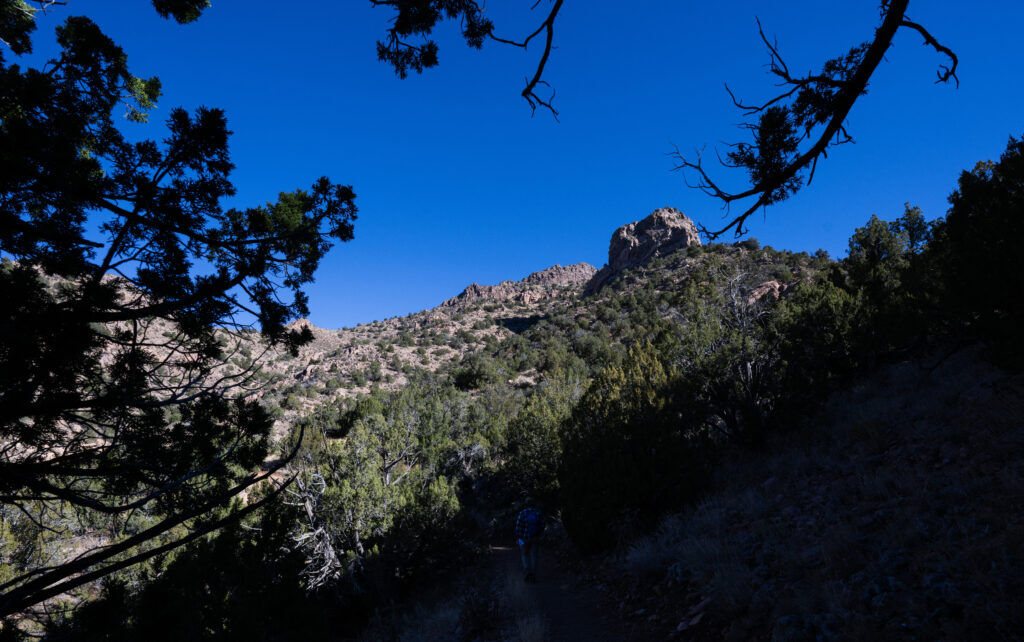
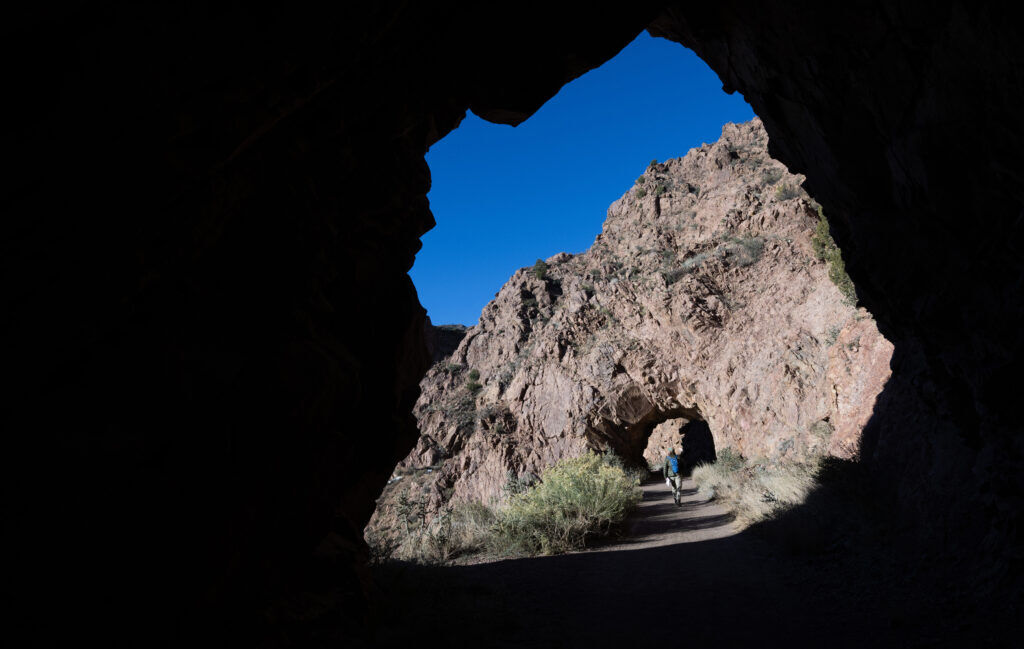
After three tunnels and about 2 miles along the flat, historic path overlooking the Arkansas River and surrounding hogbacks, Royal Cascade rambles up the hillside. It harshly switchbacks about 3 1/2 miles to the base of Fremont Peak — a scenic, highly sought summit — and the Royal Gorge Park trail network that has further established Cañon City as a mountain biking destination, adding to vaunted networks called Oil Well Flats and South Cañon. More recently, trails have expanded in Red Canyon Park.
And then there’s Tunnel Drive, not to be forgotten as it has at times over the past century.
“It reflects how we’ve been a tourist town all the way back, and being a community that enjoys the outdoors all the way back,” says Lisa Studts, director of Royal Gorge Regional Museum and History Center. “The history of recreation in this community has been around since almost the very beginning.”
But first, in the early 1890s, there was an idea for a ditch. Water from the Arkansas River would be transferred to the plains between Pueblo.
Or so the thinking went.
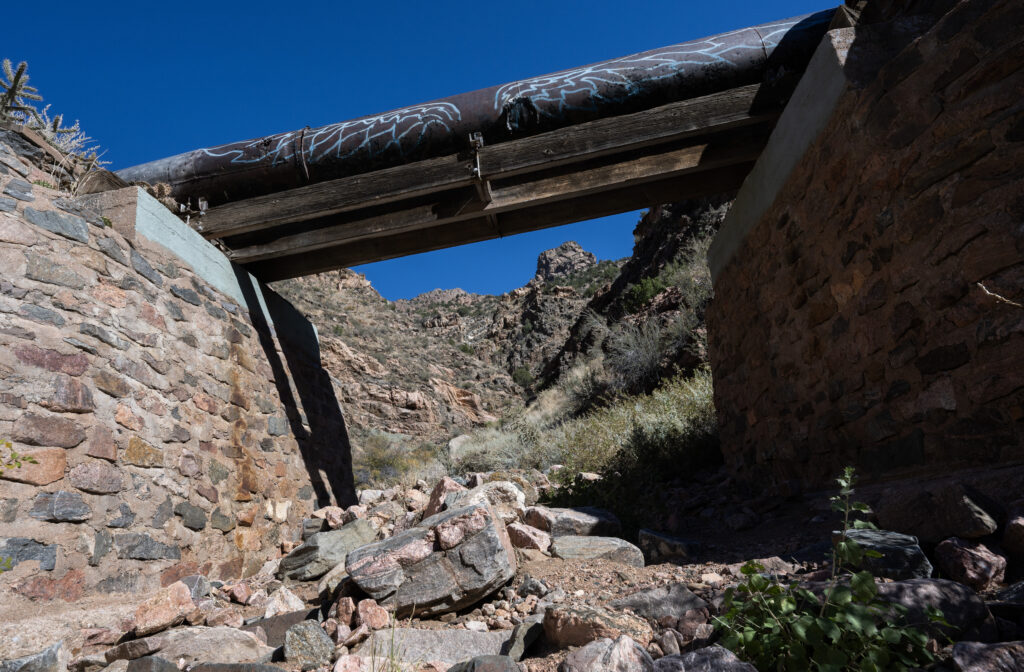
Local prison inmates were assigned to construction, which included blasting granite along the mountainside above the river. This proved costly and controversial. Having only recently opened the boarding school for girls, St. Scholastica was among buildings reportedly shaken and damaged by the blasts. A Cañon City man who became governor in 1903, James Peabody, ordered work to stop.
While one project of prisoner labor was abandoned, another was marked as a success by 1908: Skyline Drive remains a popular (and hair-raising) stretch for motorists today.
“Skyline Drive is helping to make Cañon City famous,” the local newspaper reported that year. “A driveway such as the proposed Gorge road would do equally as much along this line — perhaps more.”
This would be Royal Gorge Boulevard, or Tunnel Drive as it became better known. Probably the newspaper could not have predicted another report in 1915, regarding a motorcyclist named Bill Plandell: “The other day Plandell startled the natives by spinning along the famous Royal Gorge Tunnel drive at about forty five miles an hour while standing erect on the saddle of his motorcycle while the handlebars were left to do their own steering.”
Remarkably, the stunt ended with no injury. The same could not be said of other accidents over the decades.
“It got to be kind of a hangout for the local kids and underage drinking and that kind of thing,” says Brady, recalling his teenage years. “It got to the point where the city said, ‘OK, no more.'”
He started working for the city in 1996, just as another idea for Tunnel Drive was coming together — to modify it for hiking and cycling. This was an unusual job at the time.
“Back in those days, we didn’t really have any trails to speak of,” Brady says.
What about one to continue the venture from Tunnel Drive, one rising all the way to Fremont Peak? Off Brady went with colleagues, bushwacking in search of that route.
“We couldn’t find one. It wasn’t an enjoyable walk,” he said later. “We knew we needed to find the right trailbuilders, and we weren’t it.”
The city hired a professional, Steve Thomas, in 2016. This was a few years after a wildfire scorched land across Royal Gorge Park, that land the city acquired in 1907 for potential that had yet to be realized.
“Just looking out at that destruction, it was kind of like a moonscape,” Brady says. “The whole forest was gone, the grass was gone. We just had this wide open expanse. And we just had the thought, ‘What else can we do?'”

Enter Thomas, who spent the past 10 years building out Royal Gorge Park’s network. In that Fremont Adventure Recreation post celebrating Royal Cascade in 2022, he described the trail as one of the most difficult jobs. And it was one of the most rewarding, he said: “It’s beautiful around every turn. It just gets better.”
As racers of several long-distance events have learned over the past few years.
“Your endurance type people are definitely putting it to great use. Especially in the winter time, when for the most part it can stay snow-free,” says LeDoux, the cycling native of this banana belt region.
It’s not for all, warns a sign at the trailhead, marked by two black diamonds: “This is an ADVANCED trail that requires a high level of physical fitness.”
Rather than continue up, some are more than content turning back — back through the tunnels and the path that one might say started this trail revolution in Cañon City.
Don’t overlook Tunnel Drive, Brady says.
“The river views and the mountains, and you see the bighorn sheep up there quite often,” he says. “It’s just a really cool place, and anybody can hike it.”
IF YOU GO
Driving west on U.S. 50 through Cañon City, look for the sign pointing left to Tunnel Drive; Tunnel Drive Road goes about a half-mile to the trailhead. The mostly flat, scenic path leads about two miles to a dead end.
Toward the end of Tunnel Drive, the well-marked Royal Cascade Trail starts steeply up the hillside. The trail remains steep and challenging for about 3.6 miles as it meets Fremont Peak and connects with other Royal Gorge Park trails.
For more information from Fremont Adventure Recreation, go to joinfar.org
Get OutThere
Signup today for free and be the first to get notified on new updates.

PREV
PREVIOUS

The Salvation Army, Safeway partner to serve thousands in Denver during free holiday dinner event
Thousands arrived hungry at the Colorado Convention Center on Sunday. They all left with full stomachs and a taste of the holiday spirit. The occasion marked the first time since before the COVID-19 pandemic that The Salvation Army publicly hosted a free “Hope Served Here” holiday dinner, an event that typically gathers up to 2,000 […]
Large smoke plumes visible after Franktown house fire in south metro Denver
Large white smoke plumes arose from a home in Franktown on Monday morning after a garage caught fire. No injuries have been reported. The fire was first reported at 5:50 a.m. on Monday at a home in the 1100 block of Deerpath Road north of Highway 86. Denver Gazette news partner 9NEWS caught the fire […]