







Colorado justices lay down framework for analyzing defamation lawsuits involving ‘public interest’ issues

The Colorado Supreme Court clarified on Monday how judges should evaluate whether lawsuits arising from a person’s speech — in particular, online consumer reviews — are connected to an “issue of public interest” and merit protection from legal liability.
As part of the framework, the justices concluded a person’s motive in speaking is irrelevant to the question of whether a topic is in the public’s interest.
“A defendant may well have a malicious motive for their speech or conduct, but the challenged activity still may implicate a public issue or an issue of public interest,” wrote Justice Maria E. Berkenkotter in the Dec. 8 opinion. Otherwise, the law would produce different results “if two defendants, for instance, utter exactly the same words in exactly the same way, but one is motivated by personal animus and one is not.”
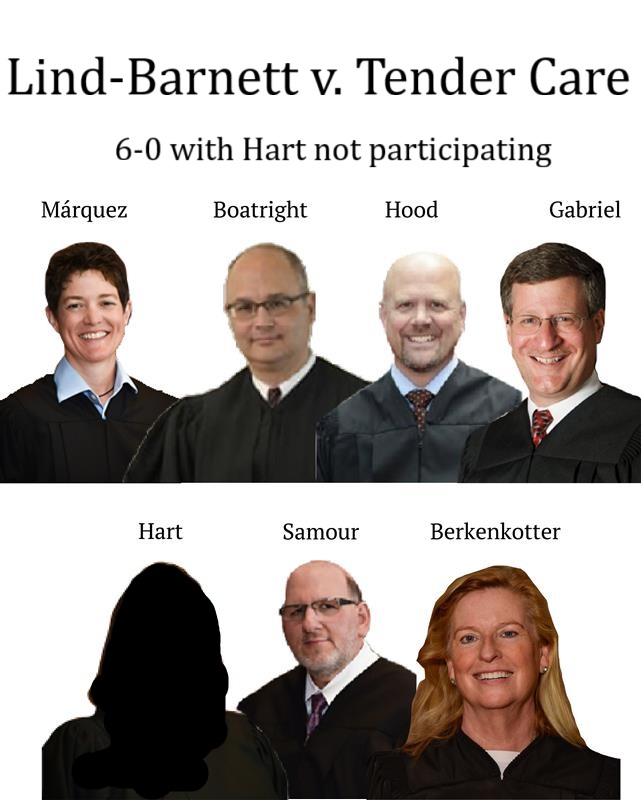
For the first time, the state’s highest court examined Colorado’s 2019 “anti-SLAPP” law, which stands for “strategic lawsuits against public participation.” The goal of lawmakers was to provide a mechanism for quickly disposing of litigation arising from a person’s First Amendment rights — specifically, the rights to free speech and to petition the government.
One category of protection is afforded to speech made “in connection with a public issue or an issue of public interest.” However, the law does not define what such issues are.
In the underlying case, Jennifer Lind-Barnett had a poor experience when she brought her puppy to Tender Care Veterinary Center in Falcon. She subsequently posted about it on multiple community Facebook pages, including Tender Care’s. Among other things, she and another dissatisfied customer, Julie Davis, accused Tender Care and their staff of “ignorance,” “belligerence,” being “less than adequate,” and having “almost killed” a pet.
Tender Care filed a defamation lawsuit based on more than 100 of Lind-Barnett and Davis’ statements. The defendants sought to dismiss the complaint under the anti-SLAPP law, arguing their speech was a matter of public interest covered by the shield.
In August 2022, an El Paso County judge declined to dismiss the lawsuit, believing the statements fundamentally pertained to “a private business dispute, essentially a pair of customer complaints.”
A three-judge Court of Appeals panel clarified that customer posts about veterinary services may constitute a matter of public concern. But the panel did not believe the defendants’ statements contributed to “any broader public discussion about pet health care,” like training, the availability of services or “overbreeding” problems.
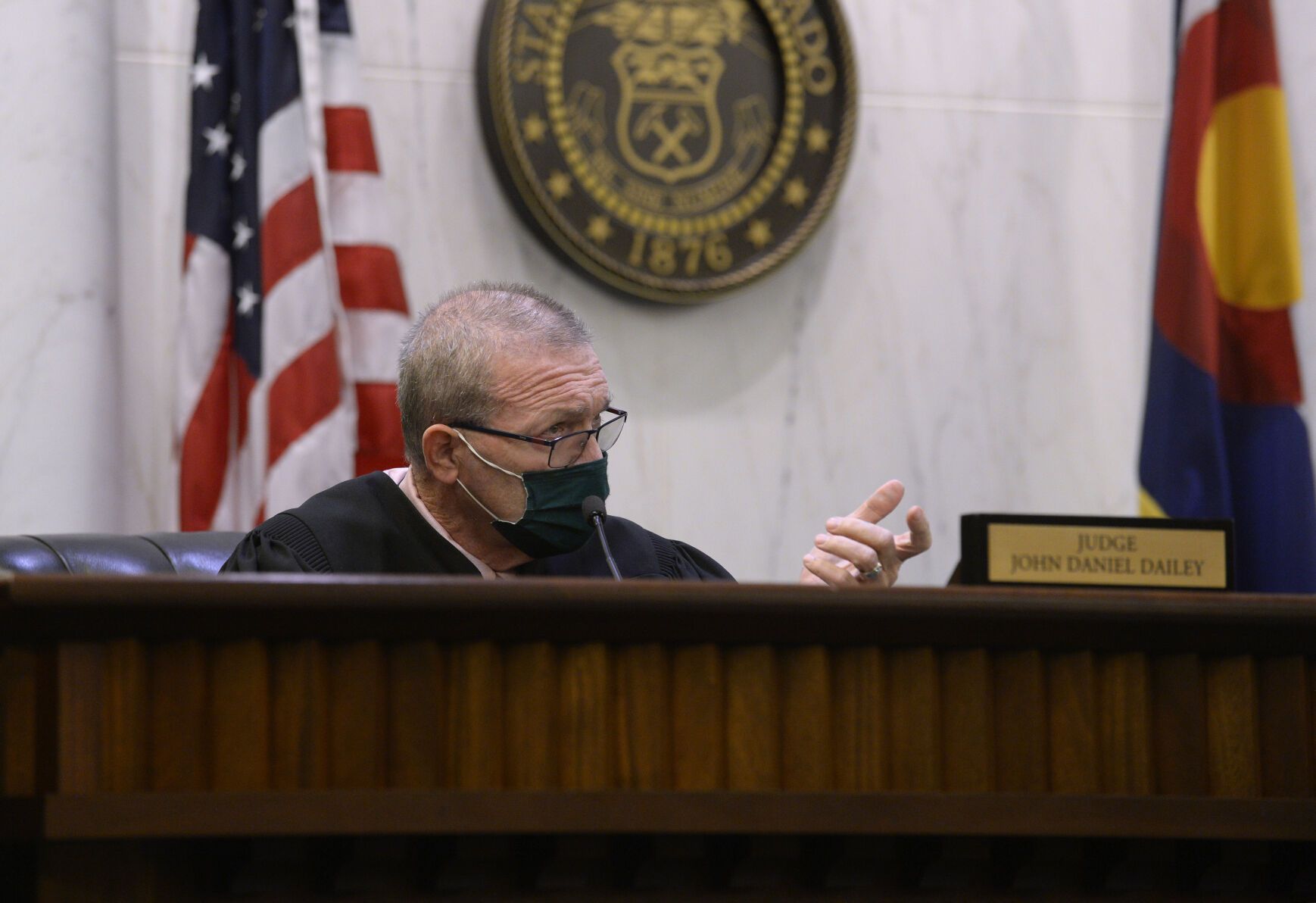
“Rather, read in context, the posts’ purpose was, in Lind-Barnett’s own words, ‘to deal with (Tender Care) once and for all’ — that is, to exact some revenge by putting it out of business,” wrote then-Judge John Daniel Dailey. “Most of the posts simply attack Tender Care and its staff.”
The defendants appealed to the Supreme Court, arguing the Court of Appeals panel took too narrow a view of the “public interest.” They noted that their comments generated substantial discussion among other interested community residents. They also disputed that their motivations in posting played any role in determining whether the anti-SLAPP law covered their speech.
Various consumer- and speech-related groups weighed in on the defendants’ behalf. Public Citizen and the Public Participation Project argued consumer reviews are generally a matter of public interest because of the information they provide to customers. Online review site Yelp also contended that individual experiences can, when combined, contribute to “the public debate,” even if a consumer is motivated out of revenge.
During oral arguments, some of the justices were sympathetic to the value of even inflammatory reviews.
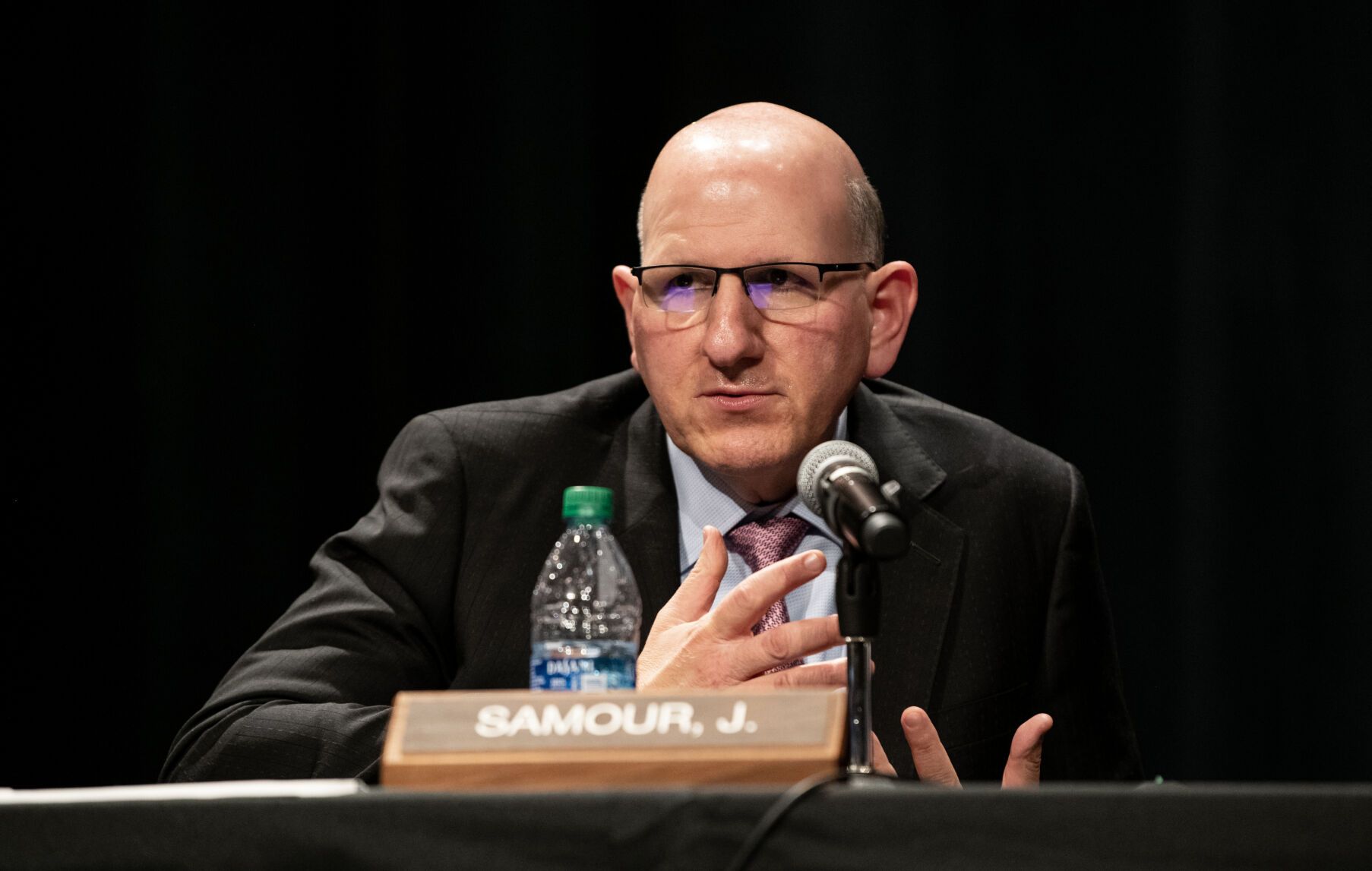
“The motivation may be the person’s upset at the doctor,” said Justice Carlos A. Samour Jr. “But if the person is saying, ‘Hey, I went to this doctor and I almost ended up dying,’ and I, on the other hand, am looking for a doctor in the future and I’m looking at that review, that’s helpful to me. Even if the motivation by that patient may have been because they were upset.”
Berkenkotter, in the court’s opinion, laid out a two-step approach for judges to determine if statements are connected to the public interest. First, they must ask if an objective observer could understand, in context, that there is some larger topic of public interest at play. Second, they will examine if the commentary contributed to the discussion or debate on that issue.
In the case of the defendants, she wrote, the Court of Appeals correctly identified a general issue of public importance their statements pertained to.
Even though the posts “stemmed from perceived inadequate veterinary care for their pets, the posts could reasonably be understood, in context, to implicate a public issue or an issue of public interest regarding the quality of services and care at a licensed veterinary facility,” Berkenkotter explained. “That is, while the petitioners’ animosity was palpable, these were not purely private concerns.”
But the Court of Appeals was wrong to look at the defendants’ motives in determining their online posts were not protected under the anti-SLAPP law.
Consequently, the Supreme Court returned the case to the trial court for reconsideration under the new framework.
“Without affording coverage to the broadly distributed consumer information at issue here (on social media platforms dedicated to fostering such community discussion), including serious allegations of professional misconduct by licensed physicians, all of us would be deprived of receiving such important warnings,” said attorney Steven D. Zansberg, who represented the defendants.
The attorney for Tender Care did not immediately respond to a request for comment.
Justice Melissa Hart did not participate in the decision. She has been on a leave of absence since late October for “family and personal health reasons.“
The case is Lind-Barnett et al. v. Tender Care Veterinary Center, Inc.